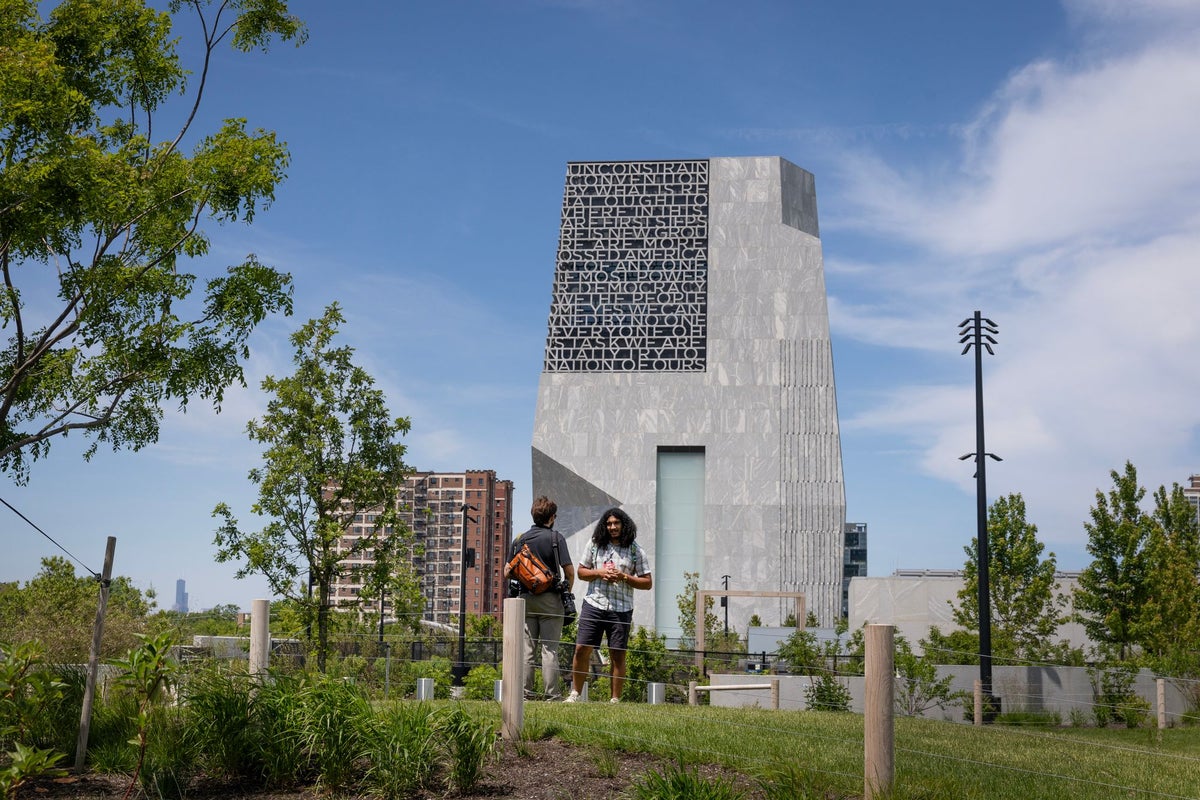
Donald Trump didn't hold back. He stood in front of a crowd, leveled his sights at the under-construction Obama Presidential Center in Chicago, and called it a total disaster. He didn't stop there, either. He went on to compare the modern architectural design of the museum tower to a giant trash can.
Most political organizations would fire back with a scathing press release, a wave of social media outrage, or a defensive list of architectural awards. Instead, the Obama Foundation did something infinitely more frustrating for an opponent.
They invited him over for a tour.
The High Road That Doubles as a Trap
It's a classic move straight out of the Barack Obama playbook. By publicly extending an open invitation to Trump to visit the Chicago campus ahead of its grand opening, the foundation completely flipped the script. It is the political equivalent of killing someone with kindness, wrapped in a thick layer of strategic trolling.
When you look at how modern political media works, the goal is almost always to trigger a defensive reaction. Trump’s trash can comment was designed to get a rise out of the Obama camp, to devalue a legacy project on Chicago's South Side, and to fire up his base.
By responding with a polite open door, the Obama Foundation basically deflated the entire argument. They didn't argue about the aesthetics. They didn't call names. They just said, "Hey, come see it for yourself."
What Most People Get Wrong About This Feud
This isn't just a petty squabble about architecture. The design of the Obama Presidential Center has been a flashpoint for years, even before Trump weighed in. Located in historic Jackson Park, the 19.3-acre campus features a 235-foot museum tower that locals have mixed feelings about. Some Chicagoans have playfully dubbed it the "Obamalisk," while critics have knocked its brutalist, geometric angles.
When Trump threw the "trash can" label at it, he was tapping into existing local grumblings about the building’s footprint and look.
But there’s a massive difference between local architectural debate and high-level political posturing. The Obama Foundation's invitation highlights a stark contrast in how both men view their post-presidency legacies.
- The Obama Approach: A sprawling, $830 million physical campus on the South Side of Chicago featuring a museum, a public library branch, a basketball court, and park space designed to draw one million visitors annually.
- The Trump Approach: A heavily digital focus, with traditional physical library plans remaining largely abstract while focus stays locked on active political campaigns.
By inviting Trump to the physical space, the foundation is subtly flexing the scale of their project. They're highlighting the fact that their massive, concrete-and-stone footprint is real, active, and about to open to the public.
The Strategy Behind Turning the Other Cheek
Let's talk about why this works so well from an SEO and public relations standpoint. The foundation knows Trump is highly unlikely to actually show up, buy a ticket, and walk through the exhibits.
If he ignores the invite, the Obama Foundation looks like the bigger person—the mature adult in the room willing to cross party lines. If he actually accepts and visits, it creates a media circus that guarantees massive global press coverage for the center's opening. It's a win-win situation built entirely on a foundation of polite defiance.
It also shifts the conversation away from legitimate criticisms of the center. Over the years, community organizers in Chicago have raised real concerns about gentrification, rising housing costs in the Woodlawn and South Shore neighborhoods, and the displacement of Black residents. Those are serious, systemic issues that require actual policy solutions.
When the narrative shifts to Trump calling a building a trash can and the foundation inviting him for a visit, the complex conversations about urban development get buried under easy headline candy.
How to Handle Public Criticism Like a Pro
There is a genuine lesson here for anyone managing a brand, a public project, or a personal reputation. When someone attacks your work with a low-blow comment, your instinct is to fight dirty or build a wall.
The Obama Foundation showed that you don't need to do either. You can stand firmly behind what you built, refuse to lower your tone, and offer your critics a front-row seat to see the work up close. It disarms the bully because it shows you aren't afraid of the critique.
The Obama Presidential Center is set to host its official grand opening on Juneteenth, marking a massive milestone for the South Side. Whether you think the tower looks like a masterpiece or, well, a trash can, one thing is certain. The team running it knows exactly how to control a news cycle.
If you're dealing with vocal critics in your own professional life, stop trying to out-argue them in the comments section. Build something so substantial that you can comfortably invite your worst critics to come look at it. Let the quality of your work do the talking, and if they still want to complain, let them do it while standing in your lobby.