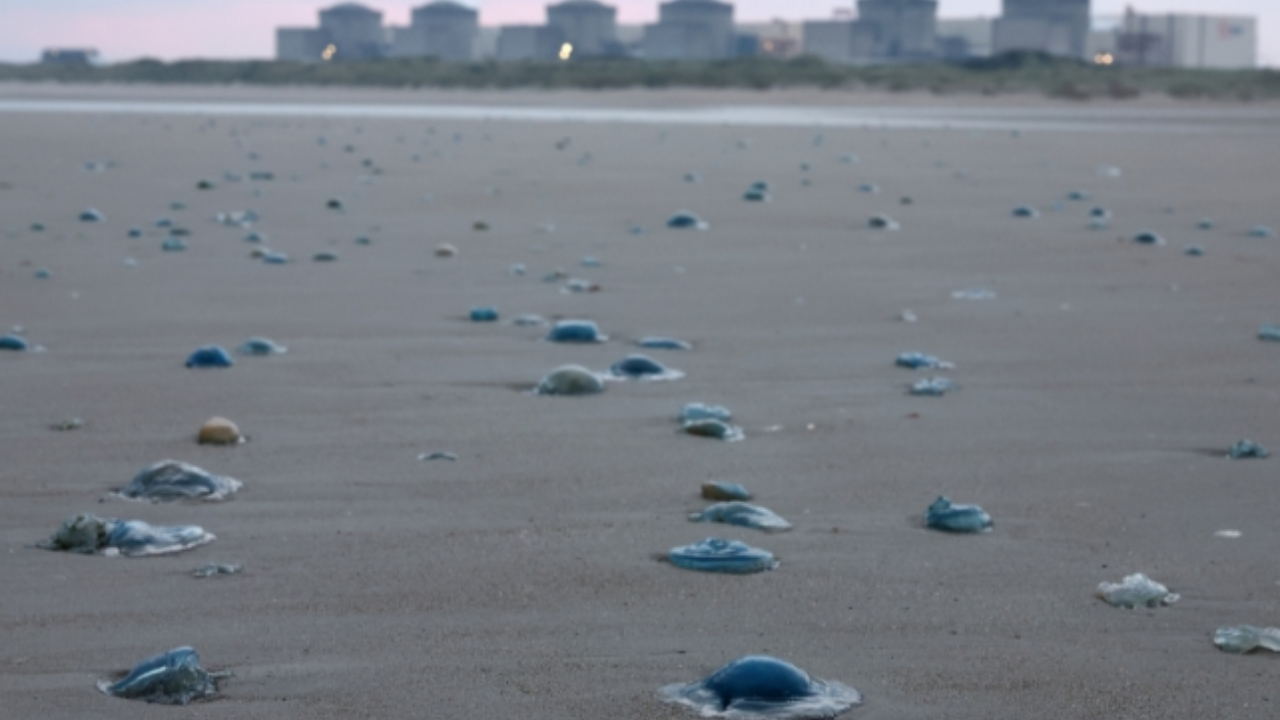
You don't think about marine invertebrates when you flip on a light switch. You probably assume powering a continent relies on massive coal reserves, splitting atoms, or gusts of wind. But millions of coastal residents depend on cold seawater rushing into massive industrial cooling systems every single second.
And sometimes, nature pushes back.
When millions of translucent, gelatinous sea creatures suddenly flood intake canals, billion-dollar energy assets grind to a halt. Power operators sweat through their hard hats while control rooms scramble to avoid catastrophic overheating.
Nuclear facilities face unique operational constraints. They can't just flip a breaker and walk away. Understanding how aquatic blooms threaten critical infrastructure reveals just how fragile high-tech energy grids remain against raw biology.
When Sea Life Clogs the Pipes
The Gravelines nuclear power station sits on the northern coast of France. It features six pressurized water reactors capable of generating massive amounts of electricity. To keep those reactors from melting down, the plant pulls staggering volumes of cold water directly from the English Channel.
That raw intake system acts as a giant vacuum.
During certain seasons, massive swarms of sea life drift straight toward the facility. These jellyfish don't mean to attack industrial machinery. They simply ride ocean currents, completely at the mercy of the tides.
When millions of them hit the intake screens at once, they overwhelm the filtration mechanisms. The screens jam. Water flow drops. Reactor operators must react fast to prevent emergency shutdowns.
It sounds almost ridiculous that simple blobs of water and protein can defeat modern engineering. But weight matters. When millions of organisms pile up against metal grates, the physical pressure builds exponentially. The intake pumps choke.
The Physics of Industrial Chokepoints
Why do these blooms happen so suddenly? Coastal waters warm up, nutrient runoff surges from agricultural zones, and natural predators disappear due to overfishing. Suddenly, conditions turn optimal for gelatinous organisms to multiply exponentially.
Then the wind shifts.
An offshore breeze pushes a massive swarm straight toward the shoreline. Industrial intake channels act as a trap. Facilities like Gravelines rely on rotating drum screens to clear out debris, but those systems are designed for seaweed, plastic bags, and stray fish. They aren't built to handle tons of gelatinous sludge that disintegrates into slippery mush under mechanical pressure.
If the screens tear, pieces of tissue bypass the primary filters. Those fragments clog secondary heat exchangers. Once internal piping loses proper flow, internal temperatures spike. Operators face a stark choice: power down the reactor deliberately, or risk an automatic emergency scram that takes days to safely reverse.
Human Error and Operational Blind Spots
Most plant engineers spend decades worrying about valve corrosion, electrical grid fluctuations, and regulatory compliance. They don't expect marine biology to shut down a reactor.
Common mistakes plague facility responses during these events:
- Treating animal blooms as temporary anomalies rather than systemic ecological shifts.
- Relying on manual debris removal when mechanical failure happens in minutes.
- Underestimating the sheer volume of organic mass a coastal current can transport in a single afternoon.
Operators need dedicated barrier nets and acoustic deterrents long before animals reach the intake canal. Waiting until the alarms sound in the control room means you've already lost the battle.
Broader Vulnerabilities in Coastal Infrastructure
France isn't the only country dealing with this headache. Nuclear and fossil-fuel plants across Japan, Scotland, Israel, and the United States face identical threats. Warm coastal waters accelerate organism growth, turning routine power generation into a daily wrestling match with local ecosystems.
Desalination plants and liquefied natural gas terminals suffer the exact same vulnerabilities. Whenever massive industrial systems draw water directly from the ocean, they invite marine life inside.
We built our heavy industrial footprint right along the shoreline for convenient access to coolant. Now, changing marine ecosystems mean those intakes pull in far more than just water.
What Actually Works on the Ground
Defeating these biological disruptions requires active, mechanical defense systems installed years in advance. Bubble curtains—lines of compressed air bubbling up from the seabed—help push drifting organisms away from intake zones. Specialized fine-mesh barrier nets catch the creatures before they ever reach the primary pump houses.
Automated sensor arrays track water turbidity and biological density miles offshore. Giving operators a four-hour warning window changes everything. Crews can ramp down non-essential pumps, clear secondary filters, and adjust water intake velocity before a crisis hits.
Nature always bats last. Ignoring the physical reality of coastal ecosystems is a luxury industrial planners can no longer afford. Stop treating the ocean like a passive resource. It's a dynamic, living system, and it demands respect if you want to keep the lights on.