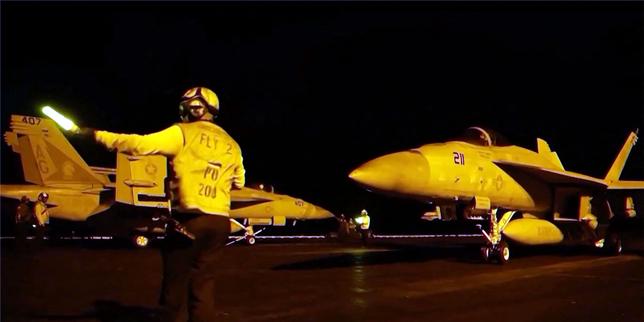
The Twelve-Night Fallacy
Twelve consecutive nights of airstrikes sounds like a relentless, overwhelming campaign designed to project absolute dominance. News outlets love the headline. It feeds a comfortable narrative: military machine turns key, targets get destroyed, deterrence resets.
It is a complete operational illusion.
When defense ministries proudly broadcast a "twelfth consecutive night of strikes," they are not announcing a strategic victory. They are admitting to a policy failure. The reliance on rhythmic, incremental air campaigns against entrenched regional actors like Iran and its proxy networks is the defense equivalent of burning money to keep a poorly insulated house warm. It produces bright lights, generates plenty of noise, but fundamentally changes nothing about the structure underneath.
Media reports fixate on kinetic output—how many sorties flew, how many munitions fell, how many nights the sirens blared. They treat air strikes as a binary scoreboard. But in modern asymmetric warfare, counting strikes is useless. What matters is systemic impact, and on that front, nightly air raids against decentralized, deeply buried assets yield diminishing returns almost immediately.
The Economics of Attrition Work Against the Attacker
Imagine a scenario where an attacker launches a $1.5 million precision-guided stand-off missile from a $100 million aircraft to destroy a $20,000 launch pad that can be replaced in six hours using parts bought off commercial supply chains.
That is not strategic projection. That is bad math.
I have watched defense planners stare at target packages for months, convincing themselves that hitting the next warehouse, the next radar dish, or the next launch rail will finally cross the enemy's pain threshold. It rarely does. Decentralized regional networks are built specifically to absorb high-intensity, low-volume kinetic hits. They do not operate like 20th-century nation-state militaries with single points of failure.
The Misunderstanding of Deterrence
The conventional view assumes deterrence works like a thermostat:
- Turn up the military pressure, and the enemy cools down their activity.
- Keep striking nightly, and the cost becomes too high for them to sustain operations.
The reality on the ground is precisely the opposite:
- Target Normalization: Nightly strikes turn extreme violence into a predictable operational background noise. Enemies adapt their logistics to routine strike windows.
- Depletion Asymmetry: The attacking force burns through finite stocks of highly complex, expensive precision munitions, while the target uses cheap, mass-produced attritable systems to draw out the conflict.
- Political Capital Burn: Each announced night of strikes drains international diplomatic leeway without delivering a decisive end state.
Deterrence is not cumulative; it is psychological. A strike campaign that continues for a dozen nights without changing the adversary's strategic posture has already lost its deterrent value. It becomes a routine transaction.
What People Get Wrong About Strategic Airstrikes
The public and mainstream media constantly ask the wrong questions when evaluating these military updates.
Does destroying weapon caches actually reduce an adversary's capability?
Only temporarily, and usually insignificantly. Modern proxy logistics do not rely on massive central depots that can be wiped out in one dramatic night. Supplies are dispersed across dozens of civilian-adjacent, deeply hardened, or mobile nodes. Hitting a cache makes for great combat camera footage, but it rarely starves the frontline for more than a few days.
Why not just keep striking until the threat is eliminated?
Because airpower alone cannot eliminate a decentralized threat. You cannot bomb an ideology out of existence, and you certainly cannot destroy underground manufacturing networks with surface-level air raids unless you are prepared to commit to a sustained, high-risk campaign that risks wider regional explosion. Repeated strikes without a ground or economic enforcement mechanism are just political theater dressed in combat fatigues.
The Hard Truth About Air Campaigns
The urge to "do something" in response to regional aggression almost always leads back to the air wing. It is clean. It minimizes friendly casualties. It looks decisive on the evening news.
Incremental Air Strikes --> Adversary Adapts --> Munition Stockpiles Drain --> Strategic Stagnation
True strategic disruption requires unglamorous, brutal execution across domains that go far beyond flying night missions over target grids:
- Targeting the Financial and Industrial Base: Wiping out a launch site does nothing if the assembly workshop ten miles away remains operational. If you are not severing the raw material pipelines and industrial tooling, you are treating symptoms while the disease spreads.
- Accepting Asymmetric Disruption: Instead of matching kinetic strike for kinetic strike, pressure must be applied where the adversary cannot adapt—unannounced, non-linear interdiction that breaks their command cohesion rather than just breaking concrete.
- Ending the Predictable Rhythm: Running strikes every single night gives the adversary a predictable tempo to manage. Unpredictability creates panic; routine creates resilience.
The Cost of the Illusion
There is a real downside to calling out this strategic reality. Demanding an end to performative air campaigns means accepting harder, uncomfortable alternatives. It means acknowledging that either a far more intense, high-risk operational commitment is necessary to truly neutralize a threat, or that strategic patience and cold containment are superior to headline-grabbing night raids.
Continuing to celebrate "12 straight nights of strikes" as evidence of resolve is dangerous self-deception. It lulls observers into believing that military force is actively solving a complex regional crisis, right up until the moment the adversary launches another barrage from the exact same region that was allegedly cleared a week prior.
Airpower is a surgical instrument, not a sledgehammer. When you use a scalpel like a club every night for two weeks, all you end up with is a dull blade and a patient that has built up immunity to the pain.
Stop measuring success by the count of the nights the bombs fell. Start measuring it by whether the adversary changed their behavior. Until that metric shifts, twelve nights of strikes is just an expensive air show.