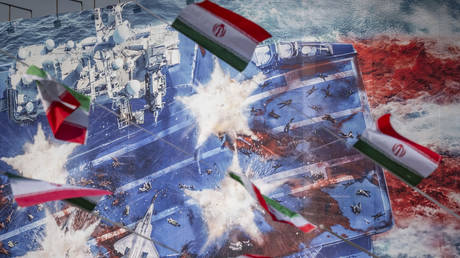
The air in the Situation Room is recycled, thin, and carries the faint metallic tang of high-end electronics running hot. On January 8, 2020, that air felt heavy enough to crush lungs. For a few frantic hours, the world sat on a razor’s edge, watching the grainy digital feeds from Al-Asad Airbase in Iraq. We were waiting for the sound of the other shoe dropping. We were waiting for the spark that would turn a decade of simmering shadows into a full-scale conflagration.
Then, the static cleared.
The Trump administration sent a letter to the United Nations. It was a cold piece of paper, typed in the sterile font of bureaucracy, but its message was a thunderclap. It stated that the immediate conflict with Iran was "terminated." Just like that. The machinery of war, which had been grinding its gears toward a massive mechanical output, was suddenly shifted into park.
To understand why that single word—terminated—matters more than the headlines suggested, you have to look past the podiums. You have to look at the people standing in the dark.
The Calculus of the Brink
Imagine a soldier at Al-Asad. Let’s call him Miller. He isn't a politician. He doesn't care about the geopolitical chess match or the intricate dance of the 1945 UN Charter. When the Iranian missiles streaked across the desert sky—retaliation for the drone strike that killed Qasem Soleimani—Miller wasn't thinking about international law. He was thinking about the thickness of the concrete above his head. He was thinking about the letter in his footlocker he hadn't finished writing to his daughter.
The administration’s claim of termination wasn't just a diplomatic update. It was a pressure valve. By telling the UN that the U.S. was "ready to engage without preconditions in serious negotiations," the white-knuckle grip on the trigger loosened.
The strategy was a high-stakes gamble on a concept called "de-escalation through strength." The logic follows a jagged path: you strike hard enough to prove the cost of engagement is too high, then you immediately pivot to the exit. It is the international relations equivalent of a barroom brawl where one person lands a knockout blow and then immediately offers to buy the next round of drinks to prevent the rest of the patrons from jumping in.
The Ghost in the Charter
Article 51 of the UN Charter is a dry piece of text. It covers the inherent right of individual or collective self-defense if an armed attack occurs. In the hands of the Trump administration, Article 51 became a shield and a closing door. By filing the report, the U.S. was legally signaling that its "defensive" actions were complete.
But legalities are rarely where the heart of the story lives.
The invisible stakes of this "termination" were rooted in the psychological state of the Middle East. For years, the relationship between Washington and Tehran has been a series of "gray zone" conflicts—cyberattacks, tanker seizures, and proxy skirmishes. These are the flickers of a campfire. The death of Soleimani was a bucket of gasoline.
When the administration declared the conflict over, they weren't saying the tension was gone. They were saying the fire was contained. It was an attempt to return to the gray zone, where the costs are measured in spreadsheets and localized incidents rather than body bags and scorched cities.
The Weight of a Word
Termination is a final word. It suggests a hard stop. A shuttering of the windows.
However, for the families of those stationed in the region, that word felt fragile. History is littered with "terminated" conflicts that found a way to breathe again. The administration's move was an exercise in strategic ambiguity. By claiming the immediate threat was neutralized, they gave Iran a face-saving exit. They allowed the Iranian leadership to say they had struck back, and allowed the American leadership to say the matter was settled.
It was a performance for a global audience, designed to prevent the "logic of escalation" from taking over. In war, there is a terrifying momentum. Action A leads to Reaction B, which necessitates Response C. Before long, the original reason for the fight is lost in the sheer necessity of winning it.
The letter to the UN was a hand on the brake.
The Silence that Followed
The silence that followed the announcement wasn't the silence of peace. It was the silence of a standoff where both parties have agreed to lower their sights for the moment.
Consider the perspective of a civilian in Tehran, waking up to the news that the "Great Satan" was open to negotiations. There is no joy in that realization, only a grim, exhausting relief. The price of bread, the stability of the power grid, the safety of their children—these are the things that hang in the balance when "termination" is debated in New York or Washington.
We often treat these events as a series of disconnected data points. We see a headline about a missile, a tweet about a general, a PDF of a UN filing. But these are the threads of a single, frayed rope.
The Trump administration’s move was an attempt to tie a knot in that rope. They wanted to signal to the world—and specifically to America’s allies who were watching with bated breath—that the United States was not seeking a regime change through total war, but rather a "maximum pressure" campaign that stopped just short of the abyss.
The Unfinished Narrative
The conflict was called "terminated," yet the sanctions remained. The rhetoric remained. The deep-seated distrust that has fermented since 1979 remained.
What changed was the immediate trajectory. The world pivoted away from the image of mushroom clouds and toward the image of diplomats in suits, even if those diplomats weren't yet talking to each other.
The human element of this story isn't found in the text of the letter to the UN. It is found in the deep exhales of millions of people who realized, for at least one more night, the sky would stay black instead of turning the orange of an explosion.
The stakes were never about the General. They were never about the base. They were about the terrifyingly thin line between a controlled strike and an uncontrollable catastrophe. By declaring the conflict over, the administration tried to redraw that line in permanent ink. Whether that ink holds or fades in the harsh sun of the desert is a question that the bureaucrats at the UN can't answer.
Only time, and the heavy silence of the gray zone, will tell.
Miller finished his letter. He didn't have to mail it from a combat zone. He folded the paper, tucked it into his pocket, and looked out over the wire at a horizon that was, for the moment, perfectly still.