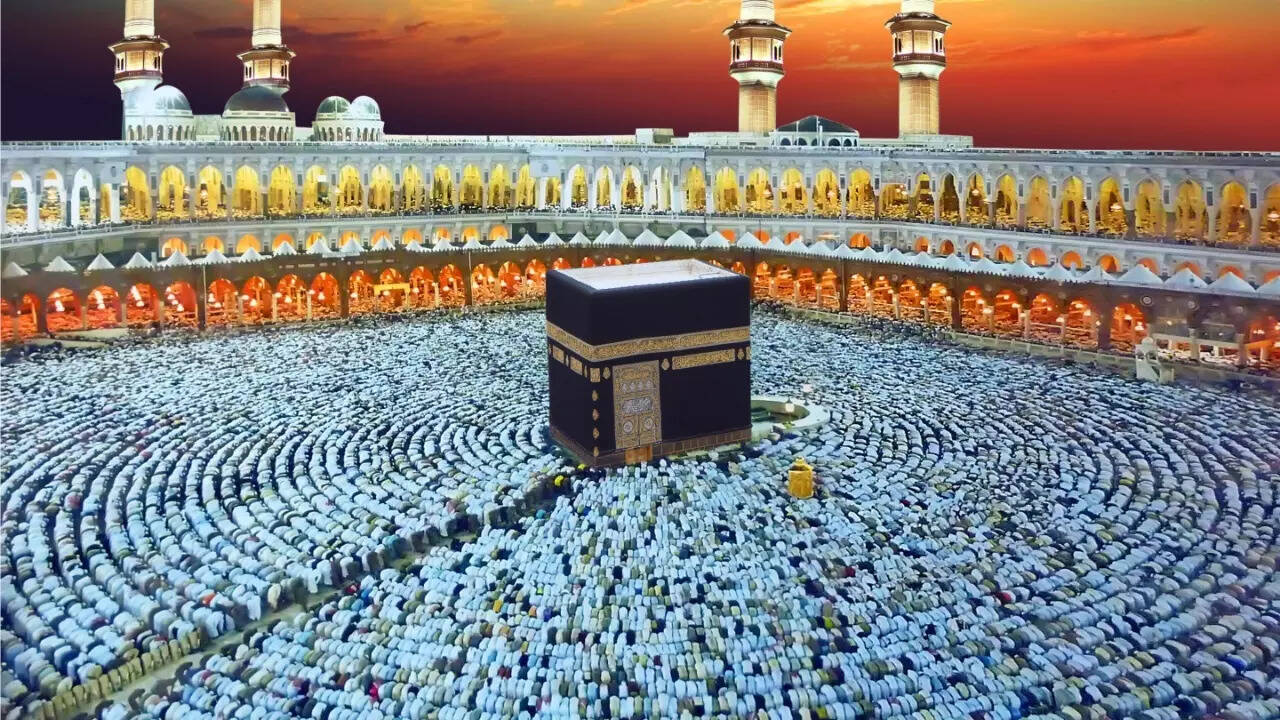
The sight is staggering. You’ve probably seen the aerial shots of the Grand Mosque in Makkah or the Sheikh Zayed Grand Mosque in Abu Dhabi during the final ten nights of Ramadan. It isn't just a religious gathering. It's a massive, synchronized display of human devotion that shuts down cities and fills every available square inch of marble with worshippers.
Laylat ul Qadr, or the Night of Power, is why these millions of people are there. Islamic tradition holds that this single night is better than a thousand months. That's about 83 years of worship packed into a few hours between sunset and dawn. When you understand that math, you understand why people are willing to stand shoulder-to-shoulder in the humidity of the UAE or the dry heat of Saudi Arabia for hours on end.
The logistics of devotion in the UAE and Saudi Arabia
If you think organizing a music festival is hard, try managing two million people who all want to be in the same spot at 2:00 AM. In Saudi Arabia, the General Authority for the Care of the Affairs of the Two Holy Mosques handles a logistical feat that would make most urban planners quit on the spot. We aren't just talking about crowd control. It’s about specialized cooling systems, thousands of gallons of Zamzam water, and floor-cleaning robots that weave through crowds without bumping into a single person in prayer.
In the UAE, the scene at the Sheikh Zayed Grand Mosque is equally intense but feels a bit more curated. Last year, the mosque recorded tens of thousands of worshippers on the 27th night of Ramadan alone. They set up massive air-conditioned tents and organized a fleet of shuttle buses to move people from remote parking lots. It’s a well-oiled machine. But for the person on the prayer mat, the tech doesn't matter. The only thing that matters is the silence of the night and the internal connection they're trying to make.
Why the 27th night isn't a guarantee
There's a common misconception that Laylat ul Qadr is definitely the 27th night of Ramadan. You'll see the biggest crowds then. You'll see the most lights. But if you talk to any scholar or someone who’s spent their life studying the Hadith, they’ll tell you that’s not exactly how it works.
The Prophet Muhammad (PBUH) told his followers to "seek it in the odd nights of the last ten days." That means the 21st, 23rd, 25th, 27th, and 29th are all in play. Some people even argue it could be any of the last ten nights. This uncertainty is actually intentional. It’s designed to keep people consistent. If we knew exactly when it was, we’d probably all show up for that one night and slack off for the rest of the month. Instead, the "hunt" for the night creates a ten-day marathon of spiritual endurance.
What actually happens during these prayers
It’s not just your standard five-times-a-day prayer. During these late nights, mosques hold Tahajjud or Qiyam-ul-Layl. These are long, voluntary prayers where the Imam recites long portions of the Quran.
- The Emotional Weight: It’s common to hear the Imam’s voice crack or hear audible sobbing from the crowd during the Dua Qunoot (a long supplication at the end of the prayer).
- The Physical Toll: Standing for two to three hours after a day of fasting is no joke. Your legs ache. Your back gets stiff. But there’s a strange collective energy that keeps you upright.
- The Community: Between the sets of prayer, people share dates, water, and tea. You’ll see a billionaire standing next to a construction worker. In that moment, the social hierarchy of the Gulf completely evaporates.
The spiritual economy of a thousand months
Let’s look at why this matters so much from a believer's perspective. If you do a good deed on Laylat ul Qadr—give $100 to charity, for example—it’s as if you gave that money every single day for 83 years. It’s a spiritual "cheat code" or a massive bonus.
People use this night to ask for the big things. They pray for health, for children, for forgiveness, or for a change in their life's direction. It’s a night of intense vulnerability. In places like the UAE and Saudi Arabia, where life can feel very focused on material success and rapid development, this night acts as a necessary anchor. It’s a reminder that there's something much bigger than the skyline or the economy.
Planning for the final nights
If you’re planning to attend these prayers in the Gulf, don't just wing it. You’ll end up stuck in traffic three miles away from the mosque.
- Arrive early: For the big mosques, "early" means arriving before the evening Isha prayer and staying through until Tahajjud finishes.
- Hydrate properly: Since you’re fasting during the day, your window to drink water is small. Use the time between prayers to sip water consistently.
- Digital fast: Put the phone away. The temptation to film the crowd is high because it looks incredible, but it kills the focus.
- Small change: Keep some cash or have your banking app ready for Zakat and Sadaqah. Many mosques have QR codes now to make it easy to donate on the spot.
The scale of Laylat ul Qadr in the Gulf is a testament to how deeply faith is woven into the geography of the region. It isn't just about the numbers; it's about the collective pause of an entire society. Whether you’re in a massive marble mosque or a small neighborhood prayer hall, the goal is the same. You're looking for that one night that changes everything.
Go find a quiet corner, put your phone on do-not-disturb, and focus on your own list of what you need to fix or ask for. The crowds are huge, but the experience is entirely personal.