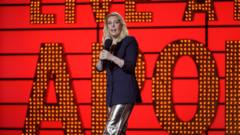
The kettle is boiling, but nobody is rushing to pour the tea. Outside, the London drizzle streaks against the double-pane glass like gray static. Inside, the amber glow of the television set casts long, familiar shadows across the worn upholstery of the sofa. For millions across the United Kingdom, this exact hour has meant the same thing for decades: a collective deep breath, a collective sigh of relief, and the comforting, predictable rhythm of shared entertainment. It was the sound of Blankety Blank bouncing off the walls, the tense, rhythmic ticking of the Celebrity Mastermind clock echoing through quiet suburban flats, and the raucous roar of Live at the Apollo pulling strangers together in the dark.
Now, silence. If you found value in this article, you should read: this related article.
The BBC has quietly wielded the budgetary axe, cutting deeply into the marrow of appointment-to-view television. Gone are the bright neon sets, the cheeky banter, the nervous contestants sweating under studio lights, and the stand-up comics stepping up to the microphone to skewer the absurdities of modern life. We are told, through dry financial reports and austere corporate statements, that tough choices had to be made. Inflation bites. License fees flatline. Digital consumption fractures the audience.
Numbers on a spreadsheet. Balance sheets reconciled. For another angle on this development, refer to the latest coverage from E! News.
Yet numbers cannot measure the weight of an empty evening.
Consider a hypothetical scenario, though it happens in thousands of living rooms every single week. Arthur is eighty-two. His world has shrunk over the years, constrained by arthritic knees and the quiet passing of old friends. His phone rings rarely. But on Saturday nights, the television transforms into a portal. When Bradley Walsh or whoever holds the mantle delivers a snappy punchline on Blankety Blank, Arthur laughs out loud, a rich, full sound that fills the hollow spaces of his flat. He is not alone. Across town, in a cramped studio flat, a twenty-four-year-old nurse finishing a brutal twelve-hour shift collapses onto her mattress, flicking on Live at the Apollo. For thirty minutes, she forgets the sterile smell of the ward, the ache in her feet, the unrelenting anxiety of her profession.
These shows are not merely content. They are social cement.
When the broadcaster pulls the plug on these institutions, the fracture runs deeper than a canceled production order or displaced studio crew. We are witnessing the systematic dismantling of our shared cultural campfire. For generations, public service broadcasting offered something radical: a space where the nation could sit down together, regardless of postcode, bank balance, or political affiliation, and experience the exact same moment of joy, suspense, or absurdity.
The bean counters look at streaming metrics and see a migration. They argue that younger audiences do not watch linear TV, that catch-up apps and on-demand algorithms have won the day. But algorithms isolate. Algorithms feed you what you already like, trapping you inside a mirrored chamber of personal preferences. Public television did the opposite. It forced an encounter with the unpredictable. It invited us to watch a pop star stumble through a general knowledge quiz on Celebrity Mastermind, revealing their human fragility beneath the PR-polished veneer. It gave us raw, unfiltered comedic timing from up-and-coming stand-ups who needed that exact Friday night slot to break into the cultural mainstream.
Take a moment to look at the anatomy of these cuts. The BBC faces a financial squeeze that has been tightening for years, pinched by political pressure over the license fee freeze and spiraling production inflation. To protect high-end, globally exportable drama—the sprawling historical epics and prestige detective series designed to sell on the international market—the corporation has started eating its own seed corn. The reliable, mid-tier entertainment formats, the studio-bound variety shows that cost relatively little yet delivered immense domestic warmth, are being sacrificed on the altar of global competitiveness.
It is a tragic irony. In striving to become a nimble global player capable of competing with American streaming giants, the BBC risks losing the very thing that made it uniquely British: its intimate, domestic heartbeat.
We have been here before, historically speaking. Whenever economic tightening hits cultural institutions, the instinct is to retreat to safety, to preserve the crown jewels while letting the everyday garden wither. But culture is not a museum collection of static artifacts. It is an ecosystem. If you starve the soil where new comedy acts find their footing, where light entertainment talent hones its craft, and where families build generational viewing rituals, the grand prestige dramas of tomorrow will wither from the roots up.
Think about the comedians who cut their teeth on Live at the Apollo. That stage was a rite of passage, a national audition that launched careers and validated the subversive, necessary art of holding a mirror up to society through humor. Think about the comforting ritual of weekend game shows that asked nothing of the viewer except a willingness to suspend disbelief and play along from the sofa.
When these shows vanish, they leave behind a void filled only by the algorithmic hum of endless scrolling.
The tragedy is not simply that television is changing. Television always changes. The tragedy is the quiet surrender of joy. We are trading communal laughter for individualized consumption, shared cultural memory for atomized convenience.
The screen goes dark. The kettle cools down. Arthur turns off the living room light a little earlier than usual tonight. The budget has been balanced, the ledgers match, and the nation is marginally poorer in the ways that truly matter.