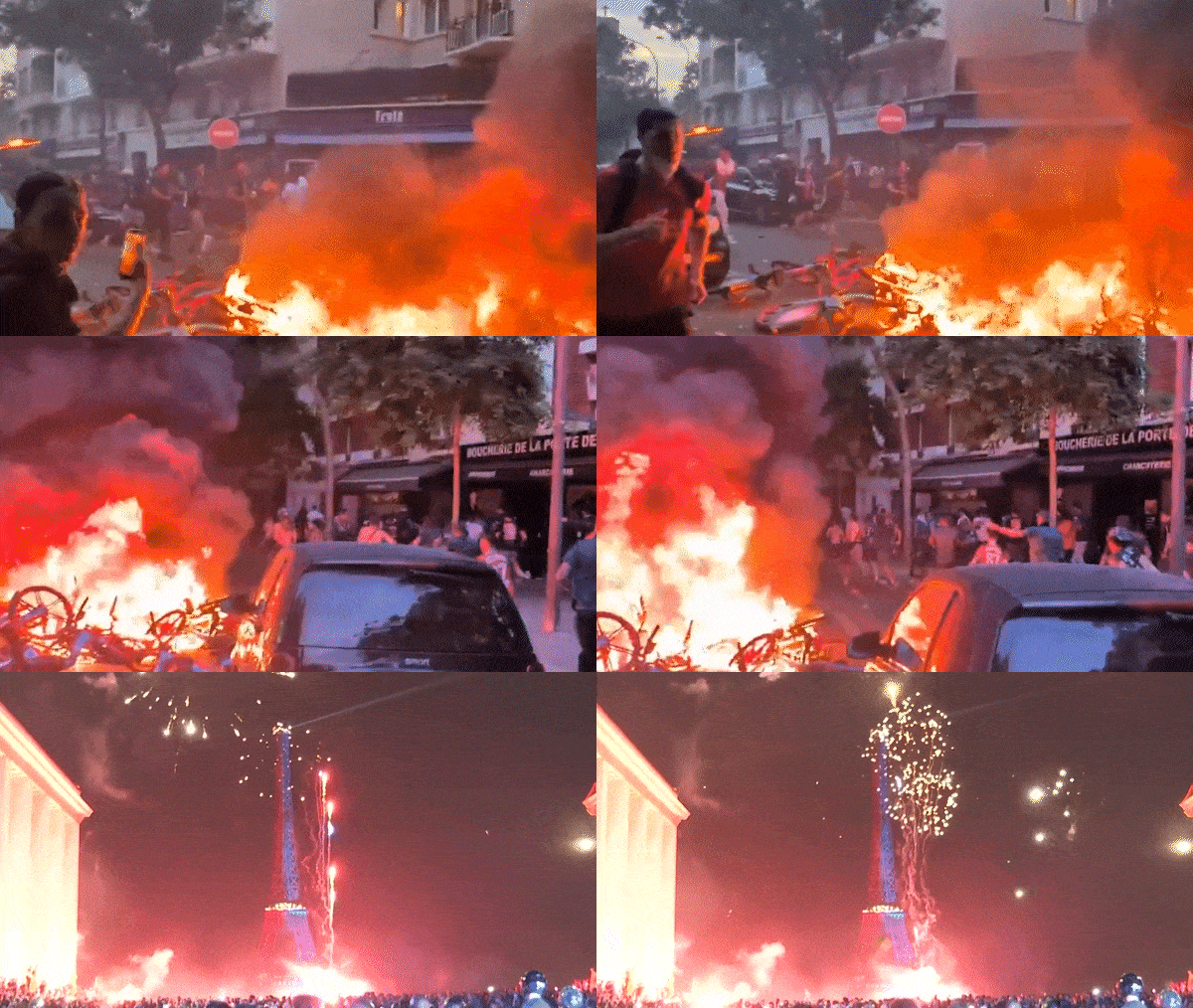
The siren began as a low, distant wail before sharp, rhythmic concussions split the night air. It was the sound of cherry bombs detonating inside metal trash cans. To anyone three miles away, it sounded like a war zone. To those standing on the corner of 5th and Elm, it was just the aftermath of a championship victory.
When the final whistle blew, the stadium erupted in a collective roar that could be heard across the river. Decibels peaked. Beer rained down in sheets. Strangers locked eyes and embraced with a fervor usually reserved for long-lost siblings. It was a beautiful, ecstatic release of ninety minutes of agonizing tension. For a closer look into similar topics, we recommend: this related article.
Then the crowd spilled out into the dark streets.
Within two hours, the euphoria curdled. The energy didn’t dissipate; it mutated. Joy became a blunt instrument. A group of teenagers, eyes wide with adrenaline and cheap lager, began rocking a parked sedan. It capsized with a heavy, metallic crunch. Someone threw a brick through the window of a family-owned bakery that had operated on the corner for forty years. By midnight, hundreds of people were in zip-ties, and the local sky was stained a dull, bruised orange from the smoke of burning tires. For further information on the matter, extensive analysis is available on Reuters.
We see this script play out in cities across the globe year after year. A team wins a historic match, and the local news runs footage of riot police firing tear gas into crowds of twenty-somethings wearing replica jerseys. The headlines always read the same way: Hundreds arrested as shops and cars burned in wild football celebrations.
But the standard headlines fail to capture the strange, fractured psychology of the night. They treat the riot as a single, monstrous entity. They miss the human friction occurring right at the border where celebration ends and destruction begins.
The Two Faces of the Crowd
To understand how a party turns into a police report, look at a hypothetical shop owner named Elena. She does not care about the offside rule. She does not know the midfielder’s passing accuracy. What she knows is that her storefront has a plate-glass window that costs four thousand dollars to replace.
On the night of the final, Elena stood behind her locked security grate, watching the human tide approach.
Initially, the crowd was just happy. They sang anthems. They waved scarves. But crowds are hyper-reactive organisms. When thousands of people pack into a tight urban corridor, individual accountability vanishes. Psychologists call it deindividuation. When you lose your sense of self within a group, your personal moral compass stops directing your actions. You start navigating by the collective momentum of the pack.
Consider what happens next. A single person, fueled by anonymity and the high of a historic win, kicks a bus shelter. The glass shatters. In cold daylight, forty people would look at that act with disgust. But in the heat of a midnight victory surge, that crack of breaking glass acts as a permission slip.
Suddenly, the boundaries of acceptable behavior expand. If he can break that, what can I do?
The destruction rarely stems from genuine anger. That is the most confounding part of sports riots. When a team loses a bitter rivalry, fans tend to trudge home in a sullen, heavy silence. The energy is deflated. But a massive, unexpected victory creates a volatile surplus of emotional energy. It is a engine running at ten thousand RPM with nowhere to send the power. If that energy isn't channeled into a organized venue, it grounds itself out on the nearest physical object. Usually, that means a stranger's car or a storefront.
The Invisible Cost of the Morning After
The true tragedy of the post-game riot isn't the broken glass. It is the lingering erosion of community trust.
The day after the chaos, the city worker sweeping up the glass isn't thinking about the beautiful game. The commuter waiting for a bus that won't arrive because the terminal was scorched isn't celebrating the trophy.
+------------------------------------+------------------------------------+
| The Night of Victory               | The Morning After                  |
+------------------------------------+------------------------------------+
| Total anonymity in the crowd       | Individual financial ruin for shops|
| Shared euphoria among strangers    | Distrust between neighbors         |
| Heavy police deployment (reactive) | Increased city tax burden (cleanups)|
+------------------------------------+------------------------------------+
The data gathered from decades of sports-related civil unrest paints a grim picture. Cities spend millions on preemptive policing, staging tactical vehicles in alleys and calling in overtime shifts for hundreds of officers. When those measures fail, the financial burden shifts directly to the small business owners and residents who live in the entertainment districts. Insurance premiums spike. Local foot traffic drops for weeks as people avoid the downtown core, fearing the next match day.
The fans who overturned the sedan on 5th Street likely woke up the next morning with nothing worse than a hangover and a sense of sheepish regret. They went back to their suburban jobs or college classrooms. But for the people who live in the footprint of the stadium, the celebration never really ends. It just turns into debt.
Redefining the Ritual
The problem lies in how we view sports culture. We have accepted the idea that extreme violence and property damage are the natural tax we pay for collective passion. We treat the post-game riot as an act of God, like a flash flood or a sudden thunderstorm.
It isn't. It is a choice made by individuals who believe their joy exempts them from civility.
Changing this requires more than just deploying more riot shields or extending the hours of the subway to clear the streets faster. It requires a fundamental shift in the culture of fandom. True celebration doesn't require a victim. The moment a victory requires the destruction of a neighbor’s livelihood to feel real, it ceases to be sports. It becomes something much older, darker, and entirely tribal.
The rain began to fall around three in the morning, finally dampening the embers of the burned-out car on the corner. The last of the sirens faded into the distance. On the pavement lay a discarded team scarf, soaked in beer and mud, trampled by hundreds of boots. It was a useless piece of fabric now, left behind by someone who had already forgotten the score of the game, leaving only the wreckage of their joy for someone else to clean up.