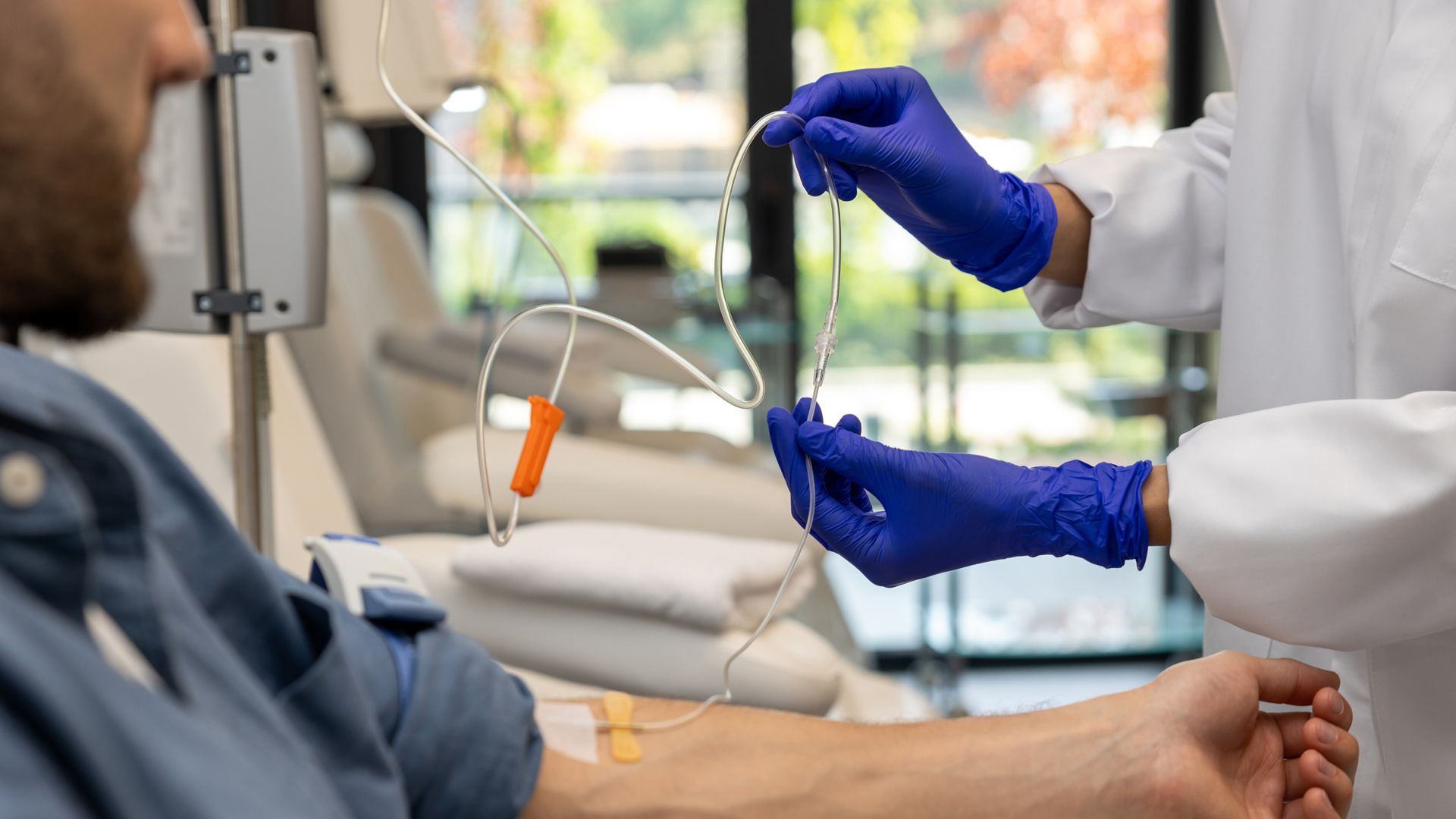
The British press is currently throwing a parade for the National Health Service’s "landmark" decision to roll out the Hybrid Closed-Loop system—hyped up by mainstream journalists as the "artificial pancreas." The narrative is predictably heartwarming: a tech-driven savior that will automatically monitor blood glucose and inject insulin, eliminating the daily, grueling guesswork for tens of thousands of Type 1 diabetics.
It sounds like a victory lap for medical technology. It is actually a textbook case of policy putting the technological cart before the clinical horse.
I have spent years analyzing health systems engineering, watching well-meaning bureaucratic rollouts crush the very frontline clinicians they were supposed to liberate. The media is hyper-focused on the clinical trial data, which is undeniably impressive in a vacuum. What they are completely ignoring is the reality of the NHS infrastructure, the gaping deficit in specialized workforce training, and the brutal economic truth of long-term medical device supply chains.
We are about to dump highly complex, data-heavy automation onto an already collapsing primary and secondary care network that cannot even handle basic administrative triage. The result will not be a seamless upgrade in public health. It will be a stark stratification of care, a mountain of wasted hardware, and burned-out clinics drowning in a tsunami of unmanaged data.
The Myth of the Hands-Off Cure
The fundamental flaw in the current coverage is the premise that automation equals simplicity. It does not.
A hybrid closed-loop system pairs a continuous glucose monitor (CGM) with an insulin pump, using an algorithm to adjust basal insulin doses in real time. The word "hybrid" is doing some incredibly heavy lifting here that the mainstream media conveniently glosses over. This is not a set-it-and-forget-it organ transplant made of silicon.
Patients still have to manually count carbohydrates. They still have to announce meals to the pump. They still have to guess how a sudden walk, a stressful work meeting, or a minor cold will warp their insulin sensitivity.
When you introduce an algorithmic layer to this equation, you do not eliminate human error; you shift where the error occurs. Instead of managing blood sugar directly, the patient now has to manage the relationship between their lifestyle and an aggressive mathematical formula. If a user inputs an incorrect carb count, the system reacts based on flawed data, potentially leading to severe, unpredictable drops or spikes that take hours to untangle.
Imagine a scenario where a patient overrides the system out of panic because they see their blood sugar rising, only for the algorithm to simultaneously kick in with its own correction dose. You now have two separate entities dumping insulin into a human body at the same time. The clinical risk does not disappear; it becomes more abstract, harder to troubleshoot, and vastly more terrifying for a patient who was told this machine would do the thinking for them.
The Care Gap the Press Ignores
The National Institute for Health and Care Excellence (NICE) has laid out a five-year implementation plan to give roughly 100,000 eligible patients in England and Wales access to this technology. To understand why this timeline is a fantasy, you have to look at who is expected to actually implement it.
This is not a medication you pick up at a pharmacy counter. Deploying a closed-loop system requires weeks of intensive, highly specialized clinical onboarding.
- The patient must be trained on sensor calibration and insertion site rotation.
- Clinicians must meticulously fine-tune baseline insulin-to-carb ratios and correction factors before the algorithm can even be safely activated.
- Data must be continuously downloaded, reviewed, and audited by specialist diabetes teams to ensure the system is tracking safely.
Here is the problem: the NHS does not have these teams.
We are currently facing an unprecedented shortage of specialist diabetes nurses and consultants across almost every trust. The staff left on the floor are already buried under standard clinic loads. Now, they are being ordered to act as remote systems administrators for thousands of complex, internet-connected medical devices.
When a patient’s pump loses its connection to the CGM at 2:00 AM, they will not call the manufacturer’s defunct automated help desk. They will call their local clinic or show up at an overstretched Accident & Emergency department. The NHS is attempting to launch a nationwide digital health revolution without building the human tech support network required to keep it alive.
The High Cost of the Hardware Monopoly
Let's talk about the money, because the economic math of this rollout is fundamentally broken. NICE negotiated a discount on these systems to make them cost-effective, but the true financial trap of medical technology lies in the consumables, not the initial hardware.
An insulin pump requires an infusion set and a reservoir change every two to three days. A continuous glucose monitor sensor lasts anywhere from 7 to 14 days before it must be peeled off and thrown in the trash. This creates a perpetual, multi-decade cash flow from the taxpayer directly to a tiny handful of massive medical device conglomerates.
By locking 100,000 patients into these specific closed-loop ecosystems, the NHS is effectively signing a blank check for proprietary consumables. If a manufacturer decides to alter its pricing structure, alter its software licensing, or phase out an older model of a pump, the NHS has zero leverage. They cannot migrate a patient easily to a competitor because the patient has spent months adapting to that specific brand’s proprietary algorithm.
We are creating a massive, state-funded dependency on corporate hardware. In an organization where trusts are routinely forced to ration basic wound care supplies and delay elective orthopedic surgeries just to balance the books, prioritizing an incredibly expensive, hardware-dependent maintenance cycle for a subset of the population is an ethical minefield.
Dismantling the Consensus: The Premise is Flawed
If you look at the queries circulating in public health forums right now, everyone is asking variations of the same short-sighted question: How quickly can I get an artificial pancreas on the NHS?
That is entirely the wrong thing to ask. The question people should be screaming is: Does my local trust have the infrastructure to keep me safe once I have it?
The public has been conditioned to believe that advanced machinery is always superior to manual management. But for a significant portion of the diabetic population, standard intensive therapy—using a flash glucose monitor and smart insulin pens—yields nearly identical HbA1c outcomes with a fraction of the psychological and logistical friction.
A smart pen logs doses automatically and calculates corrections without taking away user control or requiring an attached plastic tube taped to your abdomen 24 hours a day. It doesn't suffer from signal dropouts. It doesn't require an intensive IT infrastructure to maintain. Yet, because it isn't labeled an "artificial pancreas," it doesn't generate the glamorous headlines that politicians can use to score points during an election cycle.
The downside to my argument is obvious: it sounds cold. It sounds like I am advocating for withholding life-improving tech from people who struggle every single day. I am not. I am advocating for honesty.
The clinical trials that proved the efficacy of these systems were conducted in highly controlled environments with motivated, tech-literate patients who had 24/7 access to research clinicians. Translating those identical results into a chaotic, underfunded, real-world health system without replicating those support structures is a statistical impossibility.
We are setting patients up for systemic abandonment. The early adopters—typically affluent, highly educated individuals who know how to navigate the bureaucracy and advocate for themselves—will secure the devices and do well. The vulnerable populations, who already suffer from disproportionately worse diabetes outcomes due to social determinants of health, will either be denied access entirely due to "compliance concerns" or will be handed a complex machine they cannot properly maintain, further widening the healthcare inequality gap.
Stop treating this rollout as a finished policy triumph. It is an active logistical hazard. Until the NHS addresses the stark reality of its workforce depletion and creates a dedicated, permanent funding stream for the human infrastructure of digital medicine, this landmark approval will exist only on paper—leaving patients stranded with advanced hardware that their doctors are too overwhelmed to help them use.