If you farm maize, sorghum, or grazing pastures anywhere in east or southern Africa, you know the absolute dread of waking up to find your fields under siege. The African armyworm does not just feed; it marches through acreage in dense, destructive waves, stripping plants down to bare stalks. For years, traditional responses relied heavily on chemical pyrethroid sprays. Those chemicals come with a massive catch. They only work on very young caterpillars measuring between one and five millimeters. Miss that narrow window, and you are basically throwing money at a losing battle while destroying beneficial insects and risking livestock health.
Enter a natural game-changer found right beneath our feet. Recent field discoveries by researchers like South African entomologist Letodi Luki Mathulwe point toward a biological defense that could reshape agricultural pest management. Instead of leaning on expensive synthetic poisons, science is turning its attention to a naturally occurring soil fungus called Metarhizium rileyi.
What Makes This Fungal Discovery Different
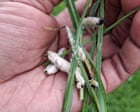
When pest outbreaks hit KwaZulu-Natal and other regions, agricultural officers fielded frantic calls from farmers watching their livelihoods vanish. But in certain patches of Kikuyu grass, something strange happened. The caterpillars weren't surviving. They were dying off in droves, coated in a distinct white and green fungal growth.
This wasn't a random occurrence. The soil fungus produces microscopic spores that latch onto the insect, pierce its cuticle, and kill it from the inside out.
Unlike conventional chemical applications that lose efficacy as soon as the larvae mature, this organism targets the pest naturally in the field environment. Even better, it offers a crucial safety buffer for livestock. When armyworms heavily infest grazing pastures, their feeding habits trigger toxic chemical releases in grasses like Kikuyu, which can poison cattle. By stopping the infestation at the source using a targeted biological agent, farmers protect both their harvests and their livestock.
The Real Challenges of Scaling Biopesticides
Let's be realistic. Finding a dead caterpillar covered in fungus in a research plot is miles away from putting a commercial product into the hands of a smallholder farmer in rural Zambia or South Africa.
Agricultural institutions, including the International Centre of Insect Physiology and Ecology (ICIPE) and CABI, have spent years vetting various biopesticide strains across the continent. Strains like Metarhizium and Beauveria bassiana show massive promise, but commercialization requires navigating rigid regulatory pathways.
If you want these biological solutions to succeed where chemical inputs fail, you have to look at three major hurdles:
- Production Costs: Mass-producing fungal spores cost-effectively is technically demanding. If a bio-inoculant costs more than a standard synthetic pesticide, small-scale farmers simply won't buy it.
- Shelf Life and Storage: Chemical jugs sit on a dusty agro-dealer shelf for months. Live fungal spores degrade faster under high heat and humidity unless formulated correctly.
- Distribution Networks: Getting new bio-inputs approved and distributed through local supply chains takes years of bureaucratic and logistical heavy lifting.
Practical Steps for Integrated Pest Management
Waiting around for a commercial bottle of fungal spray to hit your local market isn't a strategy when your maize is disappearing today. If you manage crops vulnerable to migratory caterpillars, you need an integrated approach right now.
Scout your fields weekly, focusing on the undersides of leaves before the larvae grow past the small stage. Combine natural monitoring with tools like pheromone traps to track moth movements early. Look into intercropping methods, such as push-pull technology, which naturally deters pests while improving overall soil health and fodder availability.
Keep an eye on regional agricultural extension updates regarding label-extensions for biological products as research institutions fast-track these fungal strains from the lab to commercial availability. Nature provided the toolkit. Our job is building the bridge to use it efficiently.