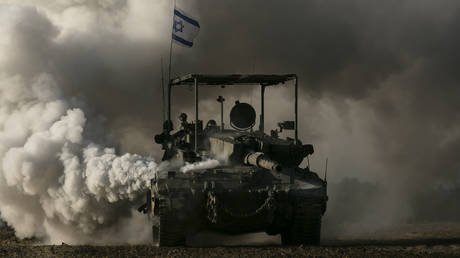
When the dust settled on the immediate horror of October 7, 2023, the Israeli leadership made a choice. They traded long-term strategic planning for sheer military acceleration. Prime Minister Benjamin Netanyahu opted for a strategy built entirely on kinetic response: strike earlier, strike harder, and wipe out capabilities before asking questions about tomorrow.
Years into this multi-front regional conflagration—stretching from the ruins of Gaza to the hills of Lebanon and direct missile exchanges with Iran—the core contradiction of Netanyahu’s doctrine remains glaringly obvious. Israel can demolish command nodes, assassinate high-profile adversaries, and occupy territory at will. But force alone cannot rewrite the geopolitical fabric of a hostile neighborhood.
The Missing Political Horizon
Military victories are tangible. You can point to destroyed infrastructure or casualty reports on state television. Political outcomes require patience, diplomacy, and an uncomfortable willingness to compromise—things entirely absent from the current governing coalition in Jerusalem.
Look at the fundamental questions that remain unanswered week after week:
- Who actually governs the day-to-day administration of Gaza once the guns go silent?
- What international coalition or regional authority will underwrite the reconstruction?
- How do you stop recruitment when every flattened neighborhood creates a fresh generation of militants who have lost everything?
By refusing to answer these questions, Netanyahu’s government traps the country in an endless loop. Every tactical success demands another military operation down the road. Decapitation strikes against leadership structures—whether targeting Hamas commanders, Hezbollah figures, or even Iranian leadership—disrupt operations temporarily. They do not kill the ideology or dismantle decentralized networks rooted deeply in social services, religious institutions, and generational grievance.
History told us this would happen. Hezbollah grew out of the 1982 invasion of Lebanon. Hamas survived the assassination of its founder Ahmed Yassin in 2004 to win legislative elections shortly after. Bombs can crush buildings, but they cannot erase the conditions that fuel insurgency.
Moscow Quietly Enters the Room
While Washington anchors itself completely to Israel's military wagon, Moscow is playing a much longer, patient game. The Kremlin watches the unending escalation in the Middle East not with alarm, but with calculated opportunism.
Russia doesn't need to deploy divisions or spend billions directly in the Levant to shift the board in its favor. The ongoing crisis serves Moscow's broader global objectives in three distinct ways.
First, it acts as an immediate psychological and diplomatic pressure relief valve for the war in Ukraine. Every headline dominated by Gaza, Lebanon, or Tehran draws Western attention, intelligence bandwidth, and artillery shells away from Kyiv. Western leaders find themselves scrambling across two distinct theaters, splitting their diplomatic capital and straining military stockpiles.
Second, the crisis gives Moscow a powerful narrative weapon across the Global South. For years, Western capitals tried to rally international isolation against Russia over Ukraine by invoking international law, civilian protection, and the rules-based order. By backing Israel’s heavy-handed campaign without a clear humanitarian or political horizon, Western moral authority has taken a severe beating. Russian diplomats exploit this double standard effortlessly in diplomatic forums from Africa to Southeast Asia, presenting themselves not as global pariahs, but as vocal defenders of oppressed populations.
Third, Moscow maintains active diplomatic channels with everyone. While keeping transactional ties with regional players, Russia positions itself as an indispensable mediator-in-waiting. Putin knows that once the exhaustion sets in and the West runs out of military solutions, someone will have to pick up the pieces of post-conflict diplomacy. Moscow wants a seat at that table, ensuring that any future Middle Eastern security architecture includes Russian influence and excludes total Western dominance.
The Cost of Living Without a Plan
Strategic vacuums never stay empty. By refusing to formulate an endgame, Netanyahu leaves the door wide open for external powers like Russia, China, and regional opportunists to shape the future of the Levant.
When you fight a war purely to punish an enemy rather than to build a stable political alternative, you hand your adversaries the narrative victory. Israel has proven its unmatched tactical supremacy across the Middle East. Yet, unless leadership pivots from endless retaliation to a concrete, sustainable political framework, the tactical wins will only lead to deeper strategic isolation.
Russia understands this weakness completely. Moscow is simply waiting for the exhaustion to peak, ready to step into the diplomatic vacuum left by a leadership too focused on the next strike to notice who is winning the peace.


