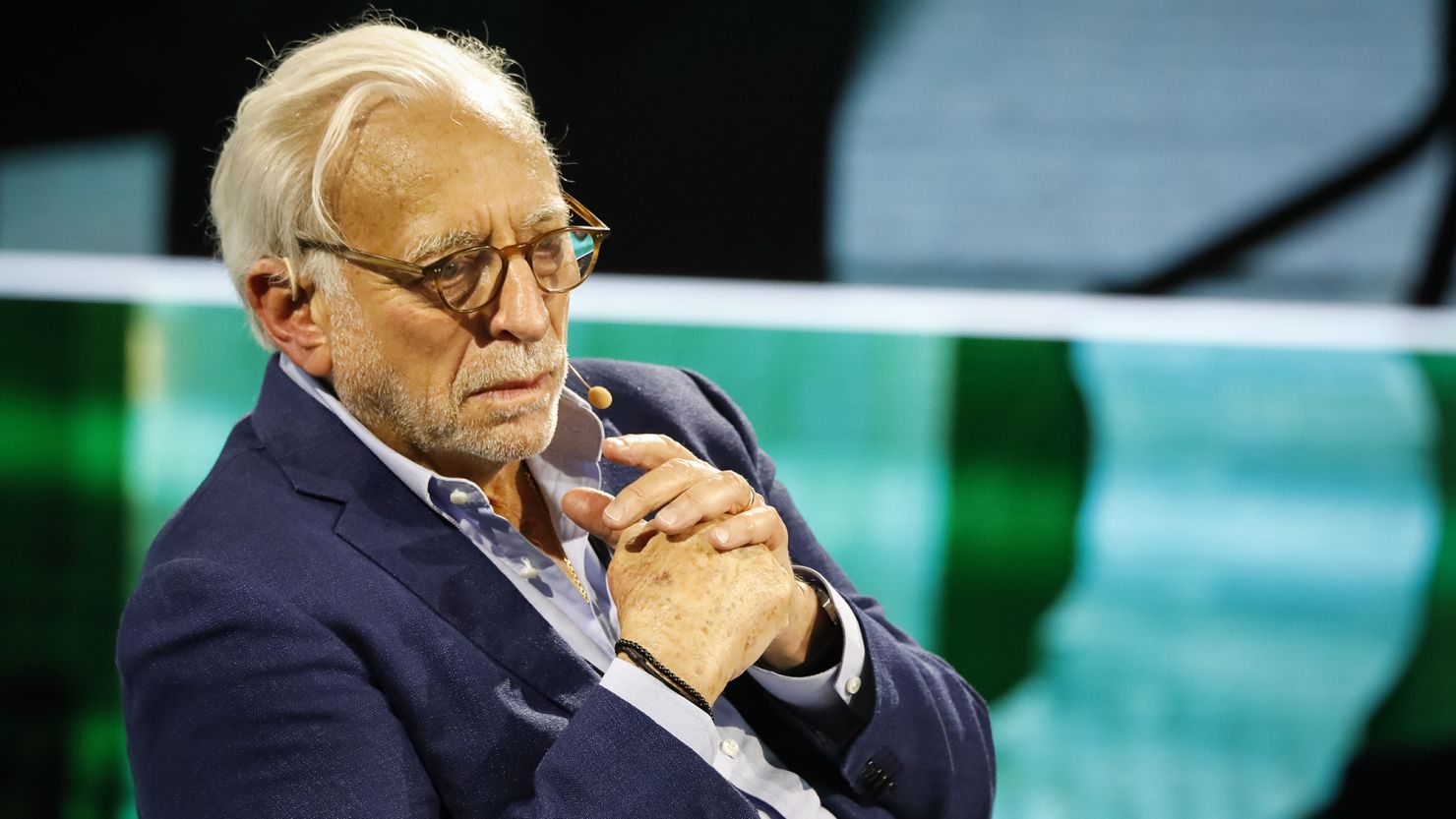
The financial press loves a hero narrative. When Nelson Peltz and Trian Fund Management took a seat on the board of Unilever, the script was written before the ink on the SEC filings even dried. He was the "activist with the golden touch," the man who trimmed the fat at P&G and Kraft, finally arriving to rescue the 19th-century conglomerate from its own "woke" distractions and sluggish growth.
It is a comforting story. It is also entirely wrong.
The recent spinning off of Unilever’s ice cream business—the home of Ben & Jerry’s—and the mass cull of 7,500 corporate roles aren't "masterstrokes" of strategic reinvention. They are the desperate, predictable moves of an organization that has run out of ideas. Peltz hasn't "unlocked value." He has triggered a controlled demolition. If you think slicing off a high-margin, market-leading ice cream division is a sign of health, you aren't paying attention to the math of long-term survival.
The Myth of the Activist Alpha
The lazy consensus suggests that Peltz’s arrival forced Unilever to "focus on the basics." The reality is far grittier. Corporate activists like Peltz don't create growth; they extract it. They are the financial equivalent of a controlled burn in a forest.
When an activist enters the room, the CEO stops looking at the customer and starts looking at the spreadsheet. This is the "Peltz Effect." It’s an immediate pivot toward short-term stock price appreciation at the expense of the very R&D and brand equity that makes a company worth owning in the first place.
Look at the mechanics of the ice cream spin-off. By separating Ben & Jerry’s and Magnum, Unilever is shedding 16% of its group sales. Why? Because ice cream has a different "supply chain profile" and higher capital intensity. That is code for: "It’s hard work, and we’d rather just hand back cash to shareholders than actually manage a complex business."
The False Choice Between Purpose and Profit
The most tired trope in the Unilever saga is the battle over "brand purpose." The critics—many of them egged on by the Trian narrative—claim Unilever failed because it spent too much time worrying about the carbon footprint of Hellmann’s mayonnaise and not enough time selling it.
This is a fundamental misunderstanding of consumer packaged goods (CPG) in the 2020s. Purpose isn't the problem. Execution is.
Unilever didn't lose market share because it cared about the environment. It lost market share because it allowed its core brands to become boring, overpriced, and easily replaceable by private-label competitors. The "anti-woke" crusade led by some investors is a convenient smoke screen for the fact that Unilever’s management simply failed at the basics of supply chain logistics and pricing power during an inflationary cycle.
Peltz’s "fix" doesn't address the core rot. It doesn't make the remaining brands—Dove, Rexona, Knorr—any more innovative. It just makes the company smaller. You cannot shrink your way to greatness.
The Math of the Ice Cream Exit
Let’s talk about the numbers that the glossy investor decks omit. Ice cream is a seasonal, high-touch business. It requires "cold chain" logistics—refrigerated trucks, specialized warehouses, and high energy costs.
By spinning this off, Unilever improves its "operating margin" on paper. The remaining business looks leaner. But it also loses the massive scale that comes with being one of the world's largest purchasers of dairy and sugar.
"When you break a conglomerate, you don't just lose the 'bloat.' You lose the hidden synergies that give you leverage over global suppliers."
Imagine a scenario where the new, independent Ice Cream Co. goes to negotiate with a global logistics provider. Without the weight of the entire Unilever portfolio behind it, its costs will inevitably rise. Meanwhile, the "lean" Unilever loses a massive chunk of its diversification.
Peltz is gambling that the market will assign a higher multiple to a slower-growing, "pure" personal care company than it did to the messy conglomerate. It’s a valuation shell game. It’s not business growth; it’s accounting optimization.
The Human Cost of "Trimming the Fat"
The announcement of 7,500 job cuts is being treated by the markets as a "necessary corrective." I have seen this movie before. In my twenty years observing CPG turnarounds, these mass layoffs rarely target the actual bureaucracy.
Instead, they gut the mid-level managers who actually understand the local markets. They fire the people who know why a consumer in Jakarta buys differently than a consumer in Berlin.
When you cut 7,500 people to save $800 million, you aren't just cutting salaries. You are evaporating institutional knowledge. You are signaling to every talented young graduate that Unilever is no longer a place for builders; it is a place for liquidators.
The "Portfolio Productivity" Trap
Unilever's new "Growth Action Plan" (GAP) sounds impressive. It focuses on the "Power Brands"—the 30 labels that represent 70% of revenue.
This sounds logical. Why waste time on the small stuff?
Because the "small stuff" is where the next billion-dollar brand comes from. By focusing exclusively on the established giants, Unilever is effectively admitting it can no longer innovate. It is becoming a holding company for legacy brands that are being slowly disrupted by nimble, digital-first startups.
Peltz's playbook is designed for the 1990s. In that era, you won by having the biggest TV ad budget and the best shelf space. Today, you win by being fast. A leaner, "focused" Unilever managed by a board terrified of an activist is the opposite of fast. It is a company in a defensive crouch.
The Real Winner in the Peltz Era
If the company isn't winning and the long-term health is in question, who is the winner?
The winner is the short-term shareholder who exits in the next 18 months. By forcing a spin-off and a massive buyback program, Peltz creates a temporary "sugar high" in the stock price. It’s a classic extraction play.
- Agitate for a board seat.
- Demand a "strategic review."
- Force a divestment of a major division.
- Initiate a massive cost-cutting program.
- Watch the stock pop on the news of "efficiency."
- Exit before the long-term consequences of under-investment become visible.
This isn't "chalking up another win." It's a raid.
Stop Asking if the Break-up Works
The question shouldn't be "Will the ice cream spin-off succeed?" The question is "Why couldn't one of the most powerful companies in the world manage an ice cream business profitably?"
The failure isn't in the portfolio. The failure is in the culture. If Unilever's leadership couldn't handle the complexity of Ben & Jerry's, they won't magically become world-class operators just because they have fewer brands to manage.
The complexity isn't the enemy; the inability to lead through it is.
The Counter-Intuitive Truth
The most successful companies of the last decade haven't been the ones that stripped themselves down to "core competencies." They’ve been the ones that embraced complexity and used their scale to dominate multiple verticals.
Look at Amazon. Look at LVMH. These aren't "focused" companies. They are sprawling, complex ecosystems. They don't spin off divisions because they're "hard to manage." They fix them.
Unilever is doing the opposite. It is admitting defeat. It is saying, "We are too slow and too tired to compete in the ice cream market, so we’re leaving."
If you're an investor, don't cheer for the break-up. Mourn the fact that the company has given up on growth in favor of survival. The Peltz era at Unilever won't be remembered for a "turnaround." It will be remembered as the moment the sun finally began to set on one of the great empires of the consumer world.
The "leaner" Unilever isn't a predator. It’s a smaller target.
Stop pretending this is a victory. It’s a liquidation in slow motion. The next time you hear about an activist "fixing" a legacy brand, look past the stock price. Look at the R&D budget. Look at the employee morale. Look at the brand's cultural relevance.
The math of decline is easy to hide behind a spin-off. Building something that lasts is the hard part. Peltz chose the easy path, and Unilever’s management was too weak to stay the course.