There are noises a hospital room recognizes instantly. The metronomic spike of a pulse oximeter. The thin, dry rustle of parchment paper pulled over an examination table. The quiet, muffled sigh of a physician closing a chart and realizing that the medical textbooks have failed to prepare them for what they are looking at.
When the patient walked into the emergency department, his complaint was remarkably mundane. Blood in the urine. Hematuria. To a triage nurse, it is a Tuesday-afternoon puzzle—a common signal pointing toward common destinations: a kidney stone, an infection, perhaps the quiet warning of a localized malignancy. It is a symptom that commands attention, certainly, but not panic. It is a routine detour on the highway of internal medicine.
Then came the scans.
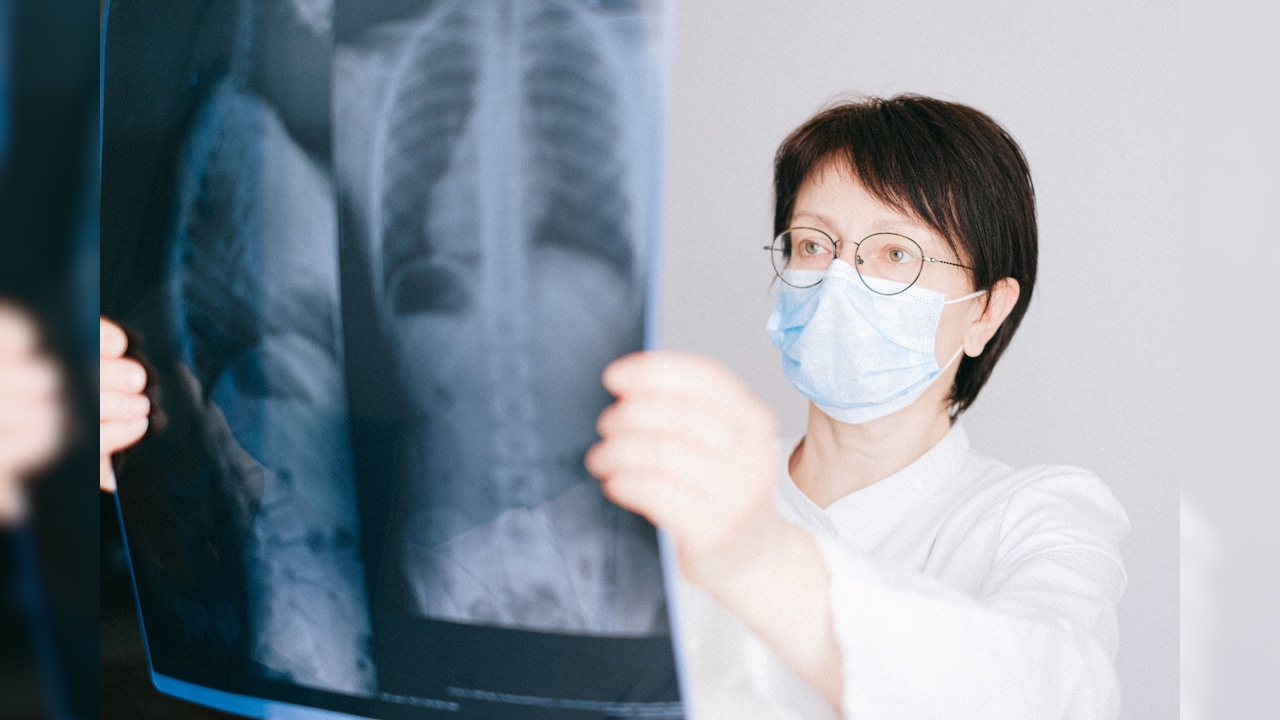
Medical imaging does not care about expectations. It does not pause to consider what makes sense. The beam of the X-ray cuts through muscle, fat, and bone, rendering the invisible architecture of the human body into stark, flat shades of gray. And there, suspended within the delicate, relentless machinery of the left ventricle of the heart, was a foreign body.
A thirty-six-millimeter steel sewing needle.
Think about that length for a moment. Thirty-six millimeters. More than an inch and a half of cold, rigid metal, riding the wild, ferocious rapids of human circulation. It was not resting quietly in some passive pocket of tissue. It was embedded directly within the thick, muscular walls of the organ that never stops working, the pump that contracts a hundred thousand times a day, driving life through every artery and capillary in the body.
How does a sewing needle travel from the mundane chaos of daily life—from mending a hem, from an accidental prick, from a stray pin left on a carpet—and find its way into the absolute center of human vitality?
The human body is a closed hydraulic circuit, but it is also a landscape of astonishing vulnerability. When a sharp object breaches the skin, it leaves a microscopic signature. If swallowed, the journey through the gastrointestinal tract is a perilous gauntlet of acid and peristalsis where sharp items occasionally puncture organs, slipping through tissue planes with terrifying stealth. A swallowed needle can migrate. It can drift through the peritoneal cavity, pierce the walls of adjacent organs, and, through the sheer hydraulic pressure of surrounding structures and muscle contractions, enter the venous system. Once inside a major vessel, it becomes a passenger in the bloodstream, carried upward on the tide of venous return toward the right side of the heart.
Ordinarily, a foreign object entering the right atrium or ventricle faces a choice dictated by anatomy: get trapped in the pulmonary capillary bed, causing a pulmonary embolism, or find a bizarre, improbable passage. But a thirty-six-millimeter needle is too large to quietly dissolve, too rigid to ignore, and too sharp not to carve its own path.
Yet this patient’s needle was in the left ventricle.
That distinction changes the physics entirely. The left side of the heart is the high-pressure engine, driving oxygenated blood out to the brain, the kidneys, the entire systemic circulation. To arrive there, a foreign body must either cross the delicate membrane of the interatrial or interventricular septum, or enter through the pulmonary veins via a bizarre transpulmonary journey. Every beat of the heart is a physical blow against the metal. Every contraction risks perforating the ventricular wall, causing cardiac tamponade—a catastrophic filling of the pericardial sac that crushes the heart from the outside, silencing it in minutes.
And yet, this man had walked into the hospital complaining of hematuria. Blood in his urine.
Why? Because the migration of a foreign body through the body’s deep tissues can cause localized inflammation, minor hemorrhaging, and referred signals that manifest far from the actual site of damage. The body, in its desperate attempt to isolate the intruder, builds walls of scar tissue, signals alarms, and creates systemic ripples that confuse even the sharpest diagnosticians. The blood in his urine was not a primary kidney failure; it was a distant echo of a silent war being fought inside his chest.
Surgeons faced an agonizing calculus. Do you operate on a heart that is actively beating around a piece of steel? Do you open the chest, arrest the heart, put the patient on a cardiopulmonary bypass machine, and fish for a needle that has become integrated into the very myocardium? Every movement of the heart muscle risks snapping the needle, sending fragments into the systemic circulation where they could cause a stroke, a mesenteric ischemia, or an instantaneous, fatal blockage.
The procedure requires a surgeon with the steady hands of a watchmaker and the nerves of a bomb disposal technician. Under direct visualization, guided by intraoperative imaging, the chest is opened. The pericardium is incised. The heart lies exposed—dark red, wet, trembling with the immense effort of keeping a human being alive. The surgical team locates the precise spot where the tip of the steel has declared war on the muscle tissue. With microscopic precision, they dissect the surrounding fibers, freeing the metal from its stubborn anchorage without letting it slip deeper into the vortex of the ventricle.
When the clamp finally secures the needle and pulls it free, the room does not erupt into cheers. Medicine is rarely cinematic in that way. Instead, there is a collective, audible exhalation. The monitors continue their steady beep. The blood continues to flow. The machine takes over the rhythm for a suspended, breathless moment while the myocardium is repaired with fine, surgical sutures.
We tend to view our bodies as fortresses. We build routines around wellness, monitoring our cholesterol, counting our steps, tracking our sleep, assuming that health is a baseline state that we maintain through clean living and sensible choices. We forget that we are also walking fragile containers of fluid and pressure, navigating a world filled with sharp edges, microscopic accidents, and biological anomalies that defy imagination.
Most of us will never harbor a sewing needle in our left ventricle. Most of us will never experience the surreal shock of learning that a domestic tool has migrated through our flesh to take up residence in our most vital organ. But the story of the man with the thirty-six-millimeter steel point is a reminder of a stranger, quieter truth: the human body is a theater of quiet
The Needle in the Heart
health
The human body is remarkably resilient, yet terrifyingly fragile. We walk through our days carrying keys, phones, and invisible burdens, entirely unaware of the machinery ticking quietly inside our chests. Seventy beats a minute. One hundred thousand beats a day. A relentless, hydraulic pump that never sleeps.
Imagine walking into a clinic for something mundane. A dull ache. A fleeting shadow of worry. Blood in your urine. It is the kind of symptom that forces you to sit up straight in a sterile chair, listening to the hum of fluorescent lights, wondering what kind of storm is brewing beneath your skin.
For a 50-year-old man in China, the hospital visit started with that exact quiet panic. Hematuria. Blood where it has no business being.
Doctors ordered the routine battery of tests. Urinalysis. Ultrasound. Scans that slice the human form into digital layers. They hunted for kidney stones, for infections, for the typical cellular breakdowns that turn a normal Tuesday into an urgent medical intervention.
Instead, they found a ghost.
A foreign object. Metallic. Rigid. Sharp. It wasn't in his kidneys. It wasn't in his bladder.
It was lodged inside his heart.
A thirty-six-millimeter needle.
Pause for a second and let that land. Thirty-six millimeters. More than an inch of cold, hardened steel. Imbedded directly into the muscular walls of a cardiac chamber, pulsing with every contraction of the organ that kept him alive.
How does a sewing needle travel from the outside world into the center of human circulation?
Medicine has names for these rare anomalies. Migration. Accidental ingestion. Silent penetration. Often, foreign bodies slip into the digestive tract unnoticed—perhaps swallowed decades earlier in a mouthful of food, or accidentally stepped on and pushed deep into soft tissue, where muscle fibers and blood vessels act like an underground railway, slowly escorting stray metal through the body's internal corridors.
We tend to think of our anatomy as fixed geography. Bones are pillars; veins are highways; organs are walled-off cities. But the body is actually a fluid, dynamic landscape. Tissues shift. Peristalsis pushes. Blood flow creates constant, microscopic pressure gradients. A stray needle can pierce the stomach wall, drift through the abdominal cavity, skirt past vital organs, and eventually find its way to the great vessels leading straight back to the heart.
It sounds like a medical thriller. Yet, in real life, it happens with terrifying, silent precision.
The patient had no immediate memory of the incident. No recollection of a sharp prick, a sudden trauma, a bizarre accident years or even decades prior. That is the most unsettling part of the story. Trauma usually announces itself with a scream or a scar. This trauma whispered. It wore the mask of normalcy while drifting closer and closer to the epicenter of life.
When the imaging results came back, the medical team faced an unprecedented puzzle. Operating on the heart is never routine. Every incision is a calculated risk. Now, imagine opening a chest cavity to extract a tiny, moving needle that had essentially become a permanent resident of the myocardium.
Surgeons had to map the exact trajectory. They needed to anticipate how the heart tissue would react to the extraction—whether the metal had caused scar tissue, whether removing it would trigger a rupture, whether the delicate electrical pathways of the heart would tolerate the intrusion.
This is where medical expertise meets high-stakes choreography. Modern cardiothoracic surgery relies on advanced imaging, precise robotic assistance, and steady, surgical hands that operate with millimeter accuracy. But beneath the technology lies something older: the sheer, raw nerve of a surgeon holding a scalpel over a beating heart, trusting years of training to overrule the natural dread of making a mistake.
The procedure was complex, delicate, and agonizingly slow. Every heartbeat was a reminder of the narrow margin between a successful rescue and a catastrophic failure.
They extracted the needle. Thirty-six millimeters of dulled steel, removed from the organ that gave it sanctuary.
When the patient woke up, the hematuria that originally brought him to the hospital faded away, just one strange symptom in a bizarre chain reaction of internal physics. But the physical healing is only half the battle.
Consider the psychological weight of knowing you were walking around as a living pin cushion. We spend our lives taking our physical safety for granted. We trust that when we wake up, our bones will hold us, our lungs will draw air, and our hearts will beat without permission or interference. We rarely think about the invisible hazards hidden in plain sight—the stray pins in a tailor's workshop, the needles dropped on a carpet, the microscopic vulnerabilities we harbor without a clue.
The man returned home, his chest scarred, his heart repaired, his understanding of his own mortality permanently altered.
We look at our bodies as fortresses. Sometimes, they are simply quiet rooms where the outside world finds a way to hide.