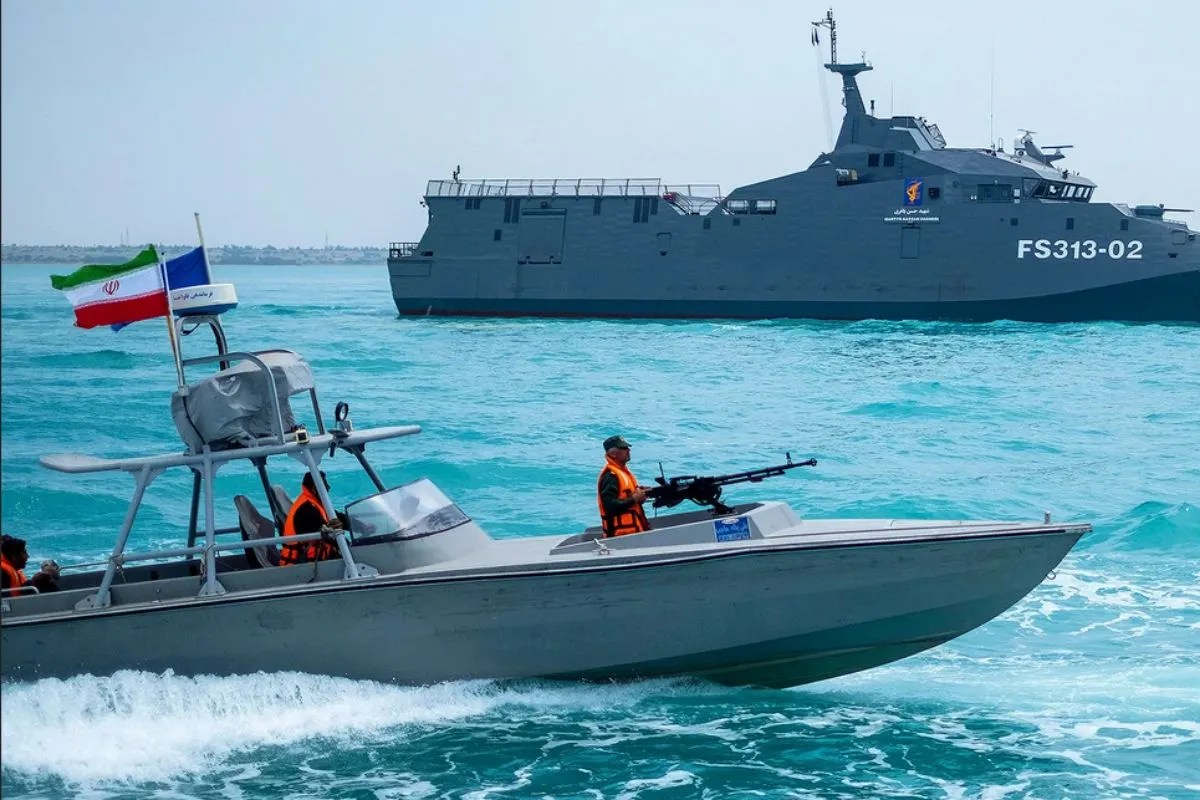
Salt crusts the window of a tanker wheelhouse, blurring the grey horizon where the Persian Gulf narrows into a throat of blue water barely twenty-one miles wide. Down there, twenty miles away, the cliffs of Iran rise like jagged teeth. Up here, a captain watches the radar sweep in relentless green circles, tracking the ghosts of steel that could cut his voyage short with a single radio broadcast.
Every drop of oil moving through this bottleneck carries a quiet tension. The Strait of Hormuz is not merely a shipping lane. It is a choke point for the global economy, a fragile corridor where the daily heartbeat of modern commerce depends entirely on the restraint of strangers.
Recent weeks have brought a familiar tremor to these waters. Whispers of American blockades slide across diplomatic desks in Washington and Tehran. Tension thickens the air. Yet, hundreds of miles away from the swagger of warships and the roar of fighter jets, a quieter conversation unfolds.
Consider what happens next: Iran and Oman sit down at the same table.
We forget that between the firebrand rhetoric of distant capitals and the iron teeth of naval blockades lies a strip of neutral geography guarded by Muscat. Oman has long played the diplomatic whisperer of the Gulf, maintaining a steady, open hand with Tehran while keeping its anchor firmly planted in international alliances. While headlines scream about imminent naval clashes and closed straits, Omani diplomats are quietly pouring oil on troubled waters—not the kind that fuels engines, but the kind that softens rigid stances.
To understand why this matters, step back into the engine room of global trade. Roughly a fifth of the world's petroleum passes through this microscopic gap between the Arabian Peninsula and Iran. When the threat of an American blockade looms, shipping insurance rates spike within hours. Tankers slow down. Crew members look out over the dark water with heavier hearts. The price at gas pumps in Chicago, Tokyo, and Frankfurt ticks upward before a single shot is fired.
This is the invisible cost of friction in Hormuz. It is paid not by generals, but by commuters, bakers, and truck drivers thousands of miles away.
Iran knows this leverage intimately. The coastline of the strait belongs largely to its sovereign territory, giving its Revolutionary Guard forces a permanent vantage point over every passing hull. For decades, Tehran has treated the waterway as a geopolitical valve. Twist it one way, and oil flows freely. Twist it another, and the world holds its breath.
Yet, total closure is a dangerous game, even for Tehran. Iran relies on these very same waters to export its own energy and secure vital imports. A blockade cuts both ways. It starves rivals, but it also chokes the hand that pulls the lever.
This is where the recent diplomatic dialogue between Iran and Oman reveals its true weight. Muscat acts as the pressure-release valve for the entire region. When American naval patrols tighten their grip, enforcing sanctions and monitoring movements with unyielding electronic eyes, the risk of a miscalculated collision multiplies. A stray radar signature, a misunderstood warning shot, a jittery commander—any of these could spark a cascade.
Oman steps into this dangerous silence.
During their recent high-level talks, Omani and Iranian officials did not draft grand peace treaties. They did something much more practical. They established guardrails. They recalibrated the unspoken rules of engagement in a sea crowded with armed grey hulls. They talked about maritime safety, traffic separation, and the urgent necessity of keeping the channel open despite the heavy weather of international sanctions.
Think of it as two neighbors living on either side of a disputed fence, quietly agreeing not to burn the barn down while the storm outside howls.
The meetings between Muscat and Tehran demonstrate a fundamental truth of modern geopolitics: channels of communication often remain open precisely where the danger is highest. While Western news networks fixate on the theater of deterrence, focusing on aircraft carriers and missile batteries, the actual survival of regional stability frequently hinges on the coffee cups shared in quiet Omani conference rooms.
The American blockade strategy relies on economic isolation and maritime interdiction, squeezing Tehran until its options narrow. But isolation breeds unpredictability. By keeping a line to Oman open, Iran maintains a diplomatic escape hatch, a way to signal intentions without losing face.
The tanker in the strait keeps moving. The radar sweep completes another circle. Green light paints the captain's face as he navigates the twenty-one-mile gap between hostility and catastrophe. Down below, the massive diesel engines pulse with a rhythm that keeps the lights on half a world away.
Out on the water, the line between war and peace is drawn in pencil, rubbed thin by the passage of a million tons of steel, yet somehow still holding, day after relentless day.