We measure our titans by the shadows they cast over the earth, but the men who build the rockets often forget that the rest of us still live in the dirt.
Consider the raw mechanics of modern gravity. On any given Tuesday, a single individual sitting in Austin or Los Angeles can type a string of characters into a glowing pane of glass, and three thousand miles away, a factory floor shifts its rhythm. Stock tickers twitch. Government contracts are rewritten. Thousands of human beings look up from their lunch breaks to wonder if their livelihoods will survive the next twelve minutes. That is not just influence. That is weather.
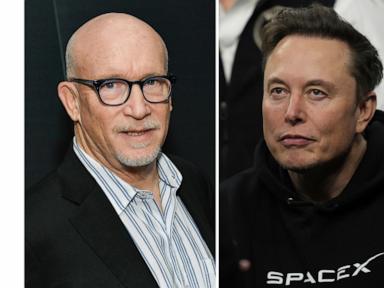
Alex Gibney understands weather. For decades, the documentarian has stood inside the eye of systemic hurricanes, watching how institutional power swallows human ethics whole. He has looked at Enron, at the Catholic Church, at Theranos, at cyber-warfare. He dissects power not by shouting at it, but by turning it over in his hands like a specimen in a quiet laboratory, revealing the jagged teeth hidden inside the velvet glove.
When a filmmaker of that analytical weight turns his lens toward Elon Musk, the resulting collision is less a biography than an excavation.
We have lived through a strange cultural spell these past ten years. We were told to look at the sky. We were told that reusable boosters landing upright on bobbing ocean drones were the only narrative that mattered. We watched the electric sedans slip silently down suburban streets, humming with the quiet arrogance of a future arriving early. We bought the merchandise. We retweeted the jokes. We treated an industrialist like a rock star, confusing the engineering achievements of thousands of anonymous, exhausted line-workers with the personal magnetism of one man holding a microphone.
Then the lights flickered.
To understand why a documentary about Musk matters right now, you have to step away from the television screen and remember what it feels like to be subject to a whim.
Imagine you are standing on a dusty stretch of highway outside of Austin. You used to work for a company that built digital town squares, spaces where people argued about politics, shared photographs of their cats, and occasionally organized revolutions. Then, overnight, the name of the building changes. The blue bird is replaced by a jagged, sterile glyph. Half your friends are handed boxes containing their coffee mugs and desk plants. The new boss walks in carrying a porcelain sink, laughing at a joke only he seems to understand.
That is the pivot point where biography turns into tragedy. Or farce. Usually, it is a messy mixture of both.
Gibney’s examination cuts through the PR gloss because it refuses to separate the rocket from the tweet. In the old days—the industrial age of Carnegies and Rockefellers—tycoons built their empires behind mahogany doors. They hired publicists to smooth out their rough edges, keeping their eccentricities locked safely away in private clubs.
Musk operates in the open air. He broadcasts his id to hundreds of millions of people at three in the morning. He turns public policy into a video game. He treats global satellite internet infrastructure as his personal chess set, capable of steering the geopolitical fate of nations based on whether he feels a particular military alliance is too risky.
This is where the documentary finds its pulsing, uncomfortable core.
We like our geniuses neat. We want the cinematic arc where the misunderstood boy with a computer manual overcomes the bullies and saves humanity from climate catastrophe. We cling to that narrative because the alternative is terrifying. The alternative is recognizing that our collective future—our orbital real estate, our primary channels of public discourse, our transition to sustainable energy—is yoked to the psychological volatility of a single human being.
A man who changes his mind as often as he changes his profile picture.
Watch the archival footage closely. Look at the early days of Tesla, when the batteries wouldn't hold a charge and the production lines in Fremont were little more than desperate, grease-stained experiments. There was genuine heroism in those moments. Engineers sleeping under desks, weeping with relief when a chassis finally rolled off the line without buckling. That is the sweat equity that bought the myth.
But myths have a terrible habit of consuming their makers.
As the valuation climbed into the stratosphere, the human scale vanished. The workers became headcount metrics. The regulatory bodies became obstacles to be taunted on social media. The democratic safeguards that prevent corporate monopolies from rewriting the rules of civic engagement began to look less like guardrails and more like annoyances to be bulldozed.
Gibney’s work is vital not because it uncovers hidden financial crimes—though the ledgers are always messy at that altitude—but because it maps the warping of a culture. When an individual accumulates enough capital to buy the town square, freedom of speech stops being a constitutional right and becomes a landlord's policy. When an individual controls the low Earth orbit constellations that armies rely on to coordinate artillery strikes, sovereign states become tenants in a private enterprise.
We traded our civic infrastructure for shiny toys.
That realization stings. It requires us to look at our own complicity. We bought the cars because we wanted to save the planet, but we also bought them because they were fast, status-signifying gadgets. We stayed on the social network because we wanted connection, even as the algorithms quietly trained us to hate our neighbors for the sake of engagement metrics.
The genius of Musk—and the tragedy of our current moment—is that he understood our deepest, most embarrassing weakness: our desperate hunger to believe in magic.
We wanted so badly to believe that a private corporation could colonize Mars before our own oceans boiled over that we were willing to excuse the collateral damage. We looked away when workers unionized and were fired. We laughed off the broken promises of full self-driving capabilities next year, and the year after that, and the year after that. We accepted that the rules simply do not apply to the person who owns the launchpad.
History is littered with the ruins of civilizations that outsourced their survival to charismatic visionaries. We build our altars to cleverness, forgetting that cleverness without empathy is just a very expensive machine for breaking things.
The documentary ends, as all good investigations must, not with a neat moral or a tidy courtroom verdict, but with a lingering question mark. The rockets are still launching. The satellites are still spinning silently overhead in the dark void of the thermosphere. The notifications still buzz against our palms in the dark hours before dawn.
The screen goes black, but the room remains lit by the faint, blue glow of our devices.
We are still standing in the dust, looking up at the sky, waiting to see what happens next.