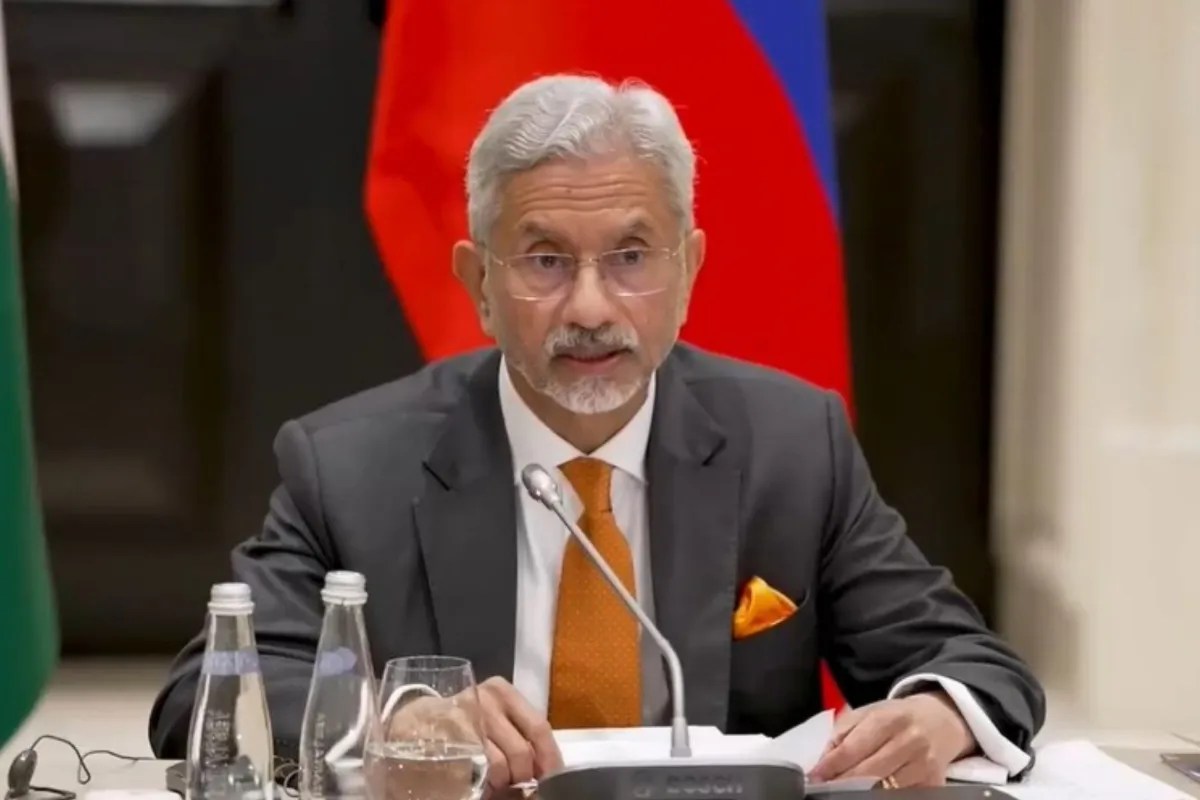
External Affairs Minister S. Jaishankar touched down in Kyiv with a calculated message that New Delhi stands ready to assist in any manner necessary to bring the grinding Russia-Ukraine war to a close. This diplomatic maneuver arrives on the heels of Prime Minister Narendra Modi urging Vladimir Putin to shift from an endless war toward actual resolution. Yet, beneath the veneer of noble peacemaking lies a complex web of strategic anxiety, energy dependency, and hard-nosed pragmatism. India is not stepping into the diplomatic arena out of pure altruism. New Delhi is guarding its economic lifeblood while attempting to manage a geopolitical tightrope that grows thinner by the month.
To understand why India is suddenly offering its services as a potential interlocutor or facilitator, one must examine the immediate pressures bearing down on South Block. The conflict has entered its fifth year, transforming from a localized European crisis into a global economic drain. For India, the stakes are concrete. Escalating attacks in the Black Sea have directly imperiled international shipping lanes, leading to the tragic deaths of Indian seafarers. Supply chains for fertilizers, fuel, and essential food items remain under chronic stress, disproportionately bleeding nations across the Global South. When commercial vessels carrying international crews become collateral damage in a distant European theater, national security concerns compel New Delhi to move from passive observation to active diplomatic posturing.
Critics in Western capitals frequently point an accusing finger at India's sustained appetite for discounted Russian crude oil. They argue that billions of dollars flowing from New Delhi to Moscow indirectly bankroll the Kremlin's military machine. Jaishankar met this criticism head-on during his discussions in Kyiv, flatly stating that the continuation of the conflict will not dissolve simply because a nation alters its energy procurement habits. Securing affordable energy supplies for a population of 1.4 billion people is an existential mandate, not a political whim. By drawing a sharp boundary between commercial survival and geopolitical complicity, India attempts to insulate its domestic economy from external moral coercion.
The structural reality of modern multi-alignment requires a state to speak to opposing camps without losing credibility in either. New Delhi maintains robust historical and defense ties with Moscow, yet it increasingly collaborates with Western security architectures like the Quad to balance against Chinese expansionism. Simultaneously, engaging directly with Kyiv allows India to counter narratives that its foreign policy is wholly subservient to Russian interests. Visiting the Ukrainian capital on a stand-alone bilateral mission sends a visual and political signal. It demonstrates that India’s strategic autonomy is active and multidirectional.
Can New Delhi realistically serve as an effective mediator? Traditional mediation usually requires a neutral party with minimal skin in the game. India possesses immense skin in the game, primarily through its heavy reliance on Russian energy and military spare parts, alongside its expanding economic footprint with Western democracies. However, this unique positioning might actually grant New Delhi a distinct utility. Unlike Western powers, who are viewed by the Kremlin as active participants backing Kyiv, or China, whose partnership with Moscow has no stated limits, India retains a measure of operational trust from both sides. When Prime Minister Modi tells Russian leadership that the era of war must end, and subsequently dispatches his top diplomat to listen closely to Ukrainian grievances, it creates a rare channel of communication that few other capitals can replicate.
The limitations of this approach remain glaringly obvious. Neither Moscow nor Kyiv has shown a genuine willingness to compromise on core territorial and security demands that would satisfy the opposing side. Peace talks cannot succeed purely on the basis of well-meaning declarations or generalized calls for dialogue and diplomacy. Until the combatants exhaust their military options or face catastrophic internal collapse, diplomatic interventions from external players will largely serve as signaling exercises rather than breakthrough negotiations. India knows this reality intimately. The offer to help is designed as much to project global power status and protect trade corridors as it is to chase an elusive permanent settlement.
Ultimately, India's diplomatic gamble reflects the messy architecture of a multipolar world order. Middle powers no longer wait for Western capitals to script the rules of international crisis management. They act where their national interests intersect with global instability, absorbing the contradictions of buying oil with one hand while offering peace with the other. As the cost of the conflict continues to ripple outward across international markets and shipping lanes, New Delhi intends to remain at the table, ensuring its voice dictates the terms of whatever future architecture eventually replaces the wreckage of the battlefield.
The conflict will be solved by dialogue, diplomacy, & negotiation
This video captures External Affairs Minister S. Jaishankar detailing India's stance on resolving the ongoing war through international diplomacy during his visit to Ukraine.