Geopolitical analysts love a good ghost story, and their absolute favorite is Iran shutting down the Strait of Hormuz. Whenever Tehran signs a maritime pact or shakes hands with Oman, mainstream media sounds the alarm. They paint a picture of a global energy apocalypse where 20 million barrels of oil a day vanish at the flip of an Iranian switch.
It is a comforting narrative for defense contractors and sensationalist editors. It is also entirely wrong.
The lazy consensus ignores a glaring economic reality. Iran cannot choke the Strait of Hormuz because doing so would mean committing financial suicide. The mainstream press looks at tactical maneuvers and confuses them with strategic dominance. Let's look past the breathless headlines and examine why the alleged Iranian chokehold is nothing more than a paper tiger.
The Flawed Premise of the Oman Strategy
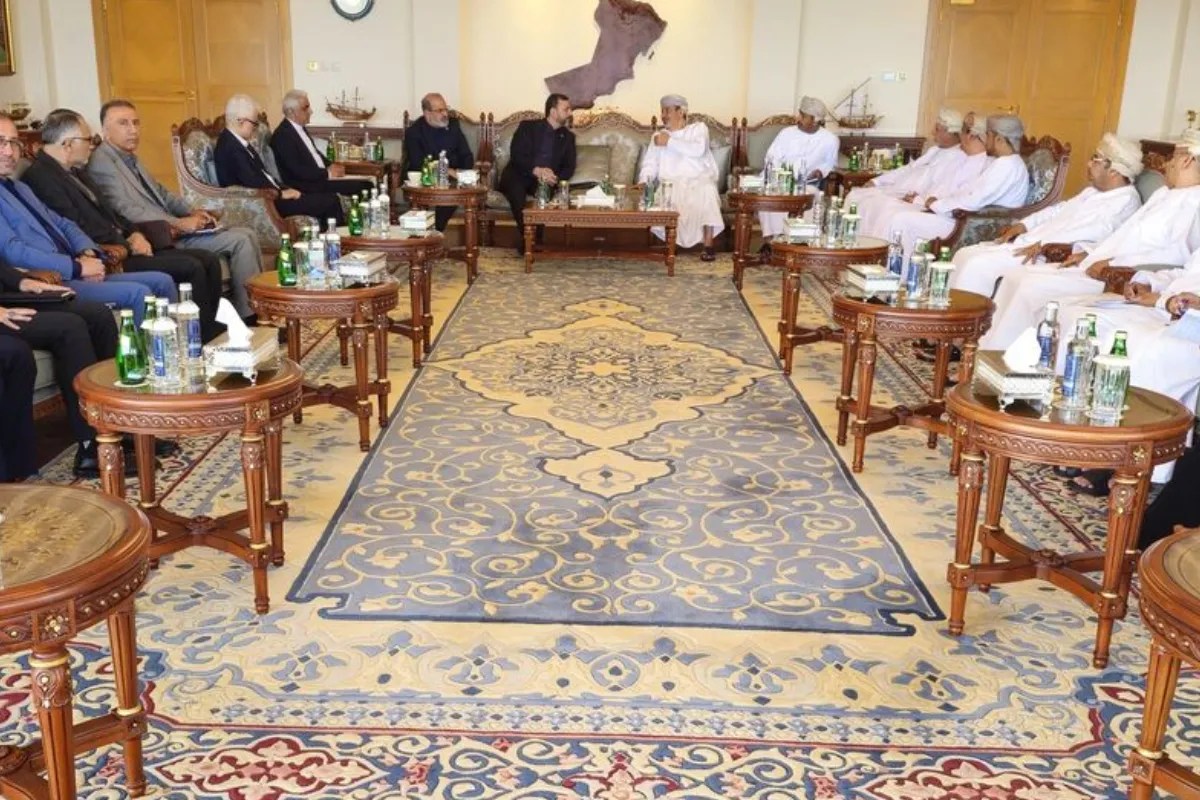
The recent flurry of commentary suggests Iran is using Oman to build a joint vice grip over the Persian Gulf. This view completely misunderstands Muscats foreign policy. Oman has spent decades positioning itself as the Switzerland of the Middle East. They are mediators, not co-conspirators.
Oman cooperates with Iran to maintain regional stability, not to help Tehran dictate terms to the global energy market. To believe Oman would actively assist in blocking a waterway that handles a fifth of the worlds petroleum liquid consumption requires ignoring every historical precedent of Omani diplomacy.
Furthermore, the mechanics of a blockade are not as simple as placing a few fast-attack craft in the shipping lanes. The Strait of Hormuz is not a narrow canal; it is a massive body of water with deep-water traffic lanes that span miles. Blocking it requires sustained, heavy conventional naval dominance. Iran possesses asymmetric capabilities—mines, anti-ship missiles, speedboats—but these are tools for disruption, not control. Disruption invites retaliation, and retaliation kills revenue.
Why Iran Needs the Strait Open More Than You Do
The biggest blind spot in standard geopolitical analysis is the assumption that Iran sits safely on the sidelines while the rest of the world suffers from an energy crisis.
Consider the actual flow of capital. Iran relies heavily on energy exports to keep its struggling economy afloat. Where does that oil go? It passes through the exact same waters. If Iran closes the strait, they do not just cut off Saudi Arabia, Kuwait, and the UAE; they choke off their own economic lifeline.
Imagine a scenario where a shopkeeper burns down the only road leading into the local market just to spite his competitors. Sure, the competitors lose business today, but the shopkeeper starves tomorrow. Iran is already operating under severe international sanctions. They rely on dark fleet tankers and complex maritime transfers to move their crude to Asian markets. A total shutdown of the strait stops their own cash flow instantly. Tehran is pragmatic. They rattle the saber to gain leverage in negotiations, not to destroy their own bank accounts.
The Failure of Asymmetric Deterrence
We often hear about Iran's massive arsenal of anti-ship ballistic missiles and swarming drone fleets. The conventional wisdom says these cheap assets can easily overwhelm billions of dollars worth of Western naval hardware.
I have spent years analyzing maritime security data and watching how insurance markets react to Gulf tensions. What the fearmongers leave out is the sheer scale of the international response that a true blockade would trigger. The moment a single commercial tanker is sunk by an intentional state act in Hormuz, the legal framework shifts.
- The US Fifth Fleet is permanently stationed in Bahrain for this exact reason.
- Combined Maritime Forces (CMF), a multi-nation coalition, patrols these waters constantly.
- Global Insurance Syndicates would immediately re-route shipping, but more importantly, international law would permit direct, devastating strikes on Iranian coastal infrastructure.
If Iran triggers a hard blockade, they lose their ports, their refineries, and their naval assets within forty-eight hours. The asymmetric advantage evaporates the moment a conflict shifts from gray-zone harassment to total conventional war. Iran knows this. Their strategy is calibrated irritation, not total obstruction.
The Redirection Pipeline Reality
Another truth nobody admits is that the Gulf states are no longer entirely trapped inside the Persian Gulf. The narrative that the world loses 100% of Gulf oil if Hormuz closes is outdated.
Saudi Arabia operates the East-West Pipeline, which can pump millions of barrels per day directly to the Red Sea, bypassing the Strait of Hormuz completely. The United Arab Emirates operates the Abu Dhabi Crude Oil Pipeline, terminating at Fujairah on the Indian Ocean. While these pipelines cannot handle the entire volume of Gulf exports yet, they provide a massive safety valve that blunts the impact of any localized disruption.
The infrastructure is shifting. The dependency is shrinking. The threat is losing its teeth.
The Real Risk is Not Blockade, It Is Friction
The danger in the region is not a grand strategic shutdown. It is the cost of doing business rising due to persistent, low-level friction.
When Iran seizes a tanker under the guise of a legal dispute, or when a drone hits a hull in the middle of the night, the immediate result is not a halt in supply. It is an increase in war risk insurance premiums for maritime shipping. Freight rates spike. Shipping companies pass those costs down to the consumer.
By focusing on the imaginary nightmare scenario of a total blockade, analysts miss the actual economic tax being levied on global trade. It is death by a thousand cuts, not a single executioner's blow.
Stop reading the sensationalist predictions of a global energy shutdown. The Strait of Hormuz remains open not because Iran lacks the weapons to close it, but because they lack the financial suicide wish required to pull the trigger. The strategy is noise. The reality is dependence.