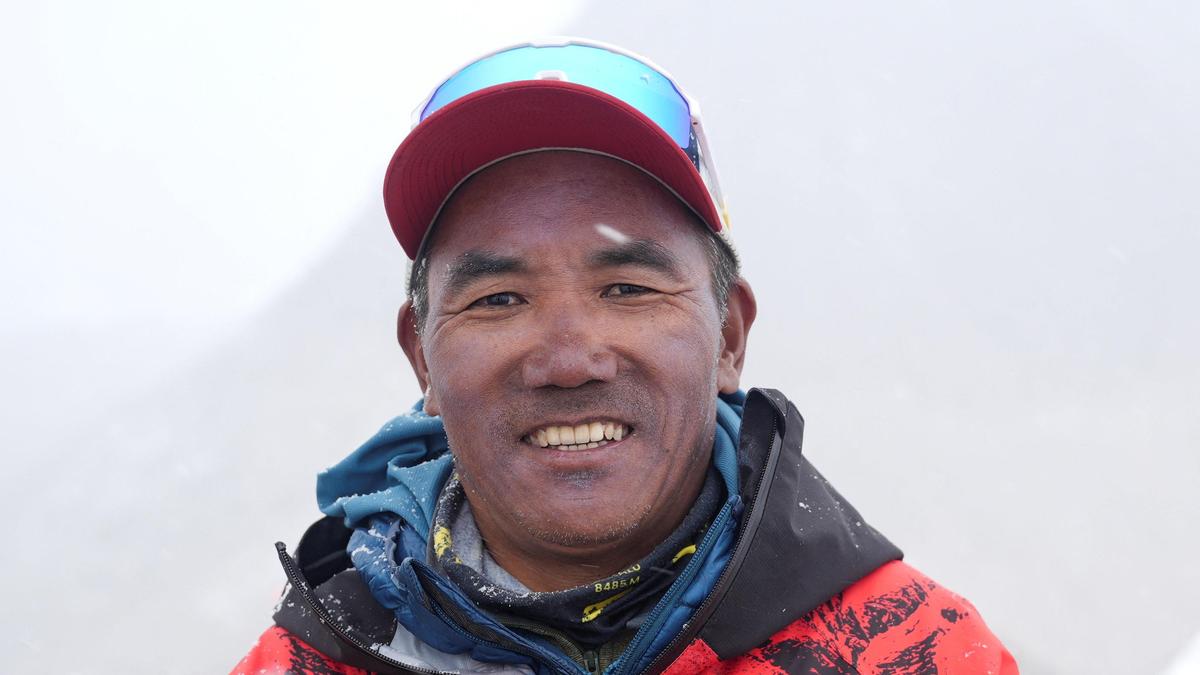
Nepali mountaineer Kami Rita Sherpa broke his own world record on Sunday by summiting Mount Everest for the 32nd time. The 56-year-old veteran guide reached the 8,849-metre peak at 10:12 a.m. local time while leading a commercial clients group for 14 Peaks Expedition. On the exact same morning, 52-year-old Lhakpa Sherpa extended her own record for the most female ascents, standing on the apex for the 11th time. To the global public, these staggering numbers represent the pinnacle of human athletic endurance. To those within the industry, the reality is far more complex.
The Western media routinely frames Kami Rita’s regular record-breaking climbs as an obsessive quest for personal glory. This perspective completely misreads the structural realities of the Himalayan mountaineering industry. For elite indigenous guides, climbing the highest mountain on earth over and over is not a vanity project. It is hard, high-hazard labor.
The Economics of Hyper-Ascent
Kami Rita Sherpa first stood on top of the world in 1994. In the three decades since, he has returned almost every single spring, occasionally making multiple ascents in a single season. He has repeatedly stated to reporters that he never set out to chase records, and that he was simply working to provide for his family.
The distinction between sport and employment matters.
Western guiding outfits charge wealthy clients anywhere from $45,000 to over $160,000 for a single slot on an Everest expedition. The business relies entirely on the backs of elite local mountaineers who establish the route, haul hundreds of pounds of gear, carry supplementary oxygen, and literally pull struggling clients up the Southeast Ridge. An experienced Sirdar—the chief Sherpa organizer—can earn significantly more than an entry-level worker, but they must keep climbing to maintain that premium status.
The record itself is an accidental byproduct of a booming commercial market. The more clients who pay to climb, the more times elite guides must make the journey into the death zone.
The True Cost of Climbing
- Permit Influx: For the spring season, the government of Nepal issued an unprecedented 492 climbing permits to foreign nationals.
- The Support Ratio: Because each foreign climber requires at least one indigenous guide, nearly one thousand people are currently pushing toward the summit during identical, narrow weather windows.
- Elevated Tolls: The Ministry of Tourism recently bumped the base foreign permit fee from $11,000 to $15,000 per person, generating millions for state coffers while doing little to curb the physical crowd on the mountain.
Crowding the Death Zone
The structural setup of modern high-altitude tourism forces hundreds of climbers into bottleneck areas simultaneously. The most notorious of these is the Hillary Step, a near-vertical rock face located at 8,790 metres. When a bottleneck occurs here, climbers are trapped in the sub-zero wind for hours, burning through their limited oxygen supply while waiting for the line to move.
[Camp IV: 7,900m] --> [The Balcony: 8,400m] --> [Hillary Step: 8,790m] --> [Summit: 8,849m]
                                                     |
                                            CRITICAL BOTTLENECK
This congestion turns minor weather shifts into fatal catastrophes. Elite guides are forced to manage not only their own physical depletion but also the panic and physical collapse of inexperienced foreign clients who paid for a trophy ascent.
Nepal attempted to address these mounting safety criticisms via the Sixth Amendment of mountaineering regulations. The new framework explicitly bans solo expeditions on all 8,000-metre peaks, forcing everyone into structured, guided teams. While the state presents this as a measure to save lives, it simultaneously ensures that the entire industry remains dependent on a shrinking pool of elite local guides who can survive thirty-plus trips into extreme altitudes.
The Looming Generational Shift
There is a dark irony undercutting Kami Rita's 32nd summit. As the records grow more extreme, the domestic labor pool is shrinking.
The children of veteran Himalayan guides are not choosing the mountain. Thanks to the grueling work of their parents, the younger generation in the Solukhumbu district has access to formal education in Kathmandu, Europe, and the United States. They are choosing careers in tech, business, and hospitality, completely avoiding the high-altitude trauma that defined their fathers' lives.
This has left guiding agencies facing an impending labor crunch.
The physical toll of these climbs cannot be overstated. Decades of breathing compressed, dry air through silicone masks destroys lung tissue. Repeated exposure to extreme high altitude causes permanent micro-vascular damage and accelerated joint deterioration. When an aging legend like Kami Rita steps away from the peaks, there will not be an identical tier of hyper-experienced workers waiting to replace him.
The industrialization of the peak has reached its logical limit. You cannot run a high-volume tourism business on the backs of a few dozen genetic anomalies who are willing to risk their lives thirty times over just to stay employed.
The global community will celebrate the 32nd ascent as a triumph of the human spirit. The real story is the relentless economic engine that required him to go back up.