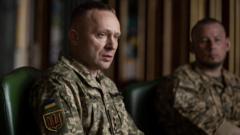
When an armored BMP-2 smashed through a burning barricade in Mariupol back in May 2014, the guy behind the wheel wasn't looking to become a viral hero. He was just trying to get his surrounded men out alive. That officer was Major General Mykhailo Drapatyi. Now, twelve years after driving that infantry fighting vehicle into Ukrainian history, Drapatyi finds himself holding the single most demanding military office on Earth.
Volodymyr Zelenskyy's decision to appoint the 43-year-old as commander-in-chief of Ukraine’s armed forces isn't just another game of musical chairs in Kyiv. It marks a complete break from the old guard. Out goes Oleksandr Syrskyi, a 60-year-old general forged in Soviet military doctrine. In comes a battle-tested commander who spent his entire career fighting Russian forces in real time.
The move followed days of street protests triggered by the sudden firing of former Defense Minister Mykhailo Fedorov. Public anger boiled over, and citizens chanted Drapatyi's name outside government buildings. People wanted an army that values human lives, embraces tech, and dumps the top-down micromanagement that plagued the high command for years. Drapatyi fits that exact bill.
The Flying BMP Officer Who Won Over Ukraine
Drapatyi's backstory isn't built on boardroom politics or staff officer prestige. He graduated from the Kharkiv Institute of Tank Troops in 2004 and jumped straight into line command. His reputation was sealed during the earliest days of the Donbas conflict.
When Russian-backed separatists cornered Ukrainian troops in Mariupol in 2014, Drapatyi led a column of four armored vehicles directly into the town center. A camera captured his vehicle launching off a heap of debris and breaking through a roadblock. That video gave him the nickname "The Flying BMP". More importantly, he got his guys out.
Later that same summer, his unit ended up surrounded near the Russian border at Zelenopillia. Instead of waiting for orders from distant headquarters, Drapatyi orchestrated a tactical breakout, saving hundreds of lives. That willingness to take initiative—and own the outcome—became his personal trademark.
Drapatyi's Command Milestones:
2014: 72nd Mechanized Brigade Battalion Commander (Mariupol breakout)
2016: 58th Motorized Infantry Brigade Commander
2023: Odesa Operational-Strategic Group Commander
2024: Kharkiv Sector Stabilizer & Ground Forces Commander
2025: Joint Forces Commander
2026: Commander-in-Chief of the Armed Forces of Ukraine
A Brutal Rejection of Soviet Command Tactics
To understand why this appointment matters so much, you have to look at what came before it. Syrskyi was a capable defensive strategist who saved Kyiv in 2022 and launched the successful Kharkiv counteroffensive. But soldiers on the frontline often complained about his rigid, Soviet-style tactics. Critics accused the command structure of relying on costly frontal assaults and treating troops like numbers on an operational grid.
Drapatyi represents the exact opposite philosophy. He belongs to a younger generation of officers who believe army leadership should actually listen to field commanders.
When Russia opened a new front near Kharkiv in 2024, the defense was collapsing fast. Zelenskyy dispatched Drapatyi to stabilize the sector. He plugged the gaps, integrated cheap FPV drones into brigade-level operations, and halted the Russian push.
Syrskyi vs. Drapatyi: The Operational Shift

Syrskyi's Approach:
- Soviet-era command hierarchy
- Centralized decision-making
- Strict adherence to top-down orders
- Strategic focus on traditional attrition

Drapatyi's Approach:
- Modernized NATO-style initiative
- Decoupled, field-level command authority
- Heavy focus on drone warfare and tech integration
- Public accountability for command mistakes
His willingness to admit fault sets him apart from almost every other senior general in Eastern Europe. In June 2025, while serving as commander of the Ground Forces, a Russian missile hit a training site in the Dnipropetrovsk region, killing 12 soldiers. Instead of shifting the blame onto low-ranking subordinates or hushing up the media, Drapatyi publicly took full responsibility and resigned. That single act earned him immense respect among the rank-and-file.
What Drapatyi Must Fix Immediately
The new chief of the armed forces isn't getting a honeymoon period. Moscow signaled its frustration with his promotion right away. Within hours of Zelenskyy's announcement, Russia’s Interior Ministry issued an emergency arrest warrant against Drapatyi.
He takes over an army facing severe challenges across a thousand-kilometer front. His initial directive from Zelenskyy is clear: ramp up deep strikes behind Russian lines, modernize training, and fix a broken recruitment system.
Here are the critical areas Drapatyi has to overhaul right now:
- Eradicate command-level lying: Frontline officers need to report real conditions without fear of punishment for bad news.
- Push authority downward: Battalion commanders must be trusted to make split-second decisions without waiting for approval from Kyiv.
- Deep tech integration: Expand the use of electronic warfare (EW) and autonomous drone systems at the squad level.
- Fix troop rotations: Build an honest mobilization system that gives exhausted frontline units predictable rest cycles.
Drapatyi didn't make grand speeches when taking the job. He posted a simple message on social media noting that he would work focused, without empty promises, and with total respect for the people holding the line. That pragmatic stance is exactly why soldiers trust him—and why his leadership might finally break the static grind on the frontlines.


