The Pivot to Capital-Intensive Mirage
Agriculture tech loves a silver bullet. The latest narrative gripping Central Valley boardrooms is seductive: buy a fleet of AI-powered, autonomous laser-firing robots, eliminate your hand-weeding crews, slash your herbicide budget by 70%, and pocket $250 an acre in pure savings.
It sounds like a tech-enabled utopia. It is actually a financial trap.
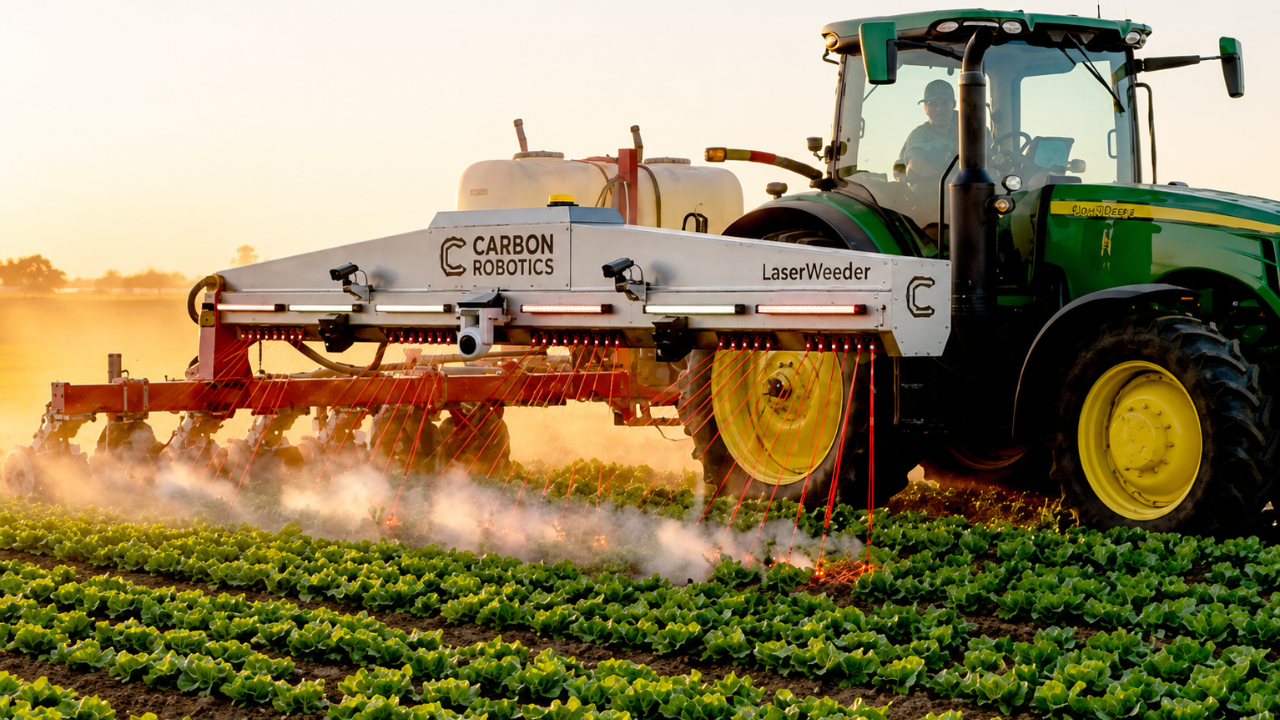
The glossy trade publications and venture-backed press releases championing these multi-ton, AI-driven weeding platforms are selling a flawed premise. They calculate return on investment (ROI) in a vacuum, completely ignoring the compounding costs of specialized mechanical downtime, soil compaction, and the ruthless realities of agricultural depreciation.
I have watched growers shell out $1.5 million for autonomous weeding implement fleets, expecting a plug-and-play savior, only to find themselves hostage to software subscription renewals, hardware technicians flown in from Seattle at $300 an hour, and fields that require identical herbicide passes anyway because of a sudden late-season downpour.
The math used to justify these machines is lazy consensus at its finest. Let us strip away the marketing gloss and look at the actual physics and economics of putting high-powered lasers on a tractor chassis.
The Phantom Math of the 70% Pesticide Reduction
The headline number always highlights a massive drop in chemical use. The logic seems simple: the AI vision system identifies a weed, a carbon dioxide or fiber laser incinerates it, and the chemical sprayer stays off.
Here is what the spreadsheet salespeople do not tell you: weed density dictates speed.
Laser weeding operates on a linear constraint. If a field suffers from a high weed bank, the machine must slow down to a crawl—often under 0.5 miles per hour—to give the computer vision model time to detect, target, and fire enough thermal energy to kill the plant tissue.
When a machine moves that slowly, your operational window closes. In high-value specialty crops like broccoli or leafy greens, missing a weeding window by 48 hours because your high-tech rig is crawling across acre four of forty means the remaining thirty-six acres will grow out of control.
What does the grower do when they realize the laser cannot keep up? They roll out the chemical spray rigs.
The Hidden Realities of "Precision" Destructive Energy
- The Canopy Cover Problem: Lasers require a direct line of sight. Once a crop canopy begins to close, or weeds grow beneath the leaves of the primary cash crop, the AI vision system becomes blind to the target.
- The Root System Failure: A laser is a top-down thermal tool. It sears the meristematic tissue of young seedlings. For deep-rooted perennial weeds or species with robust underground structures like field bindweed or nutsedge, the laser merely gives the weed a haircut. The root system remains intact, ready to push new shoots within days.
- The Energy Cost Equation: Generating enough continuous wattage to run multiple high-frequency lasers requires a massive diesel generator strapped to the back of the implement. You are trading a few gallons of generic glyphosate or a team of human laborers for a relentless consumption of diesel fuel to keep the cooling chillers and laser modules from overheating in the 105°F Bakersfield sun.
The True Cost of Machine Ownership
The "savings of $250 per acre" metric is a static calculation. It assumes the robot operates perfectly for its entire theoretical lifespan, never gets stuck in a muddy furrow, and requires no specialized labor to maintain.
Let us run a realistic capital expenditure breakdown comparing the marketing promise against the actual operational ledger over a five-year horizon.
| Expense Category | The Marketing Narrative | The Field Reality |
|---|---|---|
| Upfront Capital | Amortized smoothly over 10 years | Depreciates to near-zero in 4 years due to rapid tech obsolescence |
| Labor Costs | Zero hand-weeding crews needed | Reduced crew size, plus a $45/hour tech operator to monitor the rig |
| Maintenance | Standard mechanical wear-and-tear | Custom optics replacements, calibration tools, software licensing fees |
| Throughput | Consistent 2-3 acres per hour | Highly variable (drops significantly in heavy weed pressure) |
When an inputs sprayer breaks down, any farm mechanic with a wrench and a replacement pump from the local dealership can have it running in sixty minutes. When an AI laser weeder suffers a camera calibration failure or a fiber-optic cable fracture, your entire operation grinds to a halt.
You are no longer managing an agronomic system; you are managing a fragile, high-intensity computing cluster exposed to dust, vibration, extreme heat, and moisture.
Dismantling the "People Also Ask" Assumptions
To truly understand how deep this misconception goes, we have to look at the fundamental questions growers ask when researching these platforms. The premises themselves are bent.
Can laser weeders eliminate manual labor on the farm?
No. This is the biggest lie told to investors. A laser weeder can reduce the size of your hoeing crews during early-stage thinning and weeding, but it does not eliminate them.
Because lasers fail against mature weeds and cannot operate effectively within the tight space between two cash-crop plants without risking thermal damage to the crop itself, human crews are still required to clean up the misses. You have not eliminated labor; you have shifted your labor dependency from scalable field hands to highly scarce, expensive automation technicians who understand ROS (Robot Operating System) and optical alignment.
Is AI weed control better for soil health than traditional methods?
Only superficially. The argument is that by eliminating mechanical tillage (cultivation shoes that rip up the soil), you preserve soil structure and prevent the disruption of microbial networks.
This ignores the physics of weight. These autonomous or tractor-pulled laser platforms are heavy. To carry the generators, chillers, lasers, and shielding enclosures, these rigs often weigh significantly more than a standard cultivation setup. Running these heavy wheel loads down the exact same furrows multiple times per season creates severe subsoil compaction zones.
Compaction restricts root growth, reduces water infiltration, and creates anaerobic conditions that harm soil microbiology far more than a shallow, high-speed cultivation pass that breathes air into the top two inches of the dirt.
The Strategic Alternative: Low-Tech Agility Over High-Tech Fragility
Am I advocating for returning to massive chemical applications that blanket the valley? No. The regulatory environment in California makes that a losing strategy long-term.
The real path to profitability and weed suppression does not rely on buying a million-dollar rolling laser show. It relies on a combination of high-speed, low-mass mechanical intelligence and cultural management.
Camera-Guided Mechanical Cultivation
Instead of trying to burn a weed with a laser, look at high-speed camera-guided standard cultivation systems. Companies like carbon-blade cultivators or precision guidance hitches use computer vision not to fire a laser, but to shift a mechanical side-knife by a fraction of an inch.
- Massive Speed Advantage: These rigs can run at 6 to 10 miles per hour, covering hundreds of acres a day while your laser system is still crawling through its first field.
- Simple Maintenance: If a knife breaks, you weld it or bolt on a thirty-dollar replacement part. The tractor operator can do it in the field.
- Root Destruction: Ripping the weed out by the root mechanical blade ensures it dries out and dies in the sun, rather than leaving the root system alive to fight another day.
Cultural Suppression and Rotation
True weed control is systemic, not reactionary. The growers who are actually saving $250 an acre are doing it through aggressive cover cropping, ultra-precise drip irrigation placement that keeps the middle of the bed dry, and tight crop rotations that never give a single weed species time to build up a seed bank. If you do not give the weed water, it does not matter how smart your neighbor's laser robot is—your field is already clean.
Stop Funding the AgTech Venture Bubble
Every time a grower buys a piece of over-engineered, hyper-complex equipment to solve a problem that could be handled by smarter agronomy, they are transferring their margin from the farm to a technology startup's balance sheet.
The laser weeder looks phenomenal in a promotional video filmed under perfect conditions in a clean field of uniform romaine lettuce. But farming is never perfect. The wind blows, the soil turns to clay, dust coats the optical lenses, and the software misidentifies a cash crop as a common pigweed.
Do not tie up your capital in depreciating hardware that requires a software update to function. Invest in speed, simplicity, and soil physics. Let the tech evangelists burn through their venture capital trying to debug their machines in the dust while you drive a lean, reliable, fast operation that focuses on per-acre margin rather than tech-bro prestige.