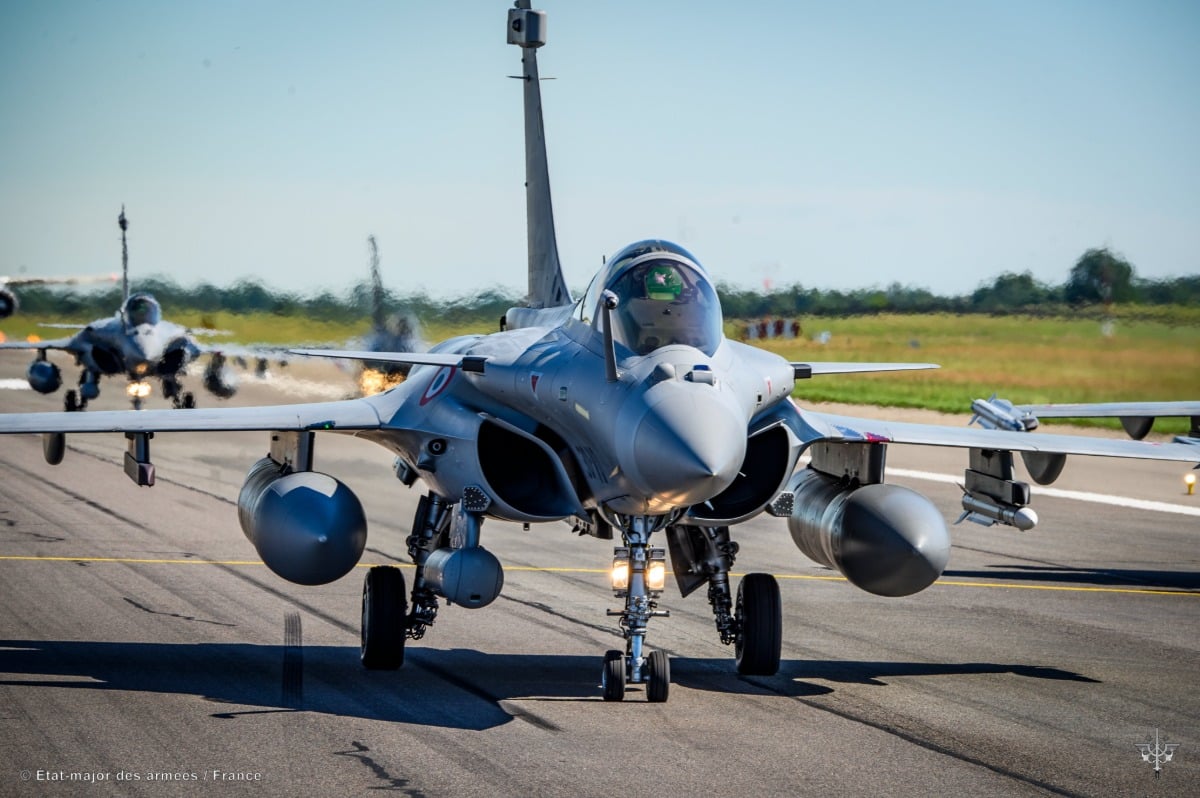
The PR Stunt Passing for Strategic Deterrence
Mainstream military reporting loves a grand spectacle. The recent coverage of France’s long-range air deployment across three continents reads like a press release written by a defense ministry marketing department. The narrative is always identical. A squadron of Rafale fighters, backed by A330 MRTT tankers and A400M transports, flies halfway around the world in record time to prove global reach. The headlines scream about agility, readiness, and the ability to strike anywhere.
It is a fantasy.
These multi-continent air missions are not demonstrations of terrifying combat readiness. They are fragile, deeply manicured diplomatic public relations stunts. They depend on months of pre-planned civilian airspace clearances, pristine maintenance schedules that never survive actual combat conditions, and a reliance on fixed, highly vulnerable allied airbases.
I have spent years analyzing defense logistics and procurement cycles. I have watched air forces burn through a significant portion of their annual flight-hour budgets on a single high-profile deployment just to secure a nice photo opportunity in the Indo-Pacific. When you strip away the glossy photography and the breathless reporting, you find a stark reality. These long-range projection exercises prove the exact opposite of what they intend. They expose how dangerously thin modern Western air forces are stretched.
The Flawed Premise of Global Reach
The "People Also Ask" sections on defense forums always focus on the wrong question. People ask, "Can France deploy fighters to Asia in less than 48 hours?"
Yes, they can. But the question is irrelevant. The real question is, "Can they sustain a high-intensity air campaign there for more than 48 hours without collapsing their domestic defense posture?"
The answer is a definitive no.
The math of modern aerial warfare is unforgiving. A multi-continent deployment requires an immense logistical tail. For every Rafale sent across the globe, you need dozens of technicians, tons of specialized diagnostic equipment, spare engines, and a constant stream of aviation fuel. In a real conflict, a peer adversary will not allow transport aircraft to fly unmolested through commercial air corridors. They will not respect the neat, peacetime flight paths negotiated months in advance with neutral nations.
Consider the reality of a contested environment. If an air force sends a dozen front-line fighters thousands of miles away, those assets are functionally removed from the European theater. For a country like France, which maintains a total fleet of fewer than 200 combat-ready fighter jets, deploying a significant package abroad represents a massive strategic gamble. It leaves the home front exposed and drains the domestic supply chain of critical spare parts. It trades actual, localized deterrence for a symbolic presence abroad.
The Refueling Orbit Nightmare
Let us break down the mechanics of the refueling pipeline. The defense media treats the A330 MRTT as a magic wand that grants infinite range. They point to these long-range missions as proof that distance no longer matters.
This is a dangerous misunderstanding of aerial refueling operations.
In peacetime exercises, tankers operate in uncontested skies. They fly predictable tracks, meeting fighters at pre-arranged coordinates. It looks efficient because no one is shooting at them.
Imagine a scenario where a long-range strike package faces an adversary equipped with long-range air-to-air missiles or advanced electronic warfare capabilities. Tankers are massive, unstealthy, slow-moving targets. They possess the radar cross-section of a flying apartment building. A peer competitor will not target the stealthy or agile fighters first. They will hunt the tankers.
Without the tankers, the fighters are dead in the air. A Rafale or any other modern jet burning through fuel at supersonic speeds in a dogfight will exhaust its internal tanks in minutes. If the refueling orbit is pushed back by enemy air defense threats, the entire long-range mission fails instantly. By relying so heavily on a small handful of strategic tankers to project power across three continents, air forces create a single, catastrophic point of failure. If you lose two or three MRTTs, your global air mission transforms into a series of expensive gliders looking for emergency diversion fields in neutral territory.
The Mirage of Allied Interoperability
Another pillar of the lazy consensus surrounding these missions is the idea of allied integration. The official line claims these deployments show how easily Western air forces can plug into regional networks in Asia or the Americas. They talk about operating out of foreign bases as if it is as simple as parking a rental car.
The reality on the ground is a mess of incompatible data links, proprietary software, and national caveats.
When a French squadron lands at an allied base in the Pacific, they cannot just use the local supply pool. A Rafale does not share parts with an F-35 or an F-18. Every single specialized tool, every specific diagnostic computer, and every unique bolt must be flown in on an A400M. If a critical component breaks and the transport plane carrying the spare is delayed by maintenance issues in a third country, that multi-million-dollar fighter jet becomes an expensive static display.
True interoperability is a myth invented to justify joint procurement programs. In a high-intensity war, host nations will prioritize their own fleets. The foreign deployment package will be pushed to the back of the line for fuel, hangar space, and runway priority. I have seen exercises where foreign detachments sat grounded for days simply because their secure communication gear could not interface properly with the local base network without triggering security alerts.
The True Cost of Symbolism
What is the actual downside of this obsession with global projection? It ruins the fleet.
Modern combat aircraft are incredibly complex machines that require hours of maintenance for every single hour of flight time. Forcing these jets to fly grueling, multi-day transit routes across continents inflicts massive wear and tear on the airframes. The engines burn through their lifecycle metrics at an accelerated rate. The delicate electronics are subjected to prolonged vibrations and environmental shifts.
When the squadron finally returns home, they do not immediately go back into rotation. They enter deep maintenance cycles. The personnel are exhausted. The maintenance backlogs grow. By chasing the prestige of a global air mission, defense leaders are actively degrading the long-term readiness of their fleets. They are burning out their best assets to win a news cycle.
If the goal is to deter major global powers, this approach is counter-productive. Competitors do not look at a temporary deployment of twelve fighters and tremble. They look at the industrial capacity behind those fighters. They see an industry struggling to produce replacement airframes, a supply chain plagued by long lead times for basic components, and an air force that cannot afford to lose a single aircraft without facing a structural crisis.
Stop Flying Across Oceans Start Fixing the Supply Chain
The obsession with showing the flag on three continents must stop. It is a legacy mindset from an era of uncontested colonial policing actions, completely unsuited for an age of peer-to-peer conflict.
Instead of wasting resources on marathon flight paths to prove a point everyone already knows is a logistical illusion, defense ministries need to pivot to a brutal, unglamorous strategy.
- Mass Over Reach: Stop optimizing for the ability to fly 8,000 miles. Optimize for the ability to generate hundreds of sorties a day from distributed, austere runways right at home or on the immediate periphery of the primary theater.
- Stockpile Spares, Not PR Photos: The millions spent on aviation fuel and hotel rooms for international deployments should be redirected into buying deep inventories of spare engines, radar modules, and munitions. A fighter jet without a replacement part is a paperweight.
- Acknowledge the Tanker Vulnerability: Accept that in a real conflict, your tankers will be forced to operate hundreds of miles away from the front lines. Train fighters to operate within the constraints of their internal fuel capacity, rather than assuming a giant flying gas station will always be waiting for them in the clouds.
The illusion of global power projection is a luxury of a peaceful world. In a real war, the oceans are vast, the bases are targeted, and the logistical tail is the first thing that gets cut. The air force that wins the next conflict will not be the one that flew around the world for a photo op. It will be the one that built a resilient, boring, localized machine capable of taking a hit and staying in the fight.