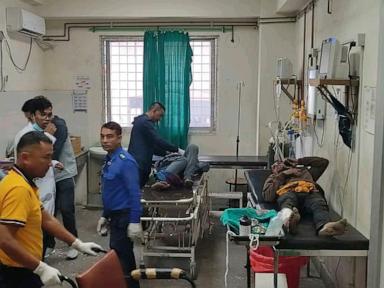
Another passenger van plunged off a steep mountain road in Nepal, killing 10 people and leaving five others injured.
It’s a headline we see far too often. Every few weeks, the exact same tragedy plays out along the winding, precipitous highways cutting through the Himalayas. People get into a local transport vehicle expecting to reach their village or a nearby market town, and within minutes, a single mechanical failure or blind curve turns a routine trip into a mass casualty event.
When a van crashes on a mountain road in Nepal, the immediate news reports focus on the raw numbers—10 dead, five rushed to a regional hospital, rescue teams rappelling down steep gorges to pull survivors from twisted metal. Those numbers matter. Each one represents a family shattered in an instant. Yet if you only look at the daily police blotter, you miss the systemic reality behind why these wrecks happen with such grim regularity.
The Reality Behind the Nepal Mountain Van Crash
First, let's be honest about the baseline facts when a crash like this hits the wire. Because the provided reference URL was unavailable to inspect directly, we can't verify the specific district, highway name, or passenger manifest of this exact incident without guessing—and guessing with human tragedy is completely unacceptable. What we do know from the core report is the stark outcome: a passenger van went off a mountain route in Nepal, resulting in 10 fatalities and five injuries.
That 15-person load tells an immediate story to anyone who has ever traveled outside Kathmandu. Standard passenger vans—often Mahindra Boleros, Tata Sumos, or aging microbuses—are frequently packed well beyond their factory-rated seating capacity. When 15 people are inside a vehicle built for seven to nine, the center of gravity shifts dramatically.
On flat pavement, overloading wears out your suspension. On a narrow, unpaved Himalayan track with a 500-foot drop on one side and a sheer rock wall on the other, a shifted center of gravity becomes a death sentence.
Why Nepal's Mountain Highways Are Unforgiving
If you've never ridden in the back of a jeep or van climbing out of the Terai plains into the middle hills, it's hard to picture the sheer physical stress placed on both the machine and the driver. Roads aren't just curvy. They're carved directly into unstable, geologically young mountainsides that shift every single monsoon season.
Infrastructure Built Against the Odds
Nepal’s rapid expansion of rural road networks over the past two decades connected millions of isolated villagers to schools, clinics, and markets. That access changed lives for the better. The problem? Many of these tracks were bulldozed quickly without proper engineering surveys, drainage systems, or retaining walls.
- Zero guardrails on secondary routes: Main arteries like the Prithvi Highway or the Mugling-Narayanghat stretch have barriers in high-risk zones, though landslides regularly wipe them out. Rural feeder roads rarely have anything separating your tires from empty air.
- Blind hairpin turns: Two vehicles often can't pass each other without one backing up dozens of yards along a crumbling shoulder to find a wider turnout.
- Monsoon erosion: Heavy summer rains saturate the soil, causing subsurface collapses that aren't visible to a driver until the roadbed literally gives way beneath the rear axle.
According to data compiled by the Nepal Police Traffic Directorate and the World Health Organization (WHO), road traffic crashes kill thousands of people in Nepal every single year, with hill and mountain districts accounting for a disproportionate share of multi-fatality wrecks. When a sedan crashes on a city street, people walk away with whiplash. When a van leaves a mountain road in districts like Sindhupalchok, Doti, or Palpa, gravity ensures the impact is catastrophic.
Mechanical Neglect and the Economics of Rural Transport
It's easy to blame the drivers. People love a simple villain. Yes, reckless overtaking and driving at unsafe speeds happen, and police reports frequently cite driver negligence.
Look closer, though, and you see an economic trap.
Rural transport operators work on razor-thin margins. Fuel is expensive. Spare parts imported from India carry heavy markups. A van owner paying off a high-interest loan feels immense pressure to squeeze every possible rupee out of a single run. That means skipping routine brake pad replacements, running tires until the tread is completely bald, and packing extra passengers onto the roof or into the rear cargo space.
The Brake Fade Trap
Think about what happens on a 15-kilometer descent dropping 4,000 feet in elevation. A heavily loaded van relies constantly on its braking system. If the driver rides the brakes instead of using low-gear engine braking—or if the brake fluid hasn't been flushed in years—heat builds up fast.
Brake fade sets in. The pedal goes soft. Suddenly, going into a 180-degree switchback with a sheer drop ahead, the driver pushes the pedal to the floor and nothing happens. By the time anyone realizes the brakes are gone, the van is already airborne.
What Actually Reduces Fatalities on Himalayan Roads
Talking about infrastructure reform sounds great in policy papers in Kathmandu, yet concrete retaining walls take years and billions of rupees to build. Lives are on the line right now. Practical survival and risk reduction come down to enforcement, vehicle standards, and personal vigilance.
- Strict syndicate and checkpoint enforcement: Nepal’s traffic police have periodically cracked down on overcrowding at major highway checkpoints. Whenever enforcement tightens, fatality rates dip. Overloaded vans need to be stopped before they ascend steep hill gradients, not counted at the bottom of a ravine afterward.
- Mandatory mechanical fitness audits: A six-month visual inspection sticker means nothing if nobody actually pulls the wheels off to check brake drums, tie rods, and steering linkages. Commercial passenger carriers operating in hill districts require strict, non-negotiable mechanical sign-offs.
- Seatbelt availability and usage: Most older rural vans in Nepal lack functional seatbelts in the rear benches. During a rollover down a slope, ejection from the vehicle is the primary cause of instant death. Installing and wearing basic lap belts dramatically changes survival odds.
How to Protect Yourself When Traveling in Nepal's Hills
If you're planning a trip through Nepal—whether you're a local commuter heading home for a festival or a trekker catching a ride to a trailhead in Solukhumbu or Annapurna—you don't have to accept fatalism. You have choices before you ever step inside a vehicle.
- Refuse overloaded vehicles. If people are sitting on wooden planks in the aisle or clinging to the rear ladder, wait for the next departure or hire a private jeep with a reputable agency. Saving 500 rupees isn't worth your life.
- Inspect the tires before boarding. Take five seconds to glance at the front tires. If the rubber looks smooth as glass or cracked along the sidewall, walk away.
- Avoid night travel on mountain routes. Visibility drops to zero around blind corners, oncoming trucks rarely dim their high beams, and driver fatigue spikes after sunset. Always travel between dawn and mid-afternoon.
- Sit in the middle rows. If you have a choice of seating in a multi-row van or jeep, avoid the very front passenger seat next to the door and avoid the rear jump seats. The middle row offers the best structural protection during side impacts or rollovers.
- Speak up early. If a driver is speeding into blind curves or checking a phone on a narrow cliffside stretch, say something calmly and firmly right away. Other passengers are usually just as nervous and will back you up once someone breaks the silence.
Every time a van crashes on a mountain road in Nepal and kills 10 people, officials promise investigations and committees form to study road safety. Real change happens faster when operators face immediate penalties for overloaded, unmaintained vehicles and passengers flatly refuse to board unsafe rides. Check the tires, skip the night buses, and never get into a van that's packed beyond its limits.


