The rain in Rabat didn't stop the crowds, but the final whistle did. It froze them. For a few seconds, the only sound across the packed cafes of Casablanca and the cold streets of Marrakech was the low hum of television commentators wrapping up a broadcast no one wanted to hear. France had won two to zero. The historic run of the Atlas Lions was over, just one step away from the ultimate final.
It hurt. You could see it in the slumped shoulders of teenagers draped in red flags and the quiet tears of older men who never thought they would live to see a Moroccan team dominate the global stage. The dream felt so close that people had already started planning their Sunday around it. Then, reality hit hard.
But looking at this defeat as just another soccer loss misses the entire point. What happened during that Morocco World Cup run was a cultural earthquake that reshaped how the world views African football. The immediate sadness was crushing, but underneath the grief, something permanent shifted.
The Night Rabat Stood Still
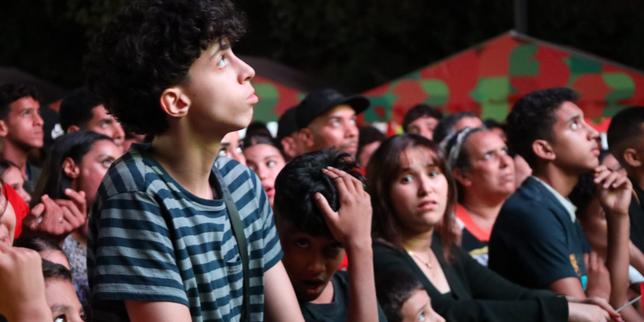
Walking through any Moroccan city during the semi-final was an eerie experience. Streets that usually bustle with chaotic traffic and shouting street vendors were completely deserted. Everyone was squeezed into cafes, staring at screens, clinging to plastic chairs.
When Theo Hernandez scored for France in the fifth minute, a collective gasp sucked the air out of the country. It was the first time an opponent had scored against Morocco in the entire tournament, excluding an own goal against Canada. The shock was psychological as much as tactical. Walid Regragui’s defensive wall, which had looked completely unbreakable against Spain and Portugal, had a crack in it.
The crowd didn't stop singing, though. Every time Achraf Hakimi chased down a ball or Azzedine Ounahi danced past a French midfielder, hope flared up again. Cafes shook with rhythmic clapping. People who didn't even care about sports three weeks prior were screaming at referees. That is the thing about a run like this. It creates temporary fanatics out of ordinary citizens. They weren't just watching a match. They were watching their country assert itself on a stage that had historically excluded them.
When Randal Kolo Muani scored the second goal in the 79th minute, the energy evaporated. It was the definitive blow. The silence that followed was heavy, thick with the realization that football can be incredibly cruel right when you think miracles are real.
Inside the Packed Cafes of Casablanca
To understand the depth of the sadness, you have to understand what this tournament meant to the average person on the street. For decades, football fans in North Africa watched the later stages of the World Cup as neutral observers. They picked a South American powerhouse or a European giant to root for.
This time, they had their own shirt to wear.
In Casablanca, fans packed into the traditional coffee shops hours before kickoff, filling the air with cigarette smoke and intense nervous energy. They brought their kids, their grandparents, and their neighbors. When the match ended, many stayed in their seats for an hour, just staring blankly at the floor.
"They broke our hearts," a fan named Youssef said outside a cafe near the Hassan II Mosque. He was rolling up his flag, his hands shaking slightly. "We genuinely believed we could beat them. We outplayed them for long stretches of the second half. That's what makes it sting so badly. We weren't just happy to be there anymore. We wanted the trophy."
That shift in mindset is crucial. The sadness wasn't the grateful, happy-to-be-here disappointment of an underdog. It was the bitter, angry frustration of a team that knew they belonged among the elite and felt an opportunity slip through their fingers.
Injuries and Tactical Gambles That Cost the Match
If you look closely at the pitch, Morocco’s undoing started long before the opening whistle. Regragui took massive risks with his starting lineup, and unfortunately, they didn't pay off.
Nayef Aguerd was pulled from the starting eleven during the warm-ups because his injury was too severe. Romain Saïss, the captain and the emotional heartbeat of the defense, tried to push through the pain but lasted only twenty minutes before signaling to the bench that his leg gave out. Noussair Mazraoui was substituted at halftime.
Playing against a team as lethal as France with a completely dismantled backline is a recipe for disaster. Regragui switched to a five-man defense to compensate, a system his players hadn't used extensively in the tournament. The tactical confusion showed in the opening minutes, leading directly to the scramble that allowed Hernandez to score.
Despite the chaos, the midfield engine kept running. Ounahi was spectacular, gliding past yellow cards and elite defenders like they weren't there. Sofyan Amrabat covered every blade of grass, tracking back to execute a legendary, bone-crunching tackle on Kylian Mbappé that will be replayed for decades. Morocco had more possession than France. They had more passes. They hit the post with a spectacular bicycle kick by Jawad El Yamiq.
They did everything but score. France won because they were clinical, ruthlessly exploiting the few moments where Morocco's exhaustion and injuries slowed them down.
Why the France Morocco Football Rivalry Felt Different
This wasn't just a sporting event. It never could be. The history between France and Morocco is long, complicated, and deeply intertwined through colonialism, immigration, and shared culture.
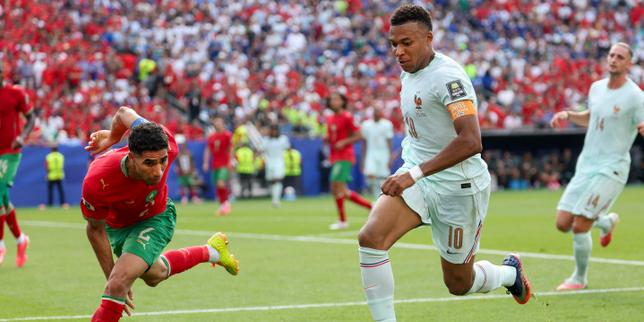
Millions of Moroccans live in France, holding dual citizenship and navigating the complex realities of being part of both worlds. On the pitch, this manifested in fascinating ways. Hakimi and Mbappé are best friends who play together in Paris. They swapped shirts at the end, sitting together in the tunnel to console each other.
But on the streets of Paris, Brussels, and Rabat, the tension was palpable. The match carried the weight of identity politics. Winning would have been a symbolic victory over the former colonial power, a statement of modern equality on the grandest stage in the world.
When France won, the celebration in European cities was tense. Riot police lined the Champs-Élysées. Clashes broke out in some neighborhoods. The sadness in Morocco was magnified by this geopolitical context. It felt like missing a chance to rewrite a narrative that has existed for generations.
The Legacy Beyond the Heartbreak
The tears will dry, and the flags will eventually come down from the balconies. What remains is a completely altered football ecosystem.
Before this tournament, no African or Arab nation had ever reached a World Cup semi-final. There was a glass ceiling, a stubborn belief that teams from these regions could provide entertainment in the group stages but lacked the tactical discipline or depth to challenge Europe and South America at the very end.
Morocco shattered that myth completely. They didn't fluke their way to the semi-final. They beat Belgium. They knocked out Spain. They sent Cristiano Ronaldo and Portugal home crying. They did it while conceding only one goal prior to the France match.
The next steps for Moroccan football are already in motion. The country is investing heavily in academies, infrastructure, and scouting networks to ensure this wasn't a one-off miracle. They are co-hosting the 2030 tournament, meaning the global stage will return to their doorstep soon.
To keep building on this momentum, the national federation must focus on stabilizing the domestic league and ensuring young local talents have direct pathways to elite European clubs. The blueprint works. Now it needs to be repeated systematically so that the next time Morocco enters a World Cup semi-final, the fans don't look at it as a dream. They look at it as an expectation.