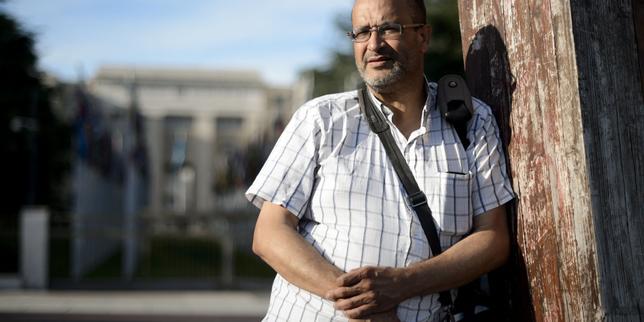
He was free. But not really.
When word came out that Franco-Moroccan journalist Ali Lmrabet was released from police custody, the international press sighed with temporary relief. It’s a familiar pattern in Morocco. A loud voice gets detained, the state sends a clear warning, and then they let them go while keeping the legal sword dangling over their head. The investigation is still ongoing. In the eyes of the Moroccan authorities, the file is never truly closed.
This isn't just about one man. It's about a systematic, highly calculated effort to make independent journalism a psychological nightmare. By keeping Lmrabet in a state of perpetual legal limbo, the state achieves its real goal. They don't need to lock you in a cell forever to silence you. They just need to make sure you spend every waking hour wondering if today is the day the police show up at your door again.
Let's look at what this latest escalation actually means and why the Moroccan state refuses to let go of its decades-long grudge against its most resilient critic.
The Strategy of Endless Legal Limbo
Morocco has perfected a quiet kind of authoritarianism. Decades ago, under King Hassan II, dissidents simply disappeared into secret prisons like Tazmamart. Today, under King Mohammed VI, the palace uses a much cleaner, more bureaucratic weapon. They use the penal code.
When Ali Lmrabet was released, it wasn’t a victory for human rights. It was a tactical pause. Keeping a journalist under investigation without immediately filing formal charges does a few things very well:
- It controls their movement: Travel bans can be slapped on at any moment, preventing them from leaving the country or seeking refuge abroad.
- It drains their resources: Fighting endless court cases requires money, time, and mental energy that should be spent writing and reporting.
- It scares off sources: No whistleblower wants to talk to a journalist who has a state-sponsored target painted on their back.
- It forces self-censorship: Every sentence you write is weighed against the threat of immediate re-arrest.
It is a slow-motion war of attrition. The state wants to wear Lmrabet down until he simply decides that writing isn't worth the suffering anymore. But if history is any indication, they don't know who they're dealing with.
A Legacy of Defying the Palace
You can't understand the state’s obsession with Lmrabet without looking at his track record. He isn't a new blogger trying to make a name for himself. He's a veteran diplomat-turned-journalist who has been pulling back the curtain on the Moroccan royal establishment for over twenty years.
Back in the early 2000s, Lmrabet founded two satirical weeklies: Demain and Demain Magazine. They were funny, sharp, and incredibly dangerous to the regime. He did the unthinkable. He published cartoons of the King. He questioned the royal budget. He even interviewed a prominent republican who openly questioned the absolute authority of the monarchy.
In a country where the King's person is legally "inviolable," Lmrabet’s work was treated as treason.
The backlash was swift and brutal. In 2003, he was sentenced to three years in prison for "insulting the King" and "threatening the territorial integrity" of the nation. He went on a hunger strike that lasted nearly fifty days, drawing global outrage and forcing the palace to issue a royal pardon in 2004.
But the regime wasn't done. In 2005, they handed him a devastating blow: a ten-year ban on practicing journalism in Morocco.
Think about that. Ten years of your professional life wiped out by judicial decree. When the ban finally expired in 2015, did the state let him work? No. They refused to issue him the national identity card and passport he needed to register his new publication. He had to go on another hunger strike, this time in front of the United Nations headquarters in Geneva, just to get his papers.
The state has a long memory. They don't forget, and they certainly don't forgive.
How Morocco Silences Critics Without Keeping Them Behind Bars
The charges against Lmrabet and other independent voices in Morocco have shifted over the years. In the past, journalists were locked up for political offenses. Today, the charges are almost always non-political.
The Moroccan authorities have realized that locking up journalists for "insulting the King" looks bad on the international stage. It makes them look like a dictatorship. So, they changed their playbook. Now, when the state wants to silence a writer, they accuse them of financial crimes, sexual assault, or espionage.
We saw this happen to Omar Radi. We saw it happen to Soulaimane Raissouni. We saw it happen to Taoufik Bouachrine.
These journalists weren't prosecuted under the press code. They were prosecuted under the penal code. The state weaponized the justice system to destroy their reputations before they even set foot in a courtroom. It's a highly effective way to alienate international human rights organizations and confuse the public.
Lmrabet’s situation fits right into this framework. Even when the charges aren't explicitly about his writing, everyone knows what they are really about. It's about control.
The Broader War on Moroccan Journalism
Morocco likes to present itself to Europe and the United States as a stable, modernizing monarchy that respects the rule of law. They want tourism. They want foreign investment. They want military cooperation.
But behind the glossy tourism brochures is a highly restrictive media environment. According to Reporters Without Borders, Morocco sits near the bottom of the World Press Freedom Index. The independent press that flourished briefly in the early 2000s has been almost completely wiped out.
The few who remain face constant pressure:
- State-directed advertising boycotts: Private companies are quietly warned not to buy ad space in critical publications, starving them of revenue.
- Pegasus spyware: Moroccan journalists and activists have been repeatedly targeted with sophisticated spyware, turning their own phones into tools of state surveillance.
- Defamation websites: A network of pro-regime websites exists solely to publish highly personal, often fabricated stories about the private lives of dissidents and their families.
It’s an ecosystem of fear. You don't have to arrest every journalist if you can convince them that writing the truth will destroy their lives.
The Cost of Staying Silent
Ali Lmrabet is still talking. He still writes, he still posts, and he still refuses to play by the rules of the palace. That is exactly why they won't leave him alone.
His latest release isn't a sign that the Moroccan judicial system is softening. It is a sign that the state is testing the waters, watching to see how much international attention his case receives before they take the next step. If the world looks away, the investigation will suddenly wrap up, and the cell door will swing shut again.
The international community cannot afford to treat these brief releases as happy endings. They are part of the punishment. Every day a journalist spends waiting for the police to knock on their door is a day the state wins.
If you want to support press freedom in North Africa, stop celebrating temporary releases. Start demanding the complete drop of these manufactured investigations. Anything less is just letting the regime write the script.