The iron handle of the side gate is cold at six in the morning. If you have ever stood in front of a schoolyard just before dawn, you know the particular stillness that lives there. It is not empty; it is pregnant. It waits for the scuffle of heavy canvas backpacks, the screech of sneakers on damp asphalt, the collective intake of breath when a bell rings too close to the hour.
On this Monday across France, that stillness will not break.
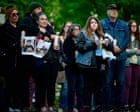
More than four hundred schools will remain dark. Not because of a snowstorm, nor a sudden municipal water main rupture, nor any of the ordinary, mundane disruptions that parents have learned to navigate with a tired sigh over coffee. These gates are locked because of a rupture of a different kind. Outside, the streets are thickening with a cold, kinetic friction. Banners are unrolled from the shoulders of heavy coats. Megaphones test their batteries with a harsh, metallic squawk that cuts through the pale morning mist.
To look at a dry statistic—four hundred and some odd institutions closed, tens of thousands of children redirected back to kitchen tables and makeshift domestic childcare—is to miss the pulse entirely. Numbers are armor against feeling. They let us look at a social fever chart without having to touch the patient's burning forehead.
Let us strip away the armor.
Imagine a teacher named Hélène, forty-eight years old, who has spent twenty-two of those years in a classroom where the radiator clanks like a dry cough every winter. Her desk is a geological dig of unreturned permission slips, graded essays stained with red ink, and a chipped porcelain mug that says Meilleure Prof in faded blue letters. Hélène is not a revolutionary by trade. She spends her weekends grading grammar tests and trying to figure out how to stretch her salary across groceries that cost more than they did six months ago.
When Hélène walks to her classroom on mornings like this, her boots crunch on gravel that feels heavier than usual. She is striking not because she hates her students—she loves them with the fierce, protective exasperation peculiar to educators—but because she looks at the walls around her and sees them slowly dissolving.
The crisis bleeding through the French educational system right now is not born in a vacuum. It is the accumulated weight of friction between a state that demands absolute efficiency and a workforce stretched past its elastic limit. When protests erupt, when unions call for a day of reckoning, and when four hundred schools pull their iron shutters down simultaneously, it is the physical manifestation of an invisible exhaustion.
We talk about education policy as if it were a spreadsheet. We debate budget allocations, curriculum reforms, and administrative restructuring with the detached coolness of engineers adjusting valves on a distant machine. But policy has a physical address. It lives in the cramped staffroom where three teachers share a single, sputtering microwave. It lives in the hallway where the ceiling tile has been water-stained into the shape of a continent for three years.
Consider what happens when a school closes for a day of protest.
In a thousand apartments across Paris, Lyon, and Marseille, the morning alarm goes off, and then, a heartbeat later, the realization sets in. Parents stare at their phones. Text messages ping in group chats like dropping glass. Are you taking the kids? Can you work from home today? The rhythm of the working day shatters into jagged pieces. A nurse has to call in sick because she has no one to watch her nine-year-old. A freelance graphic designer loses a day of billable hours sitting at the kitchen table while her son builds an elaborate fort out of sofa cushions.
This is the ripple effect. The closure of a school is never just about education; it is a tremor that rattles the entire architectural framework of modern civic life. Schools are the invisible scaffolding holding up the economy. When you pull them down for a day, the weight shifts instantly onto the shoulders of families who are already carrying too much.
And yet, the teachers are out there on the pavement.
Why? Because the alternative—quietly accepting the slow erosion of their classrooms, the swelling class sizes, the vanishing resources—feels like a different kind of closure. A slower one. A death by a thousand cuts.
There is an old French tradition of public assembly that outsiders often misread as mere stubbornness. To the casual observer watching CNN or reading a wire service brief, it looks like theater. It looks like an annual ritual of grievance, as predictable as the changing of the leaves.
That is a dangerous misreading.
When people walk off the job in numbers high enough to shutter hundreds of schools, they are signaling a profound breakdown in trust. They are saying that the social contract—the implicit agreement that if you educate the young, tend to the public good, and show up for your shift, the society will protect your dignity—has frayed to the breaking point.
I remember talking to a veteran history teacher in a suburb outside Nantes a few years ago. The radiators were hissing. He looked out the window at the schoolyard where adolescents were kicking a worn soccer ball through the mud.
"People think we teach history," he told me, wiping his glasses with a frayed handkerchief. "They think we stand up here and recite dates and treaties. But we don't. We hold the weather. Every day, thirty kids walk in here carrying whatever weather is happening in their homes—poverty, anger, fear, neglect. We are supposed to keep the roof from caving in while they try to learn fractions."
He tapped a stack of notebooks. "And lately, the roof is leaking everywhere."
That is the emotional core of the Monday morning closures. It is not just about a specific labor dispute or a contested administrative decree. It is about the unbearable lightness of a system trying to stay airborne without enough lift.
When the gates stay locked, the silence inside those empty hallways speaks louder than any chant through a megaphone. It is a reminder of how much we take for granted the intricate, daily miracle of public education. We drop our children off with a quick kiss on the cheek, expecting a universe of knowledge, socialization, and safety to envelop them for eight hours. We treat it like gravity—a natural law that requires no maintenance, no belief, and no sacrifice.
Then Monday arrives. The gates are padlocked. The asphalt is empty except for the scattered autumn leaves.
And suddenly, we have to look at the machinery we forgot we were riding.
The protesters will pack up their banners by late afternoon. The television crews will move on to the next breaking headline. By Tuesday, assuming the negotiations hold or the immediate tension eases, the iron gates will swing open again. The canvas backpacks will return. The radiator will clank its familiar, exhausted song.
But the air will be different. Everyone—from the exhausted mother rearranging her calendar to the minister behind a polished oak desk in Paris—will know that the lock on the gate can be turned from the inside, too.
The morning air is bitter as the sun finally clears the top of the gymnasium wall, casting long, sharp shadows across the deserted yard. Somewhere down the street, a whistle blows, and a crowd begins to move.