Standing on the pedestrian overpass above Causeway Bay on a humid Tuesday afternoon, you can watch two entirely different cities exist within fifty paces of one another.
Below, the pavement is a river of elbows, umbrellas, and delivery trolleys. Office workers in damp shirts squeeze past grandmothers pushing cardboard carts, everyone navigating the razor-thin margins of a metropolis where square footage is measured in sweat and mortgage payments. Then, you look slightly to the left, over a high perimeter fence, and the noise simply stops. There sits an immaculate stretch of manicured emerald turf, dotted with a handful of figures in crisp white linen rolling bowls across the grass.
Silence. Space. Sunlight.
For decades, that visual contradiction has been the quiet fault line running beneath Hong Kong’s land policy. At the center of the tremor is a policy mechanism with a deceptively bureaucratic name—Private Recreational Leases, or PRLs—and an even drier accounting term attached to them: land premiums. When policy wonks debate whether Hong Kong should rethink premiums for private recreation clubs, the public usually tunes out, lulled to sleep by jargon about concessionary rates, lease modifications, and valuation benchmarks.
They shouldn't. Because beneath the spreadsheets lies a fundamental question about who gets to breathe in the world’s densest vertical city, and what happens when a century-old colonial favor collides with a modern housing and public-space crisis.
The Tale of Two Taps
To understand why a dusty land-lease formula matters to a family living in a 200-square-foot subdivided flat in Sham Shui Po, consider a hypothetical scenario involving two neighbors trying to get water in a drought.
Imagine a village where water is astronomically expensive. Every resident pays a crushing rate per bucket just to keep their household running. Yet, at the edge of town, fifty-odd estates sit on massive, lush orchards. A hundred years ago, the village elders granted those estates free water pipes to encourage residents to plant trees and exercise outdoors. Generations later, the orchards have turned into walled-off sanctuaries. You can only enter if you inherit a golden key or pay an initiation fee equal to ten years of an average villager's wages. Meanwhile, the rest of the village is parched, and the elders are debating whether to finally charge those estates the real price of water—or keep giving them a steep discount so the trees don't die.
That is not an exaggeration of Hong Kong’s Private Recreational Lease system. It is the exact architecture of it.
Historically, beginning in the late nineteenth and early twentieth centuries, the colonial administration granted vast tracts of prime land to private sports and recreation clubs at nominal or zero premiums. The logic made sense at the time: Hong Kong was a sweltering port town with few public amenities, and incentivizing private groups to build cricket pitches, tennis courts, and yacht basins helped develop sporting infrastructure without draining the public purse.
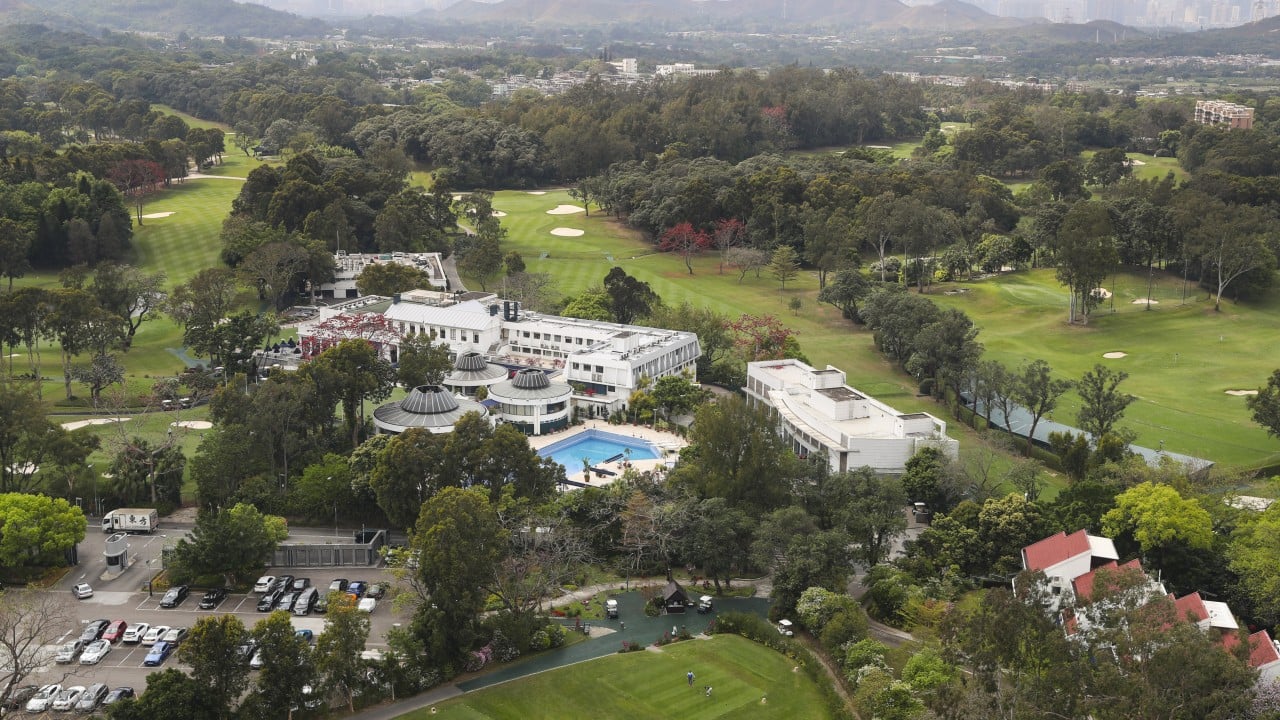
Fast forward to the twenty-first century. The city grew around those pitches until the land beneath them became some of the most expensive real estate on Earth. Today, roughly sixty-six sites across the territory—spanning hundreds of hectares—operate under these special leases. They include historic names like the Hong Kong Cricket Club, the Kowloon Bowling Green Club, the Hong Kong Football Club, and the sprawling grounds of the Hong Kong Golf Club in Fanling.
For years, these clubs paid virtually nothing in land rent while their debentures—the tradable memberships required to walk through the front gates—soared into the millions of Hong Kong dollars on the secondary market.
When the Bill Finally Arrived
Public resentment did not explode overnight; it simmered like a kettle left on a low flame. Every time a young couple failed to afford a down payment, or a school lacked a proper running track, eyes drifted toward the vast green expanses locked behind private security booths.
Eventually, the government could no longer ignore the optics. Following an extensive review that concluded in the late 2010s and began rolling out as leases expired from 2020 onward, authorities introduced a landmark shift. Instead of renewing these leases for free or a token fee, the government decided that clubs operating on a profit-making or exclusive basis would have to pay a concessionary land premium—specifically, one-third of the full market value of the land—alongside stricter requirements to open their facilities to outside schools, charities, and national sports associations.
On paper, charging a one-third market premium looked like a masterstroke of compromise. Taxpayers would finally see hundreds of millions, potentially billions, of dollars flow back into the public treasury. Meanwhile, the clubs wouldn't be wiped out overnight by full commercial real estate valuations.
Except paper rarely survives contact with reality.
The Unintended Trap of the One-Third Rule
Let us step inside the boardroom of a mid-sized, non-elite recreation club—a hypothetical composite based on the very real financial strain facing smaller associations in Kowloon and the New Territories.
Unlike the ultra-wealthy clubs whose debentures trade like luxury collectibles, many of Hong Kong’s sixty-six PRL holders are modest, community-rooted sports associations. Think sailing clubs run by retired teachers, lawn bowling greens maintained by volunteer committees, or modest football grounds used by local youth leagues. They have no corporate tycoons sitting on their boards. Their bank accounts hold just enough reserves to resurface a court or fix a leaking clubhouse roof.
When the Lands Department knocks on their door with a valuation bill calculated at one-third of Hong Kong’s stratospheric commercial land values, the math turns lethal. Even a fraction of full market value in urban Hong Kong easily runs into tens or hundreds of millions of dollars.
Look at what happens next.
To pay a massive lump-sum premium, a mid-sized club has only two bad options. First, it can hike membership fees exponentially, instantly pricing out the ordinary, middle-class enthusiasts who kept the sport alive for decades, transforming a genuine athletic community into yet another playground for the ultra-rich. Second, it can surrender the lease altogether because the numbers simply do not work.
And if a club surrenders the land, what happens? Does it automatically become a joyful public park where children fly kites?
Rarely. Without a dedicated, well-funded management model, surrendered recreational plots often sit fenced off for years while government departments argue over zoning, or they get carved up for piecemeal development, erasing scarce urban green space forever. In trying to punish exclusivity, a blunt, one-size-fits-all premium structure risks destroying the very sporting ecosystem Hong Kong claims it wants to nurture.
The Illusion of "Public Access"
There is another layer to this problem that anyone who has ever tried to book a public sports facility in Hong Kong knows intimately.
Try logging onto the Leisure and Cultural Services Department booking system at 7:00 AM on a weekday to reserve a badminton court or a soccer pitch. Within seconds, the slots vanish—snapped up by bots, touts, or sheer desperate demand. Hong Kong suffers from a chronic, suffocating shortage of athletic infrastructure. Athletes training for international competitions routinely struggle to find pool lanes or turf hours.
Under the revised PRL terms, clubs were instructed to open up a percentage of their facilities—typically around thirty percent of available capacity—to eligible outside bodies like schools, NGOs, and recognized sports federations.
In theory, this democratizes the grass. In practice, it often produces a bureaucratic mirage.
Consider a local secondary school coach trying to book a private club’s tennis courts for a Tuesday afternoon practice. The club can legally satisfy its quota by offering slots at inconvenient hours—say, 10:00 AM on a Wednesday when students are in math class, or 2:00 PM in August when the asphalt radiates heat like an oven. Furthermore, navigating the application paperwork, insurance liabilities, and guest dress codes acts as an invisible velvet rope. An ordinary Hong Kong teenager cannot simply walk up to the gate with a racket and ask to play. The gates remain locked to the spontaneous, everyday citizen.
We have traded real public access for a compliance checklist.
Why the Premium Formula Is Broken
The core flaw in Hong Kong’s current approach is that it treats land value purely as a static real estate asset rather than measuring the actual social return generated on that soil.
Right now, the policy relies heavily on a binary distinction: either you are a recognized National Sports Association paying a nominal fee, or you are a private club slapped with a one-third market value premium. That leaves almost no nuanced middle ground. It treats a hedge-fund networking club with a Michelin-starred dining room and a waiting list of billionaires the exact same way it treats a seventy-year-old community rowing club where members scrub their own boats.
Even worse, calculating premiums based on surrounding residential or commercial land prices ignores a crucial legal reality: PRL holders are strictly forbidden from building luxury apartments or shopping malls on their plots. The lease covenants lock the land into recreational use. Assessing a penalty based on the hypothetical value of skyscrapers that can never legally be built there is an accounting fiction that distorts the entire negotiation.
I remember speaking years ago with an urban planner who had spent his career mapping Hong Kong’s shrinking open spaces. We were standing near the edge of Kowloon Tsai, looking out over the patchwork of pitches and reservoirs. He pointed out that once concrete goes down in Hong Kong, it never comes back up. The city’s obsession with extracting maximum fiscal revenue from every square foot of dirt—a habit baked into its DNA because low tax rates depend heavily on land sales—has blinded policymakers to non-monetary wealth.
You cannot put a dollar figure on the mental health of a teenager who finds discipline on a rugby pitch instead of spiraling in a cramped flat. You cannot easily tally the preventative healthcare savings of eighty-year-olds practicing tai chi and lawn bowls in the fresh air every morning. When land policy views those spaces solely as under-monetized balance-sheet items, everyone loses.
Reimagining the Bargain
If Hong Kong wants to fix this, it needs to stop treating private recreation clubs as a monolithic villain and start acting like a shrewd, demanding landlord negotiating for maximum public value.
Rethinking the premium system does not mean letting wealthy clubs off the hook. Far from it. It means replacing a clumsy, revenue-obsessed formula with a tiered, performance-based social contract.
First, decouple premiums from phantom real estate valuations and tie them to genuine financial capacity and exclusivity. If a club charges multimillion-dollar entry fees, trades debentures like stocks, and operates lavish hospitality wings that generate massive surpluses, a one-third market premium is actually too generous. Those entities should pay closer to full market value for the privilege of maintaining an ultra-exclusive enclave in the middle of a land-starved city.
Conversely, genuine non-profit, community-driven athletic clubs—where fees are modest, governance is transparent, and every dollar goes back into sports development—should have their premiums slashed back to nominal levels. Protect the grassroots. Tax the luxury.
Second, replace rigid percentage quotas with radical, audited public integration. Thirty percent access during off-peak hours is an insult to taxpayers subsidizing the remaining two-thirds of the land discount. If a club wants a concessionary lease, its facilities should be plugged directly into the city’s public booking infrastructure during prime hours—evenings and weekends—managed transparently so any resident can book a court without begging a club secretary for permission.
Third, enforce strict clawback mechanisms. If a club fails to meet its community outreach targets, hoards prime-time slots for members, or lets its athletic standards slide into pure social dining, the discount evaporates immediately, triggering an automatic jump to full commercial rent. Make the privilege contingent on continuous public service, not a one-time signature every fifteen years.
Finally, be willing to reclaim land where the public return simply isn't there. Look at the protracted, bitter battles over Fanling Golf Course—a saga that exposed every raw nerve in Hong Kong’s class divide. While elite tournaments bring international prestige, holding back 170 hectares of flat, developable land in the northern New Territories while hundreds of thousands wait years for public housing was always going to be morally indefensible. Reclaiming portions of underutilized mega-sites for housing and true public parkland proves that concessionary leases are a loan from the people, not a permanent birthright.
The View from the Overpass
Back on that footbridge above Causeway Bay, the afternoon sun begins to dip behind the glass towers of Victoria Harbour, casting long, cool shadows across the lawn below.
Inside the fence, an attendant begins gathering the white flags from the green. Outside the fence, the evening rush hour reaches its crescendo—a sea of headlights, impatient horns, and exhausted faces packed shoulder-to-shoulder on the narrow sidewalks.
Land in Hong Kong has never just been dirt. It is power, memory, shelter, and dignity. The private clubs sitting on those historic leases are keepers of a precious, irreplaceable resource: breathing room in a city that is constantly running out of air.
Hong Kong does not need to bulldoze its sporting heritage to prove a political point, nor should it bankroll the leisure of the ultra-wealthy on the backs of taxpayers who can barely afford a roof over their heads. The answer lies in rewriting the price tag—demanding that every square meter of discounted grass pays its rent not just in treasury dollars, but in open gates, shared sweat, and a fair shot for the kid standing outside the fence, looking in.