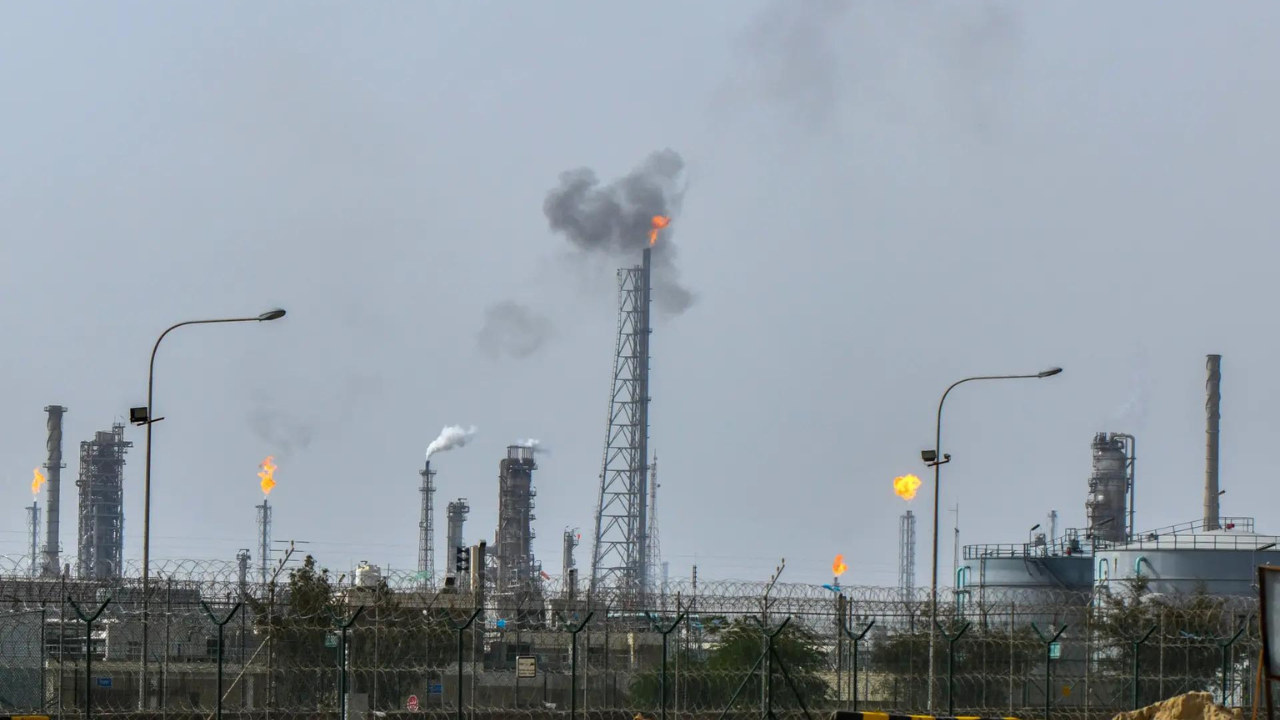
Geopolitical red lines just melted away in the Middle East. At 3:39 a.m. local time on Sunday, July 19, 2026, U.S. projectiles slammed into the construction site of the Darkhovin nuclear power plant in Iran’s southwestern Khuzestan province.
The Atomic Energy Organization of Iran (AEOI) immediately fired back with a fierce public statement, blasting the operation as a "terrorist and criminal" act of aggression that flagrantly violates international law and national sovereignty. While Washington frames its heavy aerial bombardment as a necessary campaign to degrade Iranian military capabilities and punish recent attacks on American troops, hitting a nuclear facility—even an unfinished one—takes this conflict into terrifying new territory. Recently making headlines in this space: The High-Stakes Gamble Behind Joseph Aoun's Quiet Diplomatic Blitz in Washington.
You don't need a degree in international relations to see why this matters. Targeting any piece of a nation's nuclear infrastructure used to be an unspoken taboo because of the catastrophic risks involved. By crossing that line, the current strategy risks turning a bitter regional proxy conflict into something much larger, uncontrollable, and fundamentally uncontainable.
The Dawn Attack on Darkhovin
The details out of Khuzestan province paint a picture of a precise, high-stakes midnight strike. According to the AEOI, multiple U.S. projectiles directly hit the under-construction facility. Iranian officials haven't released specific casualty numbers or detailed structural damage reports from the Darkhovin site, but they eagerly held up the facility as a symbol of "the Iranian nation's dignity and scientific self-sufficiency". Additional information into this topic are detailed by The Guardian.
Construction at the Darkhovin plant started back in 2022. Iran designed the site to house a domestically produced 300-megawatt pressurized water reactor, a project intended to prove Tehran could advance its nuclear ambitions without relying heavily on foreign tech.
Because the reactor is still years away from being operational, the strike didn't cause an immediate radiological crisis. There was no enriched fuel on-site to leak into the surrounding environment. But the psychological and political damage was done instantly. Iranian officials previously warned the International Atomic Energy Agency (IAEA) that continued strikes near nuclear zones could easily trigger catastrophic regional consequences if an active reactor gets caught in the crossfire.
A Broken Peace and Six Nights of Fire
This escalation didn't happen in a vacuum. It represents a spectacular, violent collapse of diplomacy. Just last month, a Pakistan-brokered memorandum of understanding tried to put a lid on the conflict and establish a path toward a lasting peace agreement. That deal is now completely dead.
The latest round of violence kicked into overdrive after a Friday drone attack on a military base in Jordan killed two U.S. soldiers and left another missing in action. U.S. Central Command (CENTCOM) openly stated that its intense air campaign is designed to punish Tehran for those deaths and to strip away Iran's ability to dominate vital trade routes like the Strait of Hormuz.
By Sunday morning, the U.S. military had wrapped up consecutive nights of major airstrikes across southern Iran. The targets show a clear shift in tactics. American forces are no longer just hitting isolated military command centers; they are methodically going after mixed-use civilian and military infrastructure. U.S. missiles have systematically disabled transport bridges in Hormozgan province, collapsed a critical commercial traffic tower at Chabahar port, and hammered electrical grids, forcing the Iranian Energy Ministry to ration power amid blistering summer heat.
Choking the Strait of Hormuz
As bombs fell on the mainland, a parallel battle played out in the waters of the Persian Gulf. The Navy of Iran's Islamic Revolution Guard Corps (IRGC) announced it forcefully stopped two commercial vessels trying to navigate the Strait of Hormuz.
Tehran claims the ships turned off their tracking systems and tried to sneak through an unauthorized, unsafe route with explicit American backing. Iranian state media reported that the vessels suffered unspecified "accidents" and were detained, while two other accompanying ships retreated.
Ever since late February, Iran has tightly restricted passage through the strait, banning any ships connected to the U.S. or Israel after those nations hit Iranian soil. Tehran's maritime message is uncompromising: it views the waterway as sovereign territory. Iranian commanders reiterated that no oil, gas, or chemical fertilizer ships can cross the strait without direct coordination and explicit permission from Tehran.
The Dangerous New Infrastructure Centric War
What we are seeing unfold isn't standard tit-for-tat military posturing. It's a fundamental shift in how both sides choose their targets. Military analysts point out that infrastructure has become the new center of gravity in this war.
When the U.S. strikes transport hubs and energy facilities, it drastically undercuts Iran's ability to move military equipment while simultaneously applying immense economic pressure to its 90 million citizens.
U.S. Targets in Iran:
├── Darkhovin Nuclear Site (Khuzestan)
├── Transport & Railway Bridges (Hormozgan)
├── Commercial Control Tower (Chabahar Port)
└── Regional Electrical Grids
Iran, meanwhile, is expanding its retaliation well beyond American assets to shock the global economy and terrify Washington's regional partners. Iranian forces launched direct strikes against a critical power and desalination plant in Kuwait, threatening a facility that provides nearly 90 percent of the country's drinking water. They also targeted American installations in Qatar and Bahrain, utilizing a strategy designed to show neighboring Gulf states that backing U.S. actions will carry an unbearable domestic cost.
Where the Escalation Goes Next
By striking the Darkhovin construction site, Washington gambled that hitting an unpowered nuclear facility would send a severe warning without causing an ecological disaster. But it's a short-sighted strategy that strips away any remaining guardrails. Tehran now feels entirely justified in targeting equally sensitive economic and industrial infrastructure throughout the Gulf.
With diplomatic channels shattered and both sides dug into uncompromising positions over the Strait of Hormuz, a quick off-ramp doesn't exist. Expect Iran to ramp up asymmetrical attacks, relying heavily on drone swarms and naval harassment to drive up global shipping insurance rates and disrupt energy markets.
For international businesses, logistics firms, and energy sectors, the reality is clear. The conflict has evolved past a localized dispute. If you operate supply chains or maritime routes anywhere near the Persian Gulf, you need to immediately diversify your transport networks, secure alternative energy inputs, and prepare for prolonged, systemic volatility in global trade.