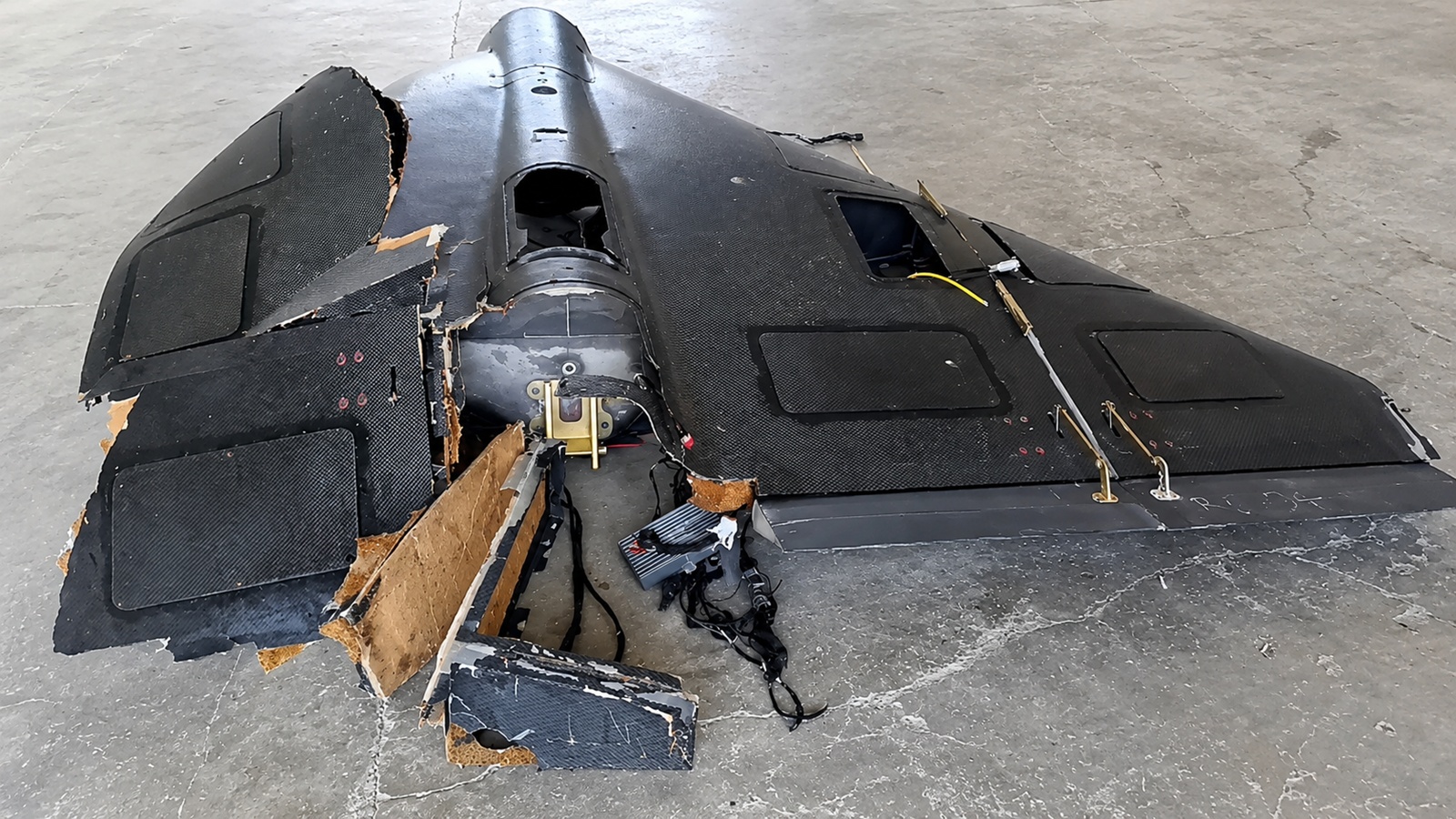
The skies over the Persian Gulf aren't just crowded; they're getting incredibly expensive. The recent confirmation by Iran's Islamic Revolutionary Guard Corps (IRGC) that its air defense units shot down another American MQ-9 Reaper drone—this time over the southwestern city of Ahvaz—marks a brutal reality check for American military strategy.
If you're tracking the numbers, this isn't an isolated fluke. A U.S. official recently acknowledged that Iran has brought down roughly 30 Reaper drones over the course of this unfolding conflict. At nearly $30 million per aircraft, the Pentagon has watched close to $1 billion worth of high-tech surveillance assets burn up and crash into the desert or the sea. For a more detailed analysis into this area, we suggest: this related article.
But this isn't just about the financial bleeding. The real story is how the escalating kinetic exchange between Washington and Tehran is fundamentally shifting the balance of power across regional chokepoints.
The Mirage of Cheap Unmanned Superiority
For a long time, the defense establishment sold drones as the ultimate low-risk, high-reward solution for modern warfare. They were supposed to be cheap, disposable eyes in the sky. But when you lose 30 of your primary reconnaissance platforms to a sophisticated state adversary, that narrative falls apart fast. For further details on the matter, comprehensive coverage can also be found on TIME.
Iran's domestic air defense networks, utilizing systems like the Khordad and various localized missile frameworks, aren't the rudimentary setups many Western analysts underestimated years ago. They are actively targeting and hitting high-altitude American assets operating near critical infrastructure, including the Bushehr Nuclear Power Plant and major logistics hubs.
The U.S. Air Force previously touted the MQ-9 Reaper as a critical player in monitoring Iranian movements. Now, the Pentagon is scrambling to replace these platforms with a new concept known as Massed Modular Aircraft (MMA)—essentially admitting that the current fleet is far too expensive to keep losing at this rate.
Shifting Frontlines From Jordan to Kuwait
The drone losses are only one side of a chaotic multi-front escalation. Following intense American airstrikes targeting Iranian positions, Tehran launched a wave of retaliatory operations that completely bypassed traditional frontlines.
- Kuwait under fire: Iranian combat drones and missiles targeted American military facilities inside Kuwait, including an ammunition depot at Camp Adairi and logistical structures at the Ali Al Salem Air Base.
- The Jordan vector: Missiles fired toward Jordan have already resulted in the deaths of American service members, pushing the total U.S. military fatality count in this specific conflict theater to 17.
- Strait of Hormuz lockdown: Naval units of the IRGC recently intercepted and disabled multiple commercial vessels attempting unauthorized crossings through the strategic chokepoint, directly disrupting Western-linked maritime traffic.
This isn't asymmetric proxy warfare anymore. It's a direct, state-on-state conventional grind. The previous diplomatic frameworks, including various regional ceasefires, have completely collapsed. Washington's strategy of using persistent air power to deter Tehran is producing the exact opposite result, forcing Gulf neighbors like Kuwait to activate their own air defenses as the conflict spills over their borders.
What This Means for Global Logistics
You can't separate the military clashes from the economic fallout. The Strait of Hormuz handles a massive chunk of the world's daily petroleum liquid consumption. With Iran actively disabling transit vessels and the U.S. executing continuous nightly strikes, shipping insurance rates are skyrocketing. Supply chains for essential goods are warping under the pressure, and critical regional infrastructure—including desalination plants and power grids—is increasingly caught in the crossfire.
Redefining Air Defense Realities
The common mistake people make is looking at these drone downings as minor tactical losses. They aren't. Every single downed MQ-9 provides adversaries with telemetry data, electronic warfare insights, and a massive propaganda victory that erodes the perceived technical superiority of Western hardware.
The Pentagon's immediate path forward requires an aggressive pivot. Security teams and defense planners must shift away from heavy, slow-moving legacy platforms in contested airspace. If an adversary possesses integrated radar and surface-to-air missile capabilities, flying a non-stealthy, $30 million drone overhead is no longer viable.
Expect to see a massive acceleration in the deployment of swarming, low-cost micro-UAVs and enhanced electronic countermeasure suites on existing manned aircraft. The era of uncontested American surveillance over the Middle East is officially over. Navigating this new reality means accepting that the cost of deterrence has just gone through the roof.