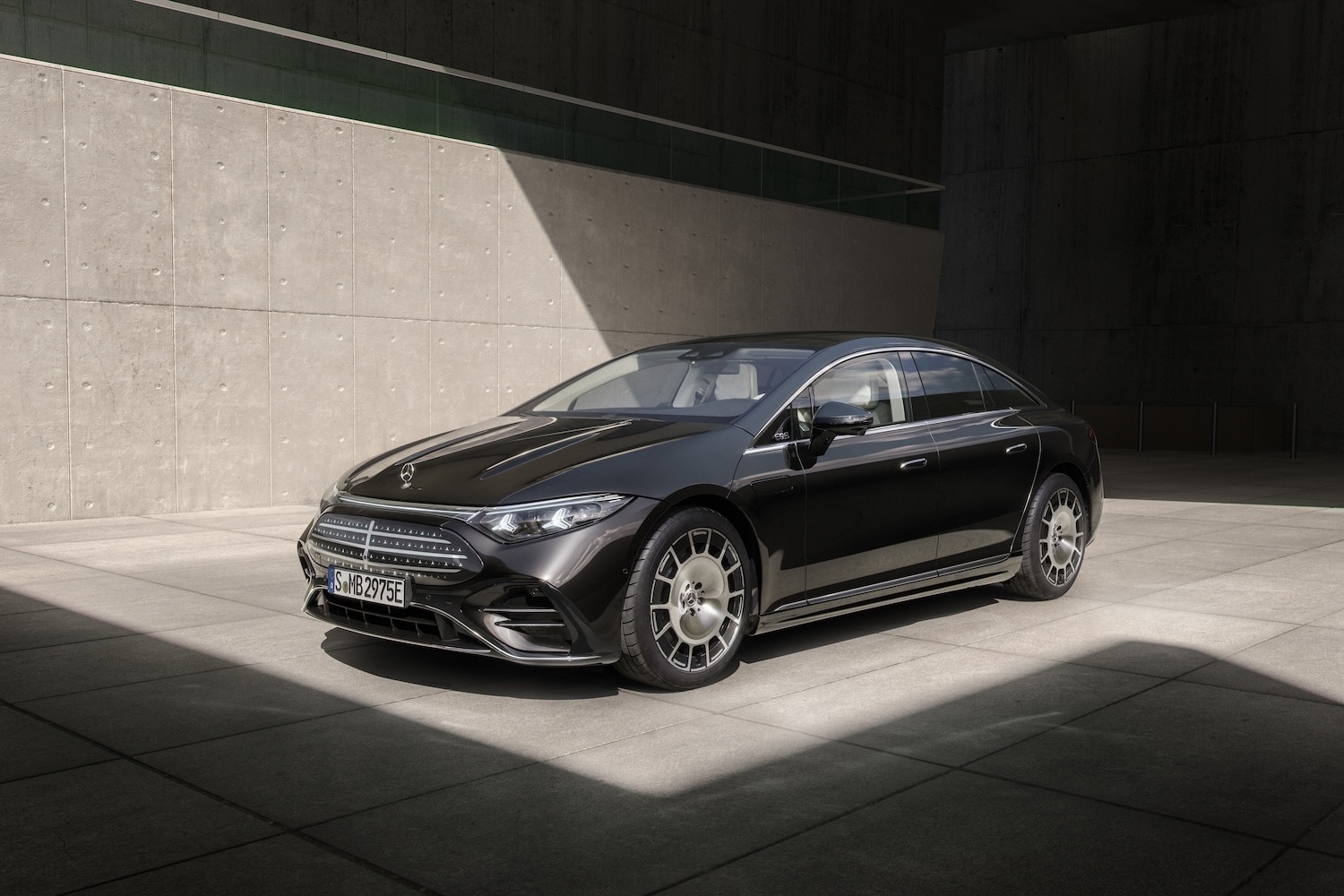
Mercedes-Benz has finally admitted that numbers on a spec sheet cannot fix a fundamental image problem. After a bruising 2024 that saw sales of the flagship electric sedan drop by more than 50 percent, the manufacturer is throwing everything—including the steering column—out the window to save its electric crown. The 2026 EQS facelift arrives with a 926 km WLTP range, 350 kW charging speeds, and a radical steer-by-wire system.
This isn't just a mid-cycle refresh. It is a corporate emergency.
The engineering of desperation
For three years, the EQS lived in the shadow of its internal combustion sibling, the S-Class. While the S-Class defined high-end travel for generations, the EQS was often viewed as a "jellybean" experiment that traded prestige for aerodynamic efficiency. To win back the buyers who defected to BMW or returned to gasoline, Mercedes had to do more than just tweak the bumpers.
The most significant change is the shift to an 800-volt architecture. This moves the EQS out of the middle-tier charging ranks and into the big leagues. By increasing the peak charging rate to 350 kW, the car can theoretically recover 320 km of range in just 10 minutes. Mercedes engineers have managed this by upgrading the battery to a 122 kWh unit utilizing new cell chemistry that blends silicon oxide with graphite.
More energy density means less weight for the same power, but weight remains the enemy. To achieve that headline-grabbing 926 km (roughly 575 miles) range, Mercedes also introduced a two-speed transmission on the rear axle. A shorter first gear handles the heavy lifting of pulling nearly three tons off the line, while a long-ratio second gear keeps the motors in their efficiency sweet spot at highway speeds.
It is a clever solution. It also highlights how much hardware is required to make a heavy luxury EV behave like a lithe cruiser.
Losing the mechanical connection
If the range numbers are for the rational mind, the new steer-by-wire system is for the tech-obsessed. Mercedes is the first German automaker to bring this to mass production, effectively severing the physical link between the driver's hands and the front wheels.
Your inputs are now purely digital signals. They are interpreted by redundant control units and executed by electric actuators at the wheels.
The benefits are practical, if a bit sterile. By removing the steering column, Mercedes can eliminate the vibration and "kickback" from uneven roads that usually travel up the shaft. It allows for a variable steering ratio that can make the car feel like a go-kart in a parking lot and a rock-steady locomotive on the Autobahn.
However, there is a psychological barrier here. Enthusiasts have long complained that electric cars feel like driving a simulator. By removing the mechanical rack entirely, Mercedes is leaning into that criticism rather than fighting it. They are betting that the modern luxury buyer values a quiet, effortless cabin over the "feel" of the road.
A hardware fix for a software market
The interior gets a massive brain transplant in the form of MB.OS. This isn't just another infotainment skin; it's a proprietary operating system designed to unify the car’s sensors, automated driving features, and cloud connectivity.
Mercedes is clearly tired of playing second fiddle to Tesla’s software-first approach. By bringing development in-house, they can push over-the-air updates that actually change how the car drives, not just how the maps look.
We see this in the new bidirectional charging capability. For the first time, an EQS can serve as a giant battery for your home, potentially powering a household during a blackout. It's a feature that turns a depreciating asset into a functional piece of infrastructure, provided the owner is willing to cycle their expensive battery cells to keep the lights on.
The S-Class shadow
Despite the tech surge, the elephant in the room remains the design. The "One-Bow" silhouette, which enables that world-leading 0.20 drag coefficient, is staying. Mercedes has tried to "S-Classify" the front end with a new grille featuring horizontal chrome slats and an upright hood star, but the overall shape remains polarizing.
The core problem for the EQS hasn't been its range or its charging speed—both of which were already competitive. The problem was that it didn't feel special enough for the $110,000 price tag. In an attempt to be the most aerodynamic car in the world, Mercedes made a car that lacked the presence of a traditional luxury flagship.
The 2026 updates are a massive technical achievement. Adding nearly 100 km of range and doubling the charging speed makes this a vastly better tool for long-distance travel. But as the market for high-end EVs cools, Mercedes is finding that luxury isn't just a set of numbers. It’s a feeling of substance.
By removing the steering column and adding more screens, they are doubling down on the "rolling computer" philosophy. If this doesn't reverse the sales slide, it may prove that the traditional luxury buyer isn't looking for a better gadget, but a better car.
The EQS is now undeniably the most advanced electric vehicle on the road. Whether it is a better Mercedes remains the question that only the sales charts of 2026 will answer.
Owners don't just want to arrive; they want to feel like they’ve arrived.