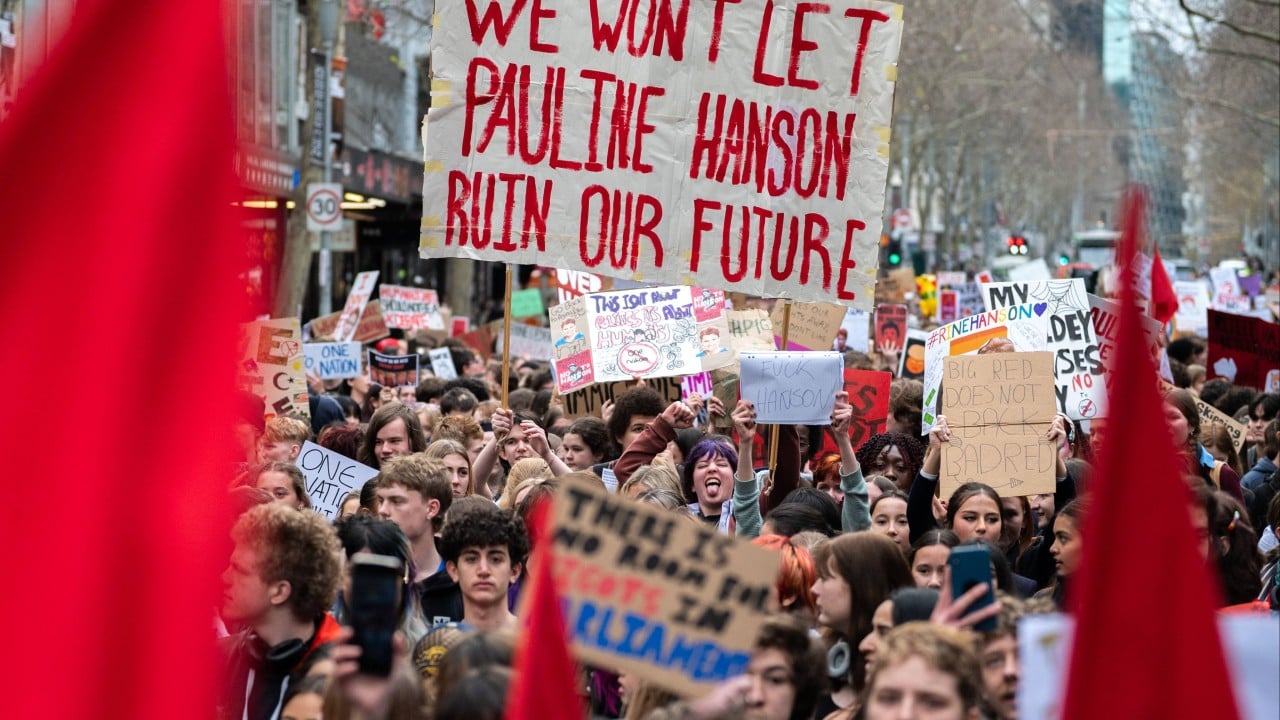
Australia is running out of patience with its own reflection. When Foreign Minister Penny Wong stood at the podium of the Lowy Institute in Sydney, she did not merely critique a domestic political opponent; she exposed a profound ideological fracture line running through the heart of contemporary statecraft. The target of her address was the surging populism of Pauline Hanson and the One Nation party, which has capitalized on economic anxiety and public fatigue to champion a manufactured nostalgia for a white monoculture. Yet the wider narrative goes far beyond standard partisan friction. It is a calculated struggle over how a modern trading nation defines its identity in an increasingly unstable Indo-Pacific region.
The Geopolitical Cost of Isolation
Wong framed the push for a monocultural society not just as a domestic moral failure, but as an acute strategic vulnerability. Modern Australia relies heavily on complex trade networks, regional diplomacy, and demographic diversity to navigate its geopolitical neighborhood. To retreat inward is to invite irrelevance.
Consider the mathematics of modern Australian commerce. The nation's economic output is fundamentally tied to international supply chains, educational exports, and diaspora networks spanning across Asia and the broader Pacific. When populist factions demand strict immigration caps, deep cuts to foreign aid, and a severing of ties with multilateral bodies, they are advocating for systemic economic self-harm.
Diplomacy requires cultural fluency. A state that views its own population through an exclusionary lens loses the capacity to project soft power. Wong, born in Malaysia and serving as the nation's first Asian-Australian federal minister, embodies the exact cosmopolitan asset that populist rhetoric seeks to discard. Her warning was direct: the fantasy of a monoculture reduces international options, alienates vital regional partners, and creates a domestic environment hostile to innovation.
The Roots of the Populist Surge
Why is this reactionary impulse gaining ground now? The answer lies in the friction between macroeconomic statistics and everyday lived experience. Recent polling figures indicate that roughly twenty-six percent of voters lean toward One Nation, propelled by widespread public frustration over housing affordability, infrastructure bottlenecks, and cost-of-living pressures.
In times of economic strain, human psychology defaults to tribalism. Politicians offer simple, comforting narratives that point the finger at external arrivals for structural failures caused by decades of domestic policy mismanagement. It is much easier to blame immigration for a housing crisis than to confront systemic zoning laws, tax incentives favoring property investors, and stagnant public infrastructure investment.
The populist appeal thrives on the myth of a lost golden era—a time when Australia supposedly possessed a uniform cultural identity and uncomplicated social cohesion. Historical reality tells a different story. Indigenous custodianship spanned tens of thousands of years before European colonization, and subsequent waves of migration from Britain, Europe, Asia, and the Middle East continuously reshaped the demographic fabric. The notion of a pure monoculture is an invention, a fictional construct designed to weaponize grievance.
The Domestic Disconnect
Beneath the rhetoric of national identity sits a deeper fracture between metropolitan centers and regional electorates. Major urban hubs like Sydney and Melbourne function as diverse, highly integrated multicultural ecosystems where half the population was either born overseas or has a parent born overseas. Conversely, many regional communities experiencing economic stagnation feel entirely disconnected from the wealth generated by globalized trade.
This geographical divide creates fertile ground for populist organizing. When regional voters watch public services decline while major cities boom, they feel ignored by the political establishment. Monoculture advocates exploit this alienation by offering a shared identity as compensation for economic decline.
Governments that fail to address regional inequality inadvertently fuel the far-right narrative. True social cohesion cannot be sustained purely through rhetorical defense of diversity in elite policy forums. It requires tangible economic investments that ensure regional towns share in the prosperity generated by international engagement.
Strategic Realities of the Indo-Pacific
Australia sits on the edge of the world's most dynamic and volatile economic zone. Strategic competition between major powers demands nimble diplomacy and deep, trusted partnerships with neighboring nations in Southeast Asia and the Pacific Islands.
If Canberra adopts an inward-looking, exclusionary posture, its diplomatic credibility evaporates. Regional neighbors notice how Australia treats its own diaspora communities and minority populations. Hypocrisy on the international stage is easily detected. Preaching regional cooperation while indulging domestic xenophobia undermines the nation's core security alliances.
National security experts increasingly view social cohesion as a critical domain of national defense. Foreign interference operations frequently target social fault lines, attempting to amplify racial and cultural divisions to paralyze decision-making. By rejecting the politics of division, the foreign ministry is attempting to fortify the nation against external manipulation.
The struggle over multiculturalism is not an abstract cultural debate confined to university campuses or think tanks. It is a hard-headed assessment of national survival. A nation built on migration cannot survive its own rejection of that reality without fracturing its economy, diminishing its security, and surrendering its global standing. The choice is stark, and the margin for error narrows with every election cycle.


