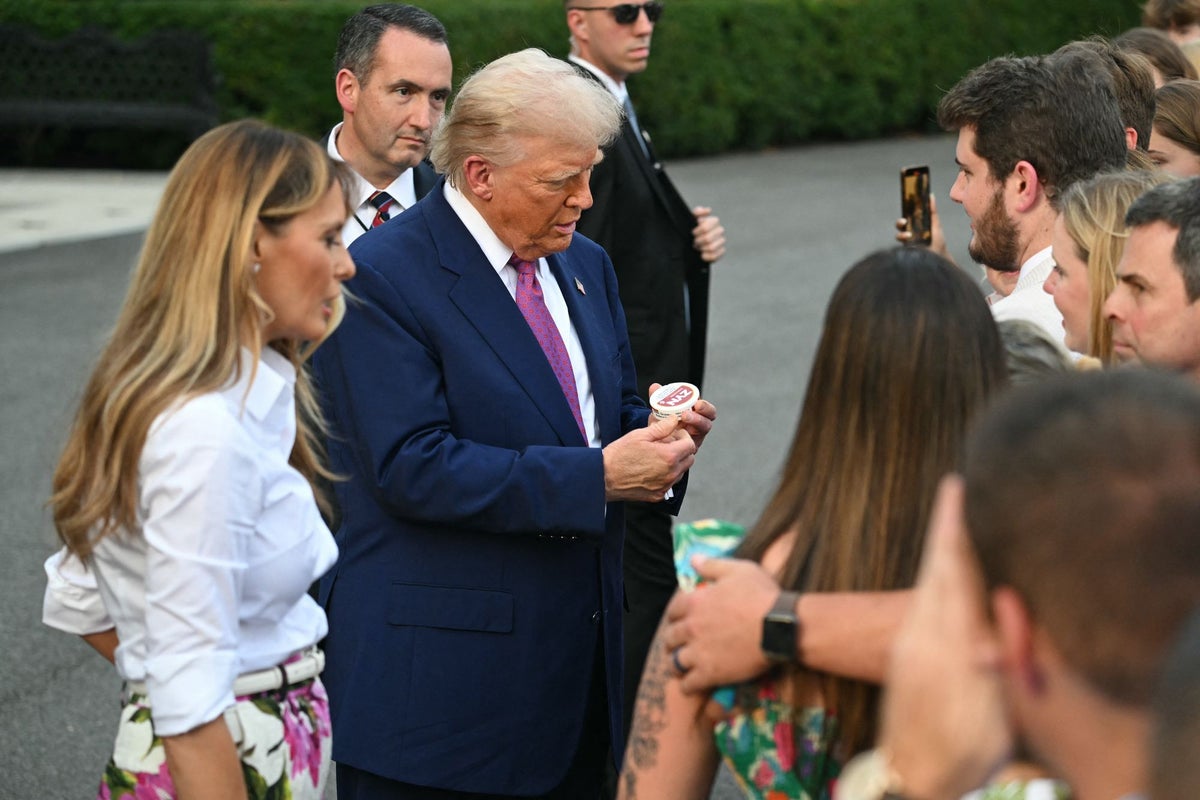
The national press corps has officially lost its mind over a piece of white felt stuffed with nicotine.
When photographs circulated of Health and Human Services Secretary Robert F. Kennedy Jr. holding a can of Zyn nicotine pouches, the commentary followed a predictable, lazy script. Critics screamed hypocrisy. They pointed to his "Make America Healthy Again" platform and asked how a man crusading against processed food could openly indulge in an addictive substance. Legacy media outlets rushed to frame the trend as a strange, tribal MAGA subculture, focusing entirely on the optics of political elites dipping pouches on private jets.
This narrative is not just shallow; it is scientifically illiterate.
By treating nicotine pouches as a cultural punchline or a public health betrayal, mainstream commentators are ignoring the most significant harm-reduction shift in a generation. The outrage machine has conflated the delivery mechanism with the drug itself, missing a massive public health victory happening right under their noses.
The Scientific Distinction the Media Ignores
To understand why the current panic is fundamentally flawed, you have to separate nicotine from tobacco smoke.
For decades, public health policy operated under a simple, undeniable truth established by epidemiologist Michael Russell: "People smoke for nicotine, but they die from the tar." The combustible cigarette is an incredibly efficient drug delivery system, but the process of burning tobacco leaf creates over 7,000 chemicals, dozens of which are known carcinogens.
Nicotine itself is a stimulant. In terms of toxicity and addiction profile, it is far closer to caffeine than it is to a cigarette. It elevates heart rate and causes temporary vasoconstriction, but it does not cause lung cancer, emphysema, or chronic obstructive pulmonary disease (COPD).
Oral nicotine pouches contain no tobacco leaf. They consist of pharmaceutical-grade nicotine, flavorings, sweeteners, and plant-based fibers. When a user places a pouch under their lip, nicotine enters the bloodstream through the oral mucosa, bypassing the lungs entirely.
Public health institutions have been slow to acknowledge this distinction, preferring a dogmatic "quit or die" approach to addiction. Yet the data on tobacco harm reduction is clear. Look at Sweden. The country has spent decades using snus—a traditional, moist oral tobacco product—instead of cigarettes. As a result, Sweden boasts the lowest smoking rate in Europe and the lowest rate of tobacco-related disease on the continent. Pouches take this concept a step further by removing the tobacco entirely, eliminating specific nitrosamines.
When RFK Jr. defended the product on national television, calling it "probably the safest way to consume nicotine," he was not abandoning his health mandate. He was stating a baseline pharmacological fact. If a smoker switches from combustible cigarettes to an oral pouch, their personal health risk drops by orders of magnitude.
Dismantling the Premise of the Panic
The current media narrative relies on several deeply flawed assumptions that show up constantly in public discourse. Let us address them directly.
Are nicotine pouches a gateway to smoking for youth?
The data shows the exact opposite. According to the National Youth Tobacco Survey, while oral nicotine pouch use has seen a modest increase among adolescents, smoking rates among high schoolers have plummeted to historic lows, sitting under 2%. The fear that a teenager will start with a mint-flavored pouch and transition to burning tobacco ignores the reality of consumer behavior. Users prefer the cleaner, smokeless alternative. The gateway is working in reverse: it is an exit ramp from smoking.
Is it hypocritical for a health official to use an addictive substance?
Only if you view public health as a moral crusade rather than a pragmatic numbers game. The financial burden of smoking-related illness in the United States exceeds $300 billion annually in medical costs and lost productivity. A Health Secretary focusing on eliminating the deadliest delivery mechanism for nicotine is a rational use of regulatory focus. Expecting absolute abstinence from a stimulant used by millions is puritanism, not medicine.
The Downside Nobody Wants to Admit
A truly objective look at the pouch boom requires acknowledging its real risks, rather than the imaginary ones manufactured for political commentary.
Nicotine is highly addictive. It alters brain chemistry, particularly in developing young brains, by hijacking dopamine pathways. For non-smokers who pick up the habit purely for the cognitive boost, they are entering a cycle of chemical dependence that is notoriously difficult to break.
Furthermore, the long-term cardiovascular impact of decades of continuous oral nicotine use is still being studied. While we know it lacks the carcinogenic profile of smoke, chronic vasoconstriction carries its own set of minor risks for individuals with pre-existing heart conditions.
But public health is an exercise in triage. You do not treat a house fire by worrying about water damage from the fire hose. Combustible tobacco kills nearly half a million Americans every single year. A product that offers a completely smokeless, combustion-free alternative is a massive net positive for harm reduction, even if it comes with the baggage of physical dependence.
Moving Past the Cultural Theater
The obsession with framing nicotine pouches through a partisan lens is a disservice to the public. Pouches are popular across the political spectrum, utilized by everyone from shift workers and military personnel to corporate executives looking for a discreet cognitive stimulant.
By hyper-focusing on the politics of who is using the product, the media has completely dropped the ball on the actual policy debate. The real story is the regulatory bottleneck at the Food and Drug Administration (FDA). The agency's Pre-market Tobacco Product Application (PMTA) process is notoriously broken, leaving millions of consumers relying on a market where safe, regulated options are forced to compete with illicit, unregulated imports due to bureaucratic foot-dragging.
Instead of investigating regulatory failure or analyzing the massive drop in smoking rates, commentators are busy writing think pieces about political symbolism on Trump Force One.
Stop looking at the brand on the can. Stop treating a major physiological shift in substance use as a culture war proxy. The emergence of a mass-market, non-combustible nicotine alternative is driving a stake through the heart of the cigarette industry. That is not a political scandal. It is a corporate and public health disruption.