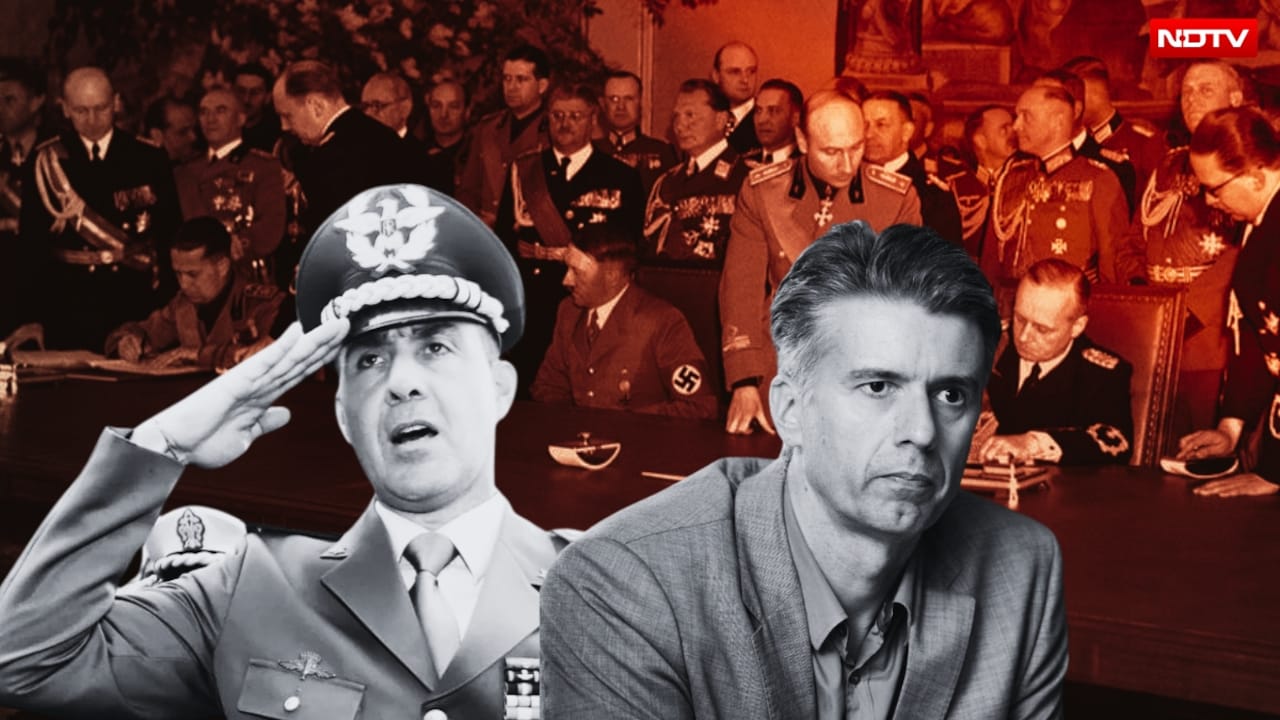
Every time nationalist parties across Europe start coordinating their strategies, lazy commentators reach for the history books. They dust off 1930s vocabulary, throw around terms like the Pact of Steel, and paint a picture of a continent sliding back toward fascism. It makes for dramatic reading. It is also fundamentally wrong.
When you look past the breathless panic in Brussels newsrooms, today's cross-border nationalist alliances look nothing like historical Axis powers. They are loose, transactional networks of populist politicians who care far more about protecting their own domestic power than building a unified international empire. If you want to understand why these movements are surging, you have to stop looking backward at World War II and start looking at the very real governance failures happening right now across the continent.
Beyond The Shock Headlines And Historical Clichés
The reflex is automatic. Whenever leaders like Marine Le Pen, Viktor Orbán, or Herbert Kickl sit down at the same table, editorial boards immediately sound the alarm bells. They warn of a coordinated assault on European democracy. They evoke dark shadows of the past.
This approach is lazy journalism. History rarely repeats itself in neat little costumes. The original Pact of Steel was a binding military and political alliance designed for aggressive expansion and total war. Today's far-right blocs in the European Parliament, such as the Patriots for Europe group, operate under a completely different logic.
Nationalism, by definition, hates international control. That includes international control by other nationalists. A French nationalist and an Italian nationalist do not share a utopian vision of a borderless fascist super-state. They want strong borders, national sovereignty, and protection for their own local industries. When their interests collide—which happens constantly—their grand international brotherhood frays very quickly. Treating them as a single, coordinated military threat misunderstands the very core of what drives them.
The Mechanics Of The Modern Nationalist Bloc
To see how these groups actually function, you have to look at institutional politics. The European Parliament is built to reward size. Parties that form official groups get more funding, more speaking time on the floor, and better committee assignments.
That is why these diverse nationalist factions put aside some of their differences to band together. It is a practical career move. They want the institutional weight and resources that come with being the third-largest group in the parliament. They are playing the system to fight the system.
Look at how they handle key policy debates. On paper, they agree on opposing mass migration, pushing back against aggressive climate regulations, and criticizing the heavy-handed centralization of the European Commission. But peel back the surface rhetoric, and the cracks appear. Some member parties have historically maintained warm ties with Moscow, while others in Central and Eastern Europe view Russian aggression with deep, historical suspicion. Trying to glue these factions together into a cohesive ideological engine is like trying to nail jelly to a wall.
Why Mainstream Parties Keep Playing Into Their Hands
The rise of these political forces isn't happening in a vacuum. It is the direct result of mainstream political arrogance. For years, establishment parties in Berlin, Paris, and Brussels dismissed legitimate public anxiety over housing costs, inflation, and immigration as uneducated or reactionary.
When citizens raised concerns about strained public services, they were often told that their worries were unfounded. When economies stagnated, they were handed bureaucratic platitudes instead of economic relief.
That vacuum created an opening. The far right didn't hypnotize millions of voters out of nowhere. They simply validated frustrations that the political establishment pretended did not exist. When mainstream politicians spend all their energy calling their opponents extremists instead of fixing broken healthcare systems or securing borders, they hand the populists a winning script. Voters don't turn to anti-establishment parties because they love fringe ideologies. They do it because they feel ignored by everyone else.
The Real Fractures Inside The Movement
If you talk to political analysts who actually study voting records in Strasbourg rather than just reading press releases, a messy reality emerges. These parties are deeply nationalistic, which means cooperation has a very hard ceiling.
Take economic policy. Protectionist measures favored by one country's workers can directly harm another country's exporters. Take foreign policy and defense. A nationalist party heavily reliant on domestic agricultural subsidies will clash with neighbors who want to overhaul the entire bloc budget.
There is also the question of staying power. Populist movements often ride a wave of anti-incumbent anger. Once they get closer to actual executive power—or actually win local and national elections—the reality of governance hits them hard. Managing a modern economy, balancing a national budget, and dealing with complex international supply chains cannot be solved by shouting slogans at a campaign rally. Many of these parties are finding out that opposition is comfortable, while running a government requires compromises that alienate their purist base.
Facing The Political Reality Without Panic
Panicking over historical ghosts prevents Europe from dealing with its actual political challenges. Writing breathless think pieces about a new fascist axis does nothing to lower energy prices, fix housing shortages, or restore trust in democratic institutions.
The mainstream political establishment needs to stop treating every election loss as an existential emergency caused entirely by foreign interference or social media algorithms. They need to compete on competence, address the concrete economic struggles of working families, and stop treating border security as a taboo topic.
Nationalist parties are filling a void left by complacent leaders. Until traditional political forces start addressing the root causes of public anger with serious, effective policy, no amount of historical hand-wringing is going to stop the populist wave. The cure for bad politics isn't denial. It is better governance.