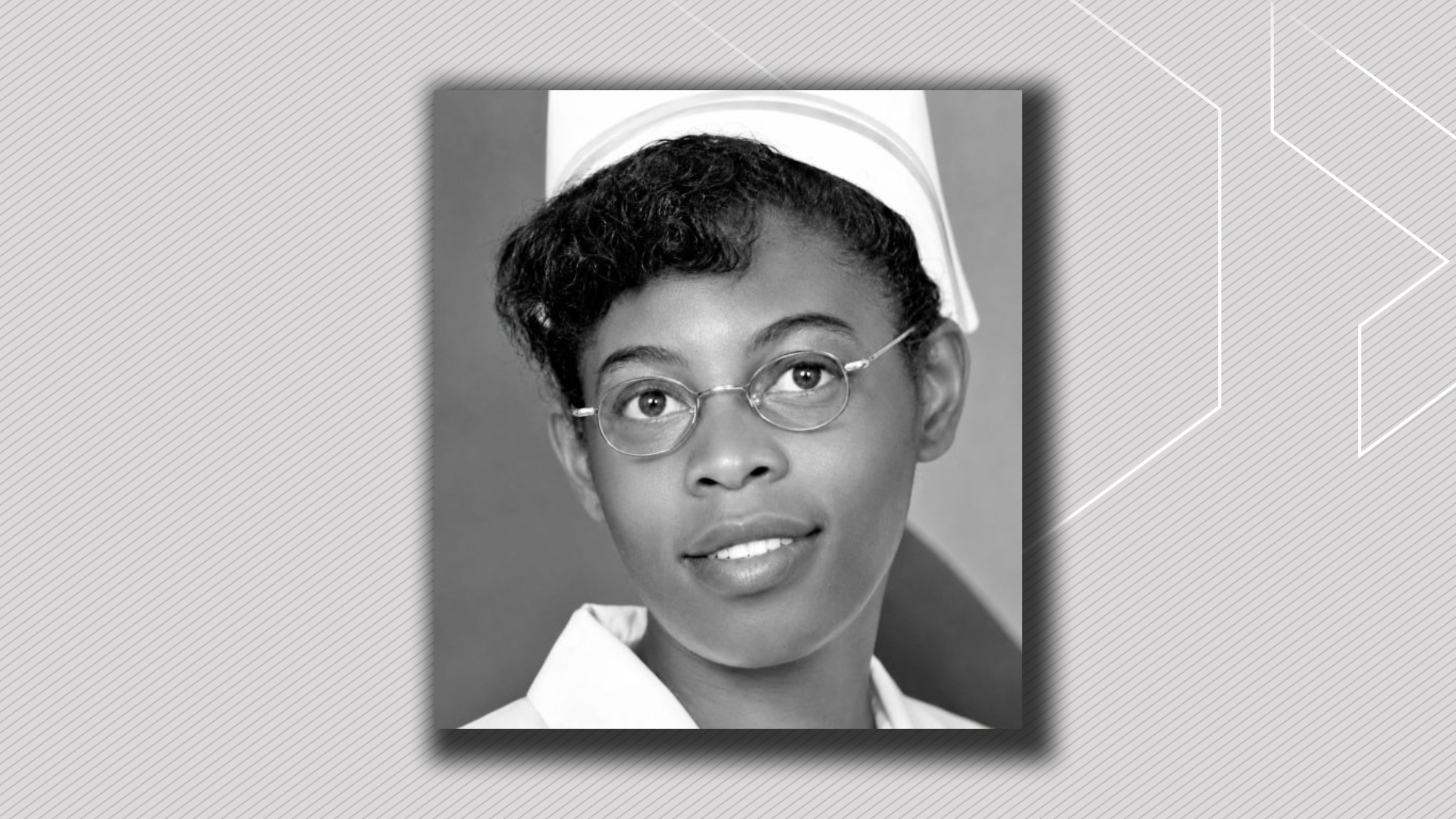
Two decades after Nadine Robinson was killed in her Edmonton home, newsrooms still churn out the exact same story: a grieving family, a stalled file, and a vague plea for someone to "come forward."
It feels compassionate. It feels like public service journalism.
It is actually an operational cover for systemic investigative decay.
When media outlets frame cold cases as tragic mysteries awaiting a magical anonymous tip, they shield law enforcement and justice systems from the brutal accountability required to fix why these cases go cold in the first place. The narrative suggests that time is the enemy. In reality, bad initial protocol, mismanaged resource allocation, and an obsession with narrative over forensic precision are what kill clearance rates.
Nadine Robinson's death in 2005—a young mother and nurse strangled while her children slept in the next room—isn't just an unsolved tragedy. It is a textbook diagnostic of how major crime units fail during the critical first 48 hours, and how the true crime ecosystem commodifies that failure for twenty years without demanding structural reform.
The First 48 Misconception
True crime junkies love to believe that cold cases are solved by dedicated detectives staring at a white board until an epiphany hits.
They aren't. Cold cases are solved when new technology renders old physical evidence useful, or when someone with zero exposure to the original bias re-examines the file from scratch.
When a homicide goes cold after twenty-four hours, the probability of solving it drops off a cliff. By year two, the odds hover near statistical zero unless physical DNA exists that can be run through forensic genealogy.
The standard media treatment of cold cases pretends that every unsolved murder is equally solvable if the public just "remembers something." This is a lie designed to generate traffic while maintaining a cozy relationship with police press offices.
Here is what actually happens in homicide departments across North America:
- Initial Overwhelm: Investigators get flooded with noise, fail to isolate actionable physical evidence, and rely heavily on witness statements that degrade within hours.
- Tunnel Vision: Early hypotheses become rigid dogma. If the primary suspect doesn't fit the initial profile, alternative vectors are ignored until the trail is ice cold.
- The Reassignment Shift: Detective turnover means a single file might pass through five sets of hands in a decade. Each handover loses institutional memory.
- Media Distraction: Press updates are weaponized to show "activity" rather than progress, placating the public while the file collects dust in a basement archive.
I have watched agencies sink tens of thousands of dollars into public appeal campaigns that yield zero court-admissible evidence, while basic evidence audit backlogs sit untouched for years. The media acts as an unwitting accomplice, printing the anniversary press release word-for-word instead of asking uncomfortable questions about the original forensic chain of custody.
Why Public Appeals Rarely Work
Ask any veteran major crimes investigator off the record, and they will tell you the truth: generic public appeals for information after twenty years almost never yield the silver bullet.
They generate noise. Hundreds of low-quality tips flood the queue, forcing junior officers to burn hundreds of hours vetting theories from amateur sleuths who watched a documentary.
The premise that "someone out there knows something" assumes the killer confessed to a chatty friend who has spent twenty years carrying a heavy conscience. Sometimes that happens. Usually, it doesn’t. Homicides committed by acquaintances or intimate partners fail to clear not because the community is keeping secrets, but because the physical evidence collected at the scene was insufficient to meet the standard of proof beyond a reasonable doubt.
Focusing on community silence shifts the blame from state investigative failure to public apathy. It implies the police did their job, but the neighborhood failed them.
That is an inversion of reality. The burden of proof and collection rests entirely on the state. If a murderer walks free for two decades, it is rarely because the neighbors didn't care enough—it's because the scene was compromised, the evidence was mishandled, or the initial canvass was botched.
The Cold Case Industrial Complex
We have built an entire media economy around the fetishization of unsolved violence.
The coverage of the Robinson case, like countless others, follows a strict template: re-hash the emotional horror of the night, quote a heartbroken relative, include a statement from an Edmonton Police Service spokesperson expressing ongoing commitment, and drop a tipline phone number at the bottom.
Notice what is missing?
- Forensic Audits: Nobody asks what specific physical evidence was preserved in 2005 and whether modern SNP array technology or investigative genetic genealogy (IGG) has been attempted.
- Resource Transparency: No one demands to see how many dedicated hours were billed to the file over the last five years versus how many were spent managing public relations.
- Clearance Rate Accountability: Edmonton's homicide clearance rates are discussed in isolation, rather than compared against historical benchmarks or peer jurisdictions.
If a corporation failed to deliver on its primary operational mandate for twenty years, shareholders wouldn't print sentimental anniversary profiles. They would fire the executive suite and audit the operations.
Yet in public safety, failure is repackaged as enduring dedication.
The Hard Truth About Genetic Genealogy
The public has been conditioned by headline-grabbing arrests to believe that forensic genealogy will automatically solve every legacy cold case.
It won't.
Forensic genealogy requires high-quality, uncompromised, non-degraded suspect DNA. In 2005, collection protocols were vastly superior to those of the 1980s, but touch DNA techniques were still primitive compared to today. If an intruder wore gloves, or if the crime scene was contaminated by first responders before secondary sweeps were completed, there is no magic biological footprint to upload to a database.
Furthermore, state and provincial crime labs face staggering backlogs. Prioritizing a twenty-year-old cold case often means delaying testing on active, high-risk cases where an active perpetrator presents an immediate physical threat to the public.
This is the cold arithmetic of justice that media outlets refuse to touch: every dollar and hour spent trying to clear a decade-old cold case is a resource pulled away from solving yesterday's shooting.
Stop Asking for Tips. Demand Audits.
If we actually care about justice for victims like Nadine Robinson—rather than just consuming their stories as somber true crime filler—the public discourse needs an immediate, aggressive pivot.
Stop asking the public to dig through twenty-year-old memories. Start demanding structural audits of cold case units.
1. Mandatory Independent File Reviews
Every homicide file that remains unsolved after 36 months should be stripped from the original jurisdiction and handed to an independent, external review team. Original investigators develop confirmation bias. They fall in love with their initial theories. An external unit doesn't care about protecting the original team's ego; they care about gaps in the file.
2. Full Forensic Inventory Disclosure
Police departments should be legally required to report whether physical evidence from cold cases has undergone modern re-testing, and if not, explicitly state why. Is it a budget issue? Was the evidence destroyed in storage? Was it degraded? The public deserves to know if a case is unsolved due to scientific limitations or bureaucratic neglect.
3. Clear Resource Allocation Metrics
Legislation should mandate transparency on how many active investigators are assigned exclusively to cold files, rather than assigning cold cases as "secondary duties" to overworked active homicide detectives who barely have time to clear current caseloads.
The current system relies on the public's short memory and emotional exhaustion. It allows police departments to issue comfortable press releases every decade, assuring everyone that "the file remains open," while doing zero heavy lifting to fix the structural deficiencies that allowed the perpetrator to vanish in the first place.
Justice isn't achieved by printing sentimental retrospective pieces every ten years. It is achieved by ruthlessly auditing the state mechanisms that failed to deliver it in the first forty-eight hours.
Until the media stops writing tributes and starts auditing execution, the cold case stack will keep growing, one anniversary at a time.