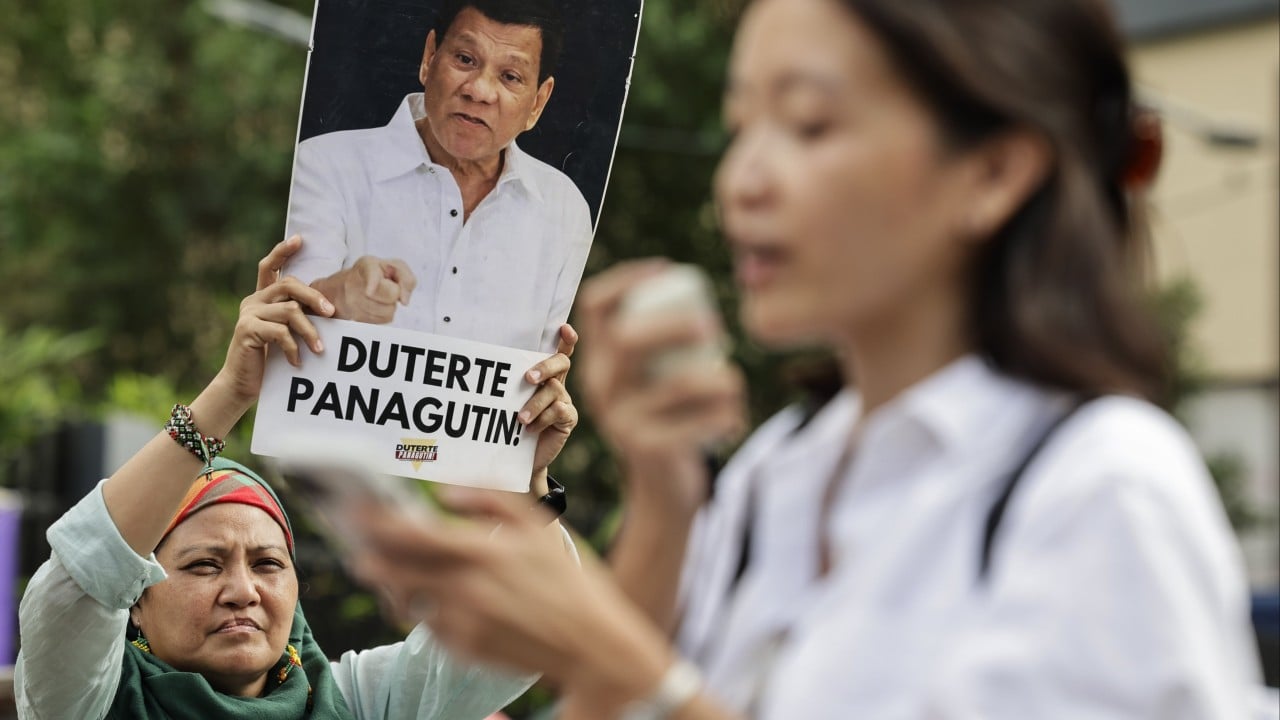
International Criminal Court (ICC) Trial Chamber III’s scheduling of former Philippine President Rodrigo Duterte’s trial for November 30, 2026, marks a structural shift in international humanitarian law execution. As the first Asian former head of state to face trial at the court, the proceeding serves as a stress test for the Rome Statute’s jurisdictional resilience. Understanding the path toward this trial requires a rigorous analysis of the specific legal mechanisms, quantitative thresholds, and procedural protocols that dictate the actions of both the prosecution and the defense.
The Jurisdiction and Temporal Scope Framework
A common point of confusion regarding international litigation involves the state’s sovereign withdrawal from a treaty. The Philippines formally exited the Rome Statute on March 17, 2019, following Duterte's directive. However, the legal architecture governing withdrawal does not grant retroactive immunity.
Under Article 127 of the Rome Statute, a state’s withdrawal does not discharge it from the obligations determined during its period of membership. The court retains jurisdiction over all alleged criminal acts committed while the state was a party to the statute.
The temporal scope of the ICC prosecution’s case is bounded by two specific periods:
- The Nationwide Presidencies Campaign: From June 30, 2016, through March 16, 2019, covering the active period of the national anti-narcotics strategy up to the exact date the withdrawal took effect.
- The Davao City Inception Window: Extending backward to November 1, 2011, when the Philippines officially ratified the statute, encompassing operations executed by the alleged "Davao Death Squad" while Duterte served as mayor and vice mayor.
Evidentiary Metrics and the Al Rahman Protocol
The Trial Chamber has bound all participating legal entities to a rigorous organizational timeline derived from the Al Rahman protocol. This operational framework is specifically designed to manage high-volume evidence, protect dual-status witnesses, and mitigate systematic delays.
The scale of the prosecution’s case relies on a concentrated evidentiary architecture rather than the absolute count of national casualties. While human rights organizations estimate total casualties from the anti-drug campaign to exceed 30,000, and official state records cite approximately 6,000 deaths, the ICC indictment concentrates on verifiable test cases.
The quantitative parameters established for the opening phase of the trial include:
- Charges: Three distinct counts of crimes against humanity.
- Specific Indictments: Direct involvement or superior responsibility in the murder of at least 76 individuals and the attempted murder of two others.
- Witness Pool: A targeted group of 60 to 70 witnesses scheduled by the prosecution.
The strict procedural schedule leading to the November 30 trial date functions via specific operational milestones:
[June 3] ---> [June 5] ---> [June 15] ---> [June 29] ---> [August 31] ---> [Nov 30]
 Joint         Medical     Registry      Provisional   Final Evidence     Trial
 Health        Expert      Protocols      Witness &      Cutoff &        Commences
 Directives    Review       Filed        Evidence List   Foreclosure
The August 31, 2026 milestone acts as a formal foreclosure deadline. Beyond this date, the prosecution is barred from adding further incidents or expanding the core witness pool, establishing a fixed parameter for the defense's strategy.
The Fitness to Stand Trial Function
The core of the defense strategy, coordinated by British barrister Peter Haynes, focuses on the physical and cognitive limits of the 81-year-old defendant. The defense maintains that Duterte suffers from significant cognitive decline, rendering him incapable of processing complex legal proceedings or instructing counsel effectively.
To resolve this conflict without stalling the trial, Trial Chamber III operates a dual-track assessment mechanism. Presiding Judge Joanna Korner ordered a new round of independent medical evaluations, executed via a structured timeline:
- June 3, 2026: Prosecution and defense must submit a joint letter of instruction defining the scope of the medical examinations.
- June 5, 2026: The ICC Registry must re-engage the three independent medical experts who previously examined the defendant to confirm availability.
The court separates the definition of fitness to stand trial from fitness to attend in person. The ICC has repeatedly granted Duterte leaves of absence from status conferences since his arrest and transfer to the detention center in The Hague in March 2025. The procedural adjustment mechanism allows the court to run trials on a daily basis while offering structural concessions, such as a weekly day off or shortened daily sitting times, to accommodate documented physical frailties without halting the judicial clock.
Geopolitical Friction Points and Institutional Risks
The trial does not occur in an isolated legal space; it functions within severe institutional constraints. The ICC faces intense external pressure, notably from the United States, which has implemented two rounds of legislative and economic sanctions against court personnel since June 2025.
The institutional risk model for the court contains two primary variables:
National Law Enforcement Defiance
The primary variable centers on the domestic political alignment within the Philippines. While Duterte remains detained in The Hague following a joint Philippine National Police and Interpol operation in early 2025, his domestic support base remains substantial. Continued enforcement cooperation depends on the shifting equilibrium between competing domestic political factions.
The Bluster vs. Operational Command Distinction
The secondary variable involves the legal interpretation of public statements. The defense intends to argue that Duterte's public declarations to "kill drug dealers" constituted political hyperbole and standard law enforcement bravado rather than a systematic state policy. To counter this, the prosecution must prove a direct causal link between executive statements and operational patterns carried out by police units on the ground.
Strategic Enforcement Forecast
The structural trajectory of the proceedings indicates that Trial Chamber III will maintain a high-velocity schedule despite defense motions for delays based on medical conditions. By anchoring the pre-trial phase to the Al Rahman protocols and establishing an unyielding August 31 evidentiary cutoff, the court is systematically neutralizing typical delay tactics used in international litigation.
Expect the trial to begin precisely on November 30, 2026, using technology-assisted participation models if the defendant's health deteriorates further. The defense will concentrate its efforts on challenging the chain of custody of local police reports and attempting to separate Duterte's verbal rhetoric from the physical execution of anti-narcotics operations. Counsel must prepare for a multi-year trial where victory will not be decided by broad political arguments, but by the precise verification of state policy and superior responsibility under Article 28 of the Rome Statute.


