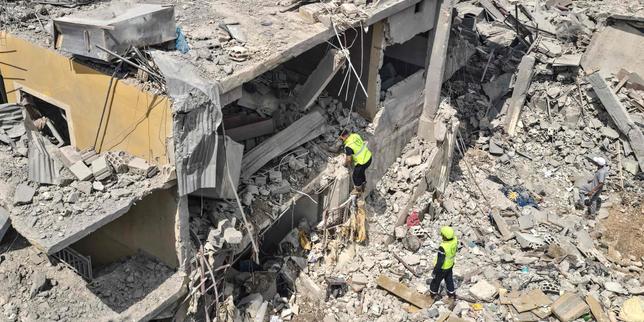
The ongoing Israeli military campaign in southern Lebanon operates not as a series of isolated retributive strikes, but as a systematic campaign of defensive attrition. While standard media reporting focuses heavily on the immediate kinetic visibility of individual bombardments, a structural analysis reveals a calculated effort to alter the strategic geography of the border region. The primary objective is the functional dismantlement of Hezbollah's forward deployment infrastructure to establish a sanitized security buffer.
To evaluate the progression and efficacy of this conflict, analysts must bypass the superficial narrative of daily strike tallies and instead evaluate the operational mechanics across three distinct vectors: infrastructure degradation, tactical displacement, and deterrence asymmetry.
The Tri-Border Kinetic Framework
The military operations currently observed along the Blue Line can be disaggregated into three functional pillars. Each pillar targets a specific component of the adversary's operational capacity, creating a compounding effect that diminishes the possibility of a surprise cross-border incursion.
+-----------------------------------------------------------------+
|               ISRAELI STRATEGIC INTENT IN LEBANON               |
+-----------------------------------------------------------------+
                                 |
        +------------------------+------------------------+
        |                        |                        |
        v                        v                        v
[1. Infrastructure]      [2. Area Denial]        [3. Supply Chain]
Targeting subterranean   Enforcing a 10km        Interdicting lines
networks & launch        tactical buffer zone    of communication &
positions.               via kinetic pressure.   logistics from Syria.
1. Fixed Infrastructure Degradation
The initial layer of the campaign targets the static military architecture embedded within the rugged topography of southern Lebanon. This involves the systematic destruction of reinforced subterranean networks, disguised observation posts, and pre-positioned multi-barrel rocket launchers. Because these assets are highly integrated into civilian municipal areas, the kinetic response requires high-precision, low-collateral munitions paired with continuous signals intelligence. The structural goal here is to strip the defending force of its home-field defensive advantages before any potential deep ground maneuver.
2. Tactical Area Denial and Displacement
The second vector focuses on the personnel layer. By maintaining a continuous, high-tempo bombardment schedule, Israeli forces enforce a tactical zone of exclusion extending roughly 10 kilometers north of the Blue Line. This geographic displacement serves two purposes:
- It pushes anti-tank guided missile (ATGM) teams outside of direct line-of-sight firing ranges targeting Israeli civilian border communities.
- It denies elite Radwan units the staging grounds necessary to execute rapid, low-signature cross-border raids.
The metric of success for this pillar is not the body count of opposing fighters, but the measurable reduction in daily ATGM launches against northern Israeli command nodes.
3. Supply Chain Interdiction
The final pillar addresses the logistical tail. No defensive force can sustain prolonged kinetic operations without continuous replenishment of munitions and material. Israeli air operations have increasingly expanded outward from the immediate border zone to target deeper logistical arteries, including border crossings between Syria and Lebanon, weapons storage facilities in the Beqaa Valley, and command-and-control hubs in Beirut's southern suburbs. Interdicting these lines of communication creates a localized depletion effect, forcing forward-deployed units to ration ammunition and reducing their operational tempo.
The Cost Function of Asymmetric Confrontation
Every military strategy is bound by an underlying economic and material cost function. In this theater, the asymmetry in resources and strategic depth dictates the boundaries of what both actors can achieve.
$$\text{Total Campaign Cost} = \text{Kinetic Expenditure} + \text{Economic Displacement} + \text{Strategic Depletion}$$
For Israel, the primary domestic pressure point is the protracted displacement of over 60,000 citizens from the northern Galilee region. The economic cost of sustaining these displaced populations, combined with the loss of agricultural and technological productivity in the north, creates a ticking clock for the political establishment. Therefore, the kinetic intensity in southern Lebanon must be calibrated to achieve rapid structural degradation of the threat before domestic economic strain becomes untenable.
Conversely, the adversary’s cost function is measured in institutional resilience and structural degradation. As an asymmetric force, Hezbollah relies heavily on its reputation as an undeterred deterrent. By systematically dismantling this deterrent layer without triggering a total regional conflagration, the campaign forces the group into a strategic dilemma: escalate to a full-scale, catastrophic war that could alienate its domestic Lebanese base, or absorb continuous localized losses that erode its long-term military credibility.
Operational Bottlenecks and Tactical Limitations
An objective evaluation of this campaign requires acknowledging its inherent structural limitations. Air superiority and high-precision artillery are highly effective at neutralizing fixed assets and disrupting logistics, but they possess diminished utility against decentralized, highly autonomous infantry cells operating in familiar terrain.
The first major limitation is the intelligence decay rate. Mobile rocket launchers and small ATGM teams can deploy, fire, and displace within a window of mere minutes. Even with real-time drone surveillance, the time-to-target loop can occasionally be outpaced by a disciplined adversary. This reality creates a floor below which rocket fire from southern Lebanon cannot be completely suppressed through standoff strikes alone.
The second bottleneck is the friction of a potential ground transition. Physical occupation of territory introduces a completely different set of strategic risks, shifting the advantage from the technologically superior air power to the deeply entrenched defender. A ground buffer zone requires continuous defensive policing, exposing armored vehicles and infantry to short-range ambushes, improvised explosive devices (IEDs), and guerrilla attrition tactics that historically favor the local irregular force.
Tactical Indicators of Regional Alignment
The intensity of the bombardments in southern Lebanon does not occur in a vacuum; it is explicitly linked to broader regional dynamics. The intensity of strikes often fluctuates based on diplomatic maneuvers occurring under the radar or developments in adjacent theaters, such as Gaza or maritime lanes in the Red Sea.
| Operational Indicator | Low-Intensity State | High-Intensity State |
|---|---|---|
| Target Selection Depth | Restricted to within 5-10km of the Blue Line | Expanding to Litani River, Beqaa Valley, and Beirut |
| Munition Profiles | Standard artillery and localized drone strikes | Heavy bunker-buster munitions and coordinated multi-wave sorties |
| Logistical Targets | Immediate tactical launch positions | International transit routes, fuel depots, and high-level leadership hubs |
When the operational indicator shifts toward the High-Intensity State, it signals that the military command has deprioritized short-term diplomatic off-ramps in favor of achieving immediate, irreversible physical degradation of the adversary's capabilities.
The Strategic Path Forward
The current trajectory indicates that localized kinetic pressure alone will not yield a formal diplomatic resolution. Instead, the campaign is designed to force a structural recalculation within the Lebanese political apparatus and international mediating bodies. The end-state objective is the enforcement of UN Resolution 1701, but through physical military enforcement rather than diplomatic consensus.
The definitive strategic play requires a transition from pure kinetic attrition to a conditional stabilization framework. Israel will likely maintain the current high-tempo bombardment strategy to maximize infrastructure destruction until a verifiable international mechanism is established to prevent the re-entry of armed factions into the southern border zone. If such a mechanism fails to materialize, the current attrition model will inevitably transition into a permanent, highly automated zone of exclusion enforced by continuous remote sensing and immediate kinetic interception. The success of this strategy hinges entirely on whether the Israeli economy can endure the prolonged displacement of its northern population longer than the adversary can withstand the systematic dismantling of its core military architecture.