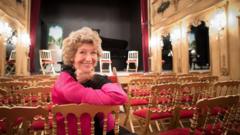
The death of Dame Felicity Lott at age 79 marks the conclusion of a singular case study in vocal preservation and repertoire optimization. In an industry where the mean career expectancy of a lyric soprano is frequently truncated by vocal fatigue, structural degradation, or misaligned repertoire choices, Lott executed a multi-decade career that sustained technical precision well into her sixties. This analysis deconstructs the structural pillars of her technique, the economic and artistic variables of her repertoire selection, and the systemic framework required to replicate such career longevity in classical vocal performance.
The Tri-Partite Framework of Vocal Sustainability
To understand how Lott maintained structural integrity over a fifty-year timeline, the vocal mechanism must be analyzed not as an artistic variable, but as a biological instrument subject to physical wear and mechanical stress. Her career longevity rests on three interdependent pillars: aerodynamic efficiency, structural registration balance, and linguistic resonance mapping.
       [Aerodynamic Efficiency]
       (Subglottic Pressure Control)
                   │
                   ▼
     [Structural Registration Balance]
     (Thyroarytenoid / Cricothyroid)
                   │
                   ▼
     [Linguistic Resonance Mapping]
    (Pharyngeal Space Optimization)
1. Aerodynamic Efficiency and Subglottic Pressure Control
Vocal degradation is primarily driven by hyper-functional breath pressure—forcing more air through the glottis than the vocal folds can efficiently resist. Lott’s technique relied on a rigorous adherence to the appoggio system, a neuromuscular equilibrium that balances the inspiratory muscles against the expiratory muscles. By maintaining a stable, low thoracic expansion and preventing premature collapse of the ribcage, she minimized the subglottic pressure exerted on the vocal fold margins. This reduced mechanical friction, preventing the formation of nodules, polyps, or chronic edema, which frequently terminate lyric careers prematurely.
2. Structural Registration Balance
The lyric soprano voice must navigate the transition between the lower thyroarytenoid-dominant register (chest voice) and the upper cricothyroid-dominant register (head voice). Lott avoided the common failure mode of shifting the heavy mechanism too high into the tonal spectrum. Instead, she mastered the voix mixte (mixed voice), blending the resonance profiles. This balance preserved the muscular elasticity of the cricothyroid muscles, ensuring that her upper extension remained stable, agile, and free of the wide, uncontrolled oscillatory pitch variance (wobble) that typically emerges in aging singers who over-sing the middle register.
3. Linguistic Resonance Mapping
Lott’s specialization in French mélodie and German Lieder was not merely an aesthetic preference; it was a structural strategy for vocal health. The acoustic properties of the French language require precise pharyngeal space modification and forward nasal resonance without glottic constriction. By mapping her vowels to optimize the first and second formants of the vocal tract, Lott achieved maximal acoustic projection (squillo) with minimal physical effort. This strategy allowed her to project over large symphonic orchestrations without escalating her physical output.
Repertoire Optimization: The Richard Strauss and Benjamin Britten Axis
A significant volume of vocal talent is neutralized by aggressive or premature repertoire escalation. The transition from light lyric roles to heavy dramatic roles represents a high-risk operational pivot. Lott’s career trajectory serves as an empirical model for risk-mitigated repertoire selection, focused primarily on the works of Richard Strauss, Wolfgang Amadeus Mozart, and Benjamin Britten.
Low Mass/Low Pressure Repertoire (Mozart) ──► Mid-Mass/High Color Repertoire (Strauss/Britten) ──► Controlled Chamber Scale (Lieder/Mélodie)
The Strauss soprano roles—specifically the Marschallin (Der Rosenkavalier), Countess Madeleine (Capriccio), and Arabella—demand sustained, soaring lines in the upper-middle passagio. However, they do not require the dense, muscular orchestration penetration of Wagnerian roles. Lott identified this specific niche: roles requiring high acoustic efficiency and long-phrase stamina without the necessity of competing against a brass-heavy, low-frequency orchestral mass.
By anchoring her operatic portfolio within this specific paradigm, she achieved several strategic advantages:
- Reduced Vocal Strain: The orchestration of Strauss, while lush, frequently thins out during crucial soprano entry points, prioritizing harmonic color over sheer decibel volume.
- Role Monopolization: By perfecting the highly specific stylistic demands of these roles—which require absolute text clarity and conversational flexibility (Parlando)—Lott became a preferred instrument for major houses globally, insulating her market value against younger, less specialized competitors.
- Britten Compatibility: Her work with Benjamin Britten’s repertoire, notably Ellen Orford in Peter Grimes and the Governess in The Turn of the Screw, leveraged her clean, non-vibrato-heavy tonal core. Britten’s writing emphasizes psychological depth and precise intervallic leaps over raw vocal power, matching Lott's specific physical capabilities.
The Economic and Pedagogical Architecture of the Masterclass Transition
As physical performance parameters inevitably shift with age, a sustainable career model requires a calculated transition from primary performance output to pedagogical and institutional leadership. Lott executed this pivot systematically, shifting her focus toward masterclasses, adjudications, and chamber recitals in her later decades.
This structural shift mitigates the physical depreciation of the vocal instrument while capitalizing on accumulated intellectual property. The transition operates under a distinct set of operational rules.
Institutional Knowledge Transfer
The classical vocal industry suffers from high fragmentation; technical mastery is largely passed down through oral tradition and behavioral modeling. Lott utilized her international status to institutionalize her specific approach to French repertoire—an area where Anglo-Saxon singers traditionally struggle with stylistic authenticity. By breaking down the specific phonemic adjustments required to sing French text cleanly, she codified a repeatable methodology for younger artists.
Portfolio Diversification
Singing full-scale operatic productions incurs high fixed costs: weeks of rehearsal, intense physical stamina, and long-term residency requirements. Transitioning to intimate recital formats and masterclasses rebalances the cost-revenue equation. The performance duration is shorter, the orchestration is reduced to a single piano (allowing for precise dynamic control and lower vocal output), and the scheduling flexibility increases exponentially. This model allows an aging artist to remain economically viable and artistically relevant without exposing their vocal mechanism to the extreme stress of modern, large-scale operatic stagings.
Systemic Risks and Limitations in Vocal Longevity Models
While Lott's career offers a blueprint for longevity, this model possesses inherent structural boundaries and risks that cannot be ignored by contemporary artists or strategists.
- The Market Volume Penalty: Prioritizing vocal health through lighter, high-efficiency repertoire means deliberately forfeiting the lucrative dramatic repertoire (e.g., Puccini, Verdi, Wagner). Singers who adopt the Lott model must accept a lower absolute volume ceiling and a restricted footprint in larger houses that favor heavy dramatic voices.
- The Specialization Trap: Relying heavily on specific national styles (French Mélodie and German Lieder) requires an elite tier of linguistic facility and cultural access. For artists training outside of Western European cultural hubs, the barrier to entry for this specific specialization may be economically prohibitive, reducing the viability of this career track.
- Physical Vulnerability to Biological Aging: No amount of technical precision can entirely reverse the hormonal and muscular atrophy associated with natural biological aging. The vocal folds inevitably lose collagen and elasticity over time. The strategy outlined here does not stop this decay; it merely optimizes the remaining tissue efficiency to delay the point of performance failure.
Strategic Action Plan for Contemporary Vocal Career Design
For artists, management agencies, and conservatories looking to replicate the structural success of Dame Felicity Lott's career architecture, implementation must occur across three distinct phases.
Phase 1: Repertoire Standardization (Ages 22–30)
Enforce an absolute ban on heavy dramatic repertoire, regardless of short-term financial incentives from casting directors desperate for large voices. Limit the operatic portfolio to Mozart, Handel, and early Bel Canto. This establishes the baseline aerodynamic efficiency and ensures the appoggio technique is fully integrated into the singer's muscle memory before the larynx undergoes final structural ossification.
Phase 2: Niche Monopolization and Market Positioning (Ages 31–50)
Identify a specific composer axis (e.g., the Strauss-Britten framework or the French-Slavic linguistic niche) that aligns with the artist's natural acoustic format peaks. Shift marketing and casting efforts to establish dominant authority within this niche. Cultivate long-term relationships with conductors who respect orchestral dynamics and prioritize vocal health over volume.
Phase 3: The Recital and Pedagogical Pivot (Ages 51+)
Systematically scale down full operatic commitments by 15% annually, replacing them with chamber music, curated recitals, and institutional masterclass series. Transition the core value proposition from physical vocal power to interpretive authority and stylistic expertise. This secures the artist's legacy, protects their physical well-being, and ensures a continuous revenue stream independent of peak physical performance constraints.


