The durability of any non-proliferation framework depends not on diplomatic consensus, but on the verification cycle: the physical verification of nuclear material inventories before material can be diverted for weaponization. The June 2026 Lake Lucerne Summit and the subsequent Islamabad Memorandum of Understanding (MoU) between the United States and Iran have created a 60-day diplomatic window by halting the military kinetic phase that began in 2025. However, a structural disconnect has emerged between the political rhetoric of the signatories and the physical constraints of nuclear monitoring. While Washington asserts that Tehran has agreed to high-level inspections, the Iranian Foreign Ministry maintains that no schedules have been set for the International Atomic Energy Agency (IAEA) to inspect facilities damaged during the hostilities. This friction reveals a deeper analytical reality: the success of the interim accord hinges entirely on resolving the verification latency problem—the gap between an unverified breakout attempt and an actionable IAEA detection.
Understanding this bottleneck requires breaking the verification architecture down into its critical operational layers, measuring the physical constraints of Iran's current stockpile, and identifying the structural vulnerabilities inherent in the 60-day interim framework.
The Three Pillars of the IAEA Safeguards Bottleneck
To evaluate whether the MoU can achieve what political actors term "nuclear honesty," the inspection process must be analyzed through three operational pillars. Safeguards are not a continuous video stream; they are a matrix of physical accounting, material containment, and access protocols.
1. Material Accounting and Inventory Verification
The primary objective of an IAEA inspection is to verify the State's Declarations of Nuclear Material Assets. In a standard verification cycle, inspectors utilize non-destructive analysis—such as gamma spectrometry and neutron counting—to verify the isotopic enrichment levels of Uranium Hexafluoride ($UF_6$) stored in cylinders.
Since the 2025 military escalations, the IAEA has been blocked from accessing Iran's primary enrichment sites at Natanz and Fordow. This creates a baseline verification deficit. The agency cannot verify the mass balance of the highly enriched uranium (HEU) stockpile. When physical access is denied, the accounting continuity is broken, meaning the statistical error margin ($\sigma$) of the remaining inventory model expands exponentially.
2. Containment and Surveillance Continuity
When inspectors are not physically present, the IAEA relies on tamper-indicating devices (seals) and optical surveillance systems. The primary vulnerability here is the "blind spot window."
If optical data collection is interrupted or if seals are removed during a period of denied access, the agency loses its chain of custody. Re-establishing this continuity requires more than flipping a switch; it demands an intensive baseline physical inventory verification (PIV), a process that can consume weeks of the 60-day interim period.
3. Structural Access Protocols
The current dispute between the declarations of US Vice President JD Vance and Iranian Foreign Ministry spokesperson Esmaeil Baghaei centers on the legal mechanism of access. Under a Comprehensive Safeguards Agreement (CSA) based on the Non-Proliferation Treaty (NPT), access is limited to declared facilities.
To verify that undeclared activities are not occurring, or to inspect damaged structures that may contain dispersed radioactive materials, the IAEA requires the broader authorities of the Additional Protocol. Iran’s rejection of specific inspection schedules for its damaged centrifuge manufacturing workshops indicates a strategy of structural access restriction, limiting verification to highly circumscribed geographic points.
The Cost Function of Breakout Timelines
The urgency of the IAEA’s return to the enrichment sites is dictated by the physics of uranium enrichment. The work required to separate isotopes is measured in Separative Work Units (SWU). The enrichment process is non-linear; the vast majority of the effort is spent converting natural uranium (0.7% $U-235$) to low-enriched uranium (5% $U-235$).
[Natural Uranium: 0.7%] ---> Requires ~65% of total SWU ---> [Low-Enriched: 5%]
[Low-Enriched: 5%]    ---> Requires ~23% of total SWU ---> [Highly Enriched: 20%]
[Highly Enriched: 20%] ---> Requires ~12% of total SWU ---> [Weapons-Grade: 90%]
Because Iran possesses a substantial stockpile of uranium enriched up to 60% purity, it has already bypassed approximately 88% of the total separative work needed to reach weapons-grade ($90%\ U-235$).
The math governing the breakout timeline creates a severe strategic asymmetry:
- Stockpile Volume vs. Critical Mass: Iran’s 60% enriched stockpile exceeds 400 kilograms. A single nuclear explosive device requires approximately 25 kilograms of weapons-grade uranium ($90%\ U-235$). Through further enrichment via advanced centrifuge cascades (such as IR-6 models), 400 kg of 60% material can be converted into enough $90%$ HEU for multiple nuclear weapons within a matter of days.
- The Detection Lag: If the breakout timeline (the time required to enrich enough material for a weapon) is shorter than the inspection frequency, the non-proliferation regime fails. Currently, with inspectors excluded from the enrichment cascades, the breakout timeline is effectively instantaneous from an external monitoring perspective. The IAEA cannot detect a diversion that occurs within a timeframe shorter than its access intervals.
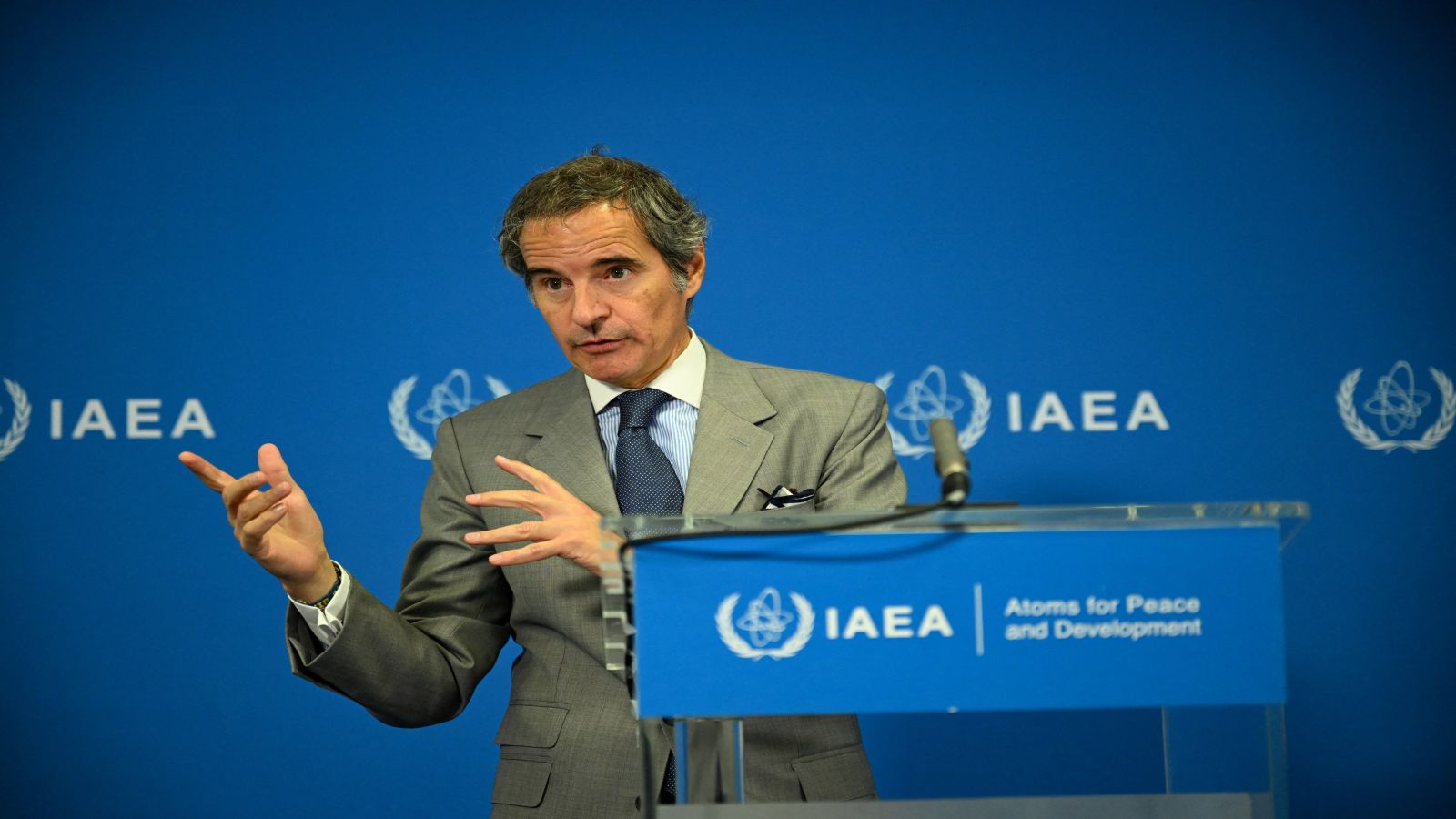
This reality explains why IAEA Director General Rafael Grossi stated in Tokyo that establishing whether inspections happen immediately or within ten days is secondary to the absolute necessity of cementing physical access. Without a baseline verification of the 60% stockpile, any diplomatic negotiation is operating on unverified assumptions regarding the total inventory of fissile material.
Structural Vulnerabilities of the 60-Day Interim Framework
The Islamabad MoU attempts to freeze the status quo by requiring Tehran to dilute its HEU stockpile in exchange for a waiver of US-backed maritime and economic sanctions, including the partial opening of the Strait of Hormuz. However, the architecture of this interim deal introduces three distinct systemic risks.
The Verification Latency Bottleneck
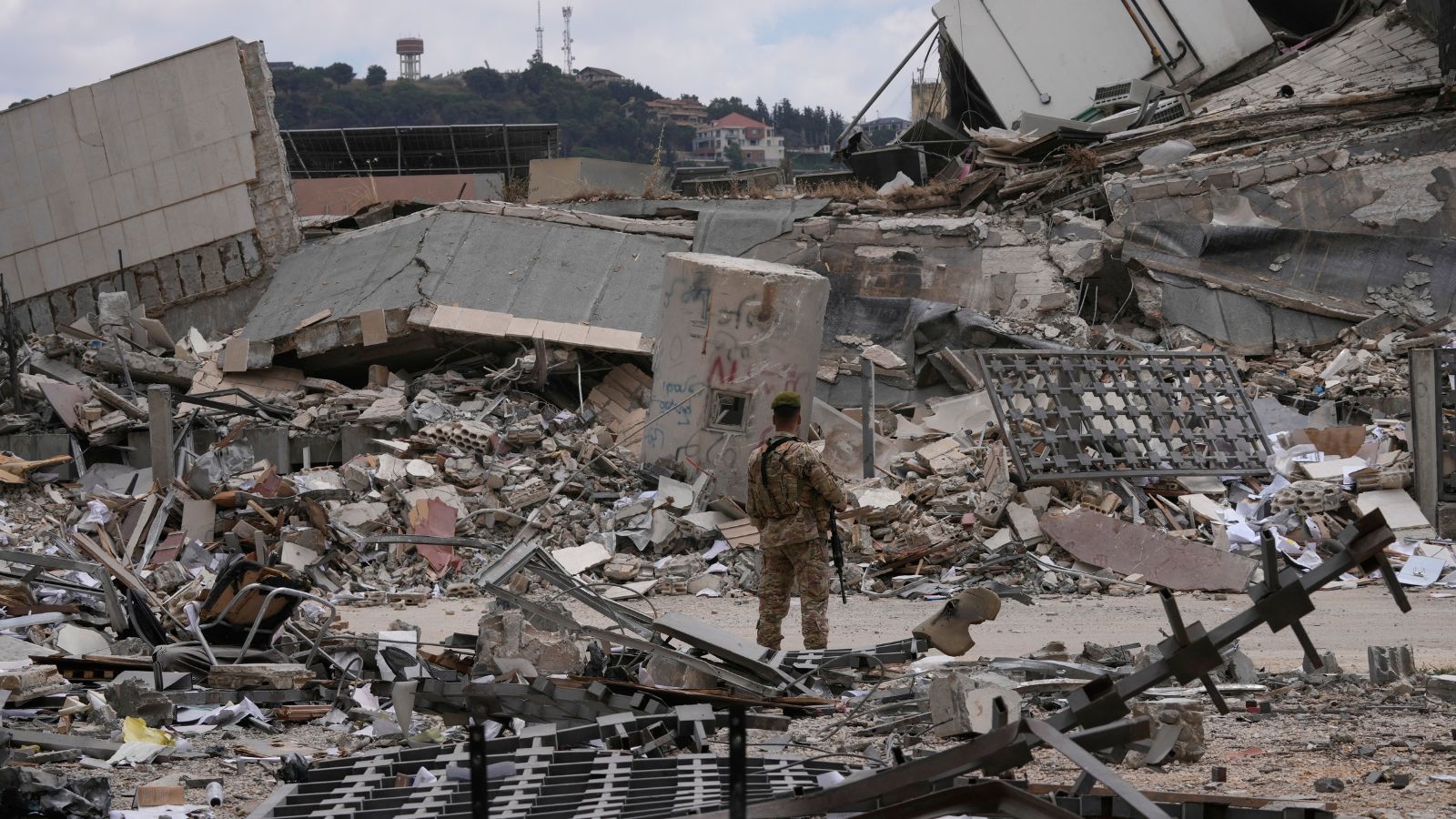
The agreement specifies a 60-day window to negotiate a permanent accord. However, conducting a comprehensive physical inventory verification across heavily fortified, subterranean, and partially damaged sites like Fordow and Natanz takes significant time. The chemical and radiological contamination inside Natanz—specifically the dispersion of uranium isotopes contained in corrosive Uranyl Fluoride ($UO_2F_2$) and Hydrogen Fluoride ($HF$) gases following previous kinetic strikes—requires inspectors to utilize specialized environmental protective equipment. The operational slowdown caused by these hazardous conditions means that the first 20 to 30 days of the interim period will be consumed purely by baseline validation, leaving zero margin for real-time monitoring.
The Asymmetry of Concession Reversibility
There is a fundamental imbalance in the physical reversibility of the concessions made by each side:
- Sanctions Relief: The lifting of naval blockades and the resumption of shipping communication protocols provide immediate, quantifiable economic liquidity to the Iranian state.
- Stockpile Dilution: While down-blending 60% $UF_6$ to 5% or natural uranium is technically quantifiable, the underlying infrastructure—the advanced centrifuge manufacturing capability—remains intact. The destruction of buildings at the Karaj workshop and the Tehran Research Center during the 2025 conflict slowed production, but the engineering knowledge and clandestine procurement networks are non-fungible. If talks collapse on day 61, the reconstitution of a 60% stockpile using advanced cascades can be achieved at a velocity that far outpaces the bureaucratic reimposition of an international maritime blockade.
The Signal-to-Noise Problem in Maritime Enforcement
The inclusion of Qatar and Pakistan as mediators to oversee shipping hotlines in the Strait of Hormuz introduces a geopolitical layer that can be exploited. Malicious actors or hardline factions seeking to disrupt the negotiations can leverage false shipping communications or ambiguous threat warnings to trigger defensive military postures. Because the MoU permits the United States to maintain naval assets nearby to reimpose a blockade if "nuclear dishonesty" is detected, a single unverified maritime incident could terminate the diplomatic window before the IAEA can complete its initial inventory verification.
Tactical Framework for Diplomatic Stabilization
To mitigate these structural vulnerabilities and ensure the 60-day window does not merely serve as a tactical pause for clandestine material relocation, the verification process must be prioritized ahead of broader political negotiations. Diplomats must decouple the technical monitoring timeline from the political bargaining schedule.
The immediate priority must be the deployment of an IAEA Technical Advance Team to establish an unalterable material baseline. This requires a sequential execution model:
- Immediate Custody of Surveillance Media: Within 72 hours, Iran must surrender all data drives and optical storage records accumulated by automated systems at Natanz and Fordow during the access blackout. This is non-negotiable for establishing whether material diversion occurred during the kinetic phase of the conflict.
- Isotopic Fingerprinting: Prior to any sanctions relaxation beyond the initial opening of the Strait of Hormuz, environmental sampling must be executed at the damaged centrifuge workshops. This establishes whether enriched material was handled at undeclared coordinates post-strike.
- Proportional Sanctions Tranching: Financial and trade waivers must not be granted upfront. Instead, they must be tied to a strict step-by-step schedule linked directly to the volume of 60% uranium physically down-blended and verified by automated on-line enrichment monitors (OLEMs).
If the international coalition permits the integration of political negotiations to outpace the physical verification of the fissile inventory, the 60-day window will inevitably expire with an expanded Iranian material capability concealed behind a screen of diplomatic ambiguity. The baseline metrics must be verified before the strategic framework can be permanently altered.