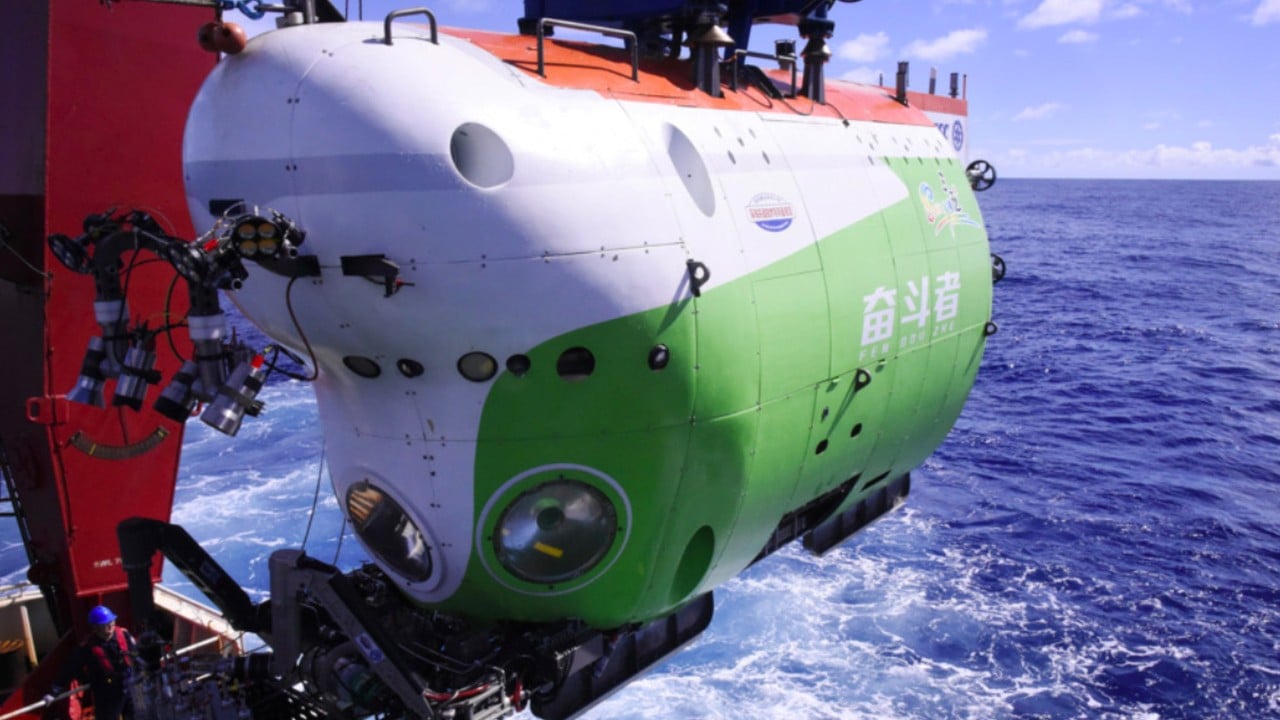
The discovery of highly localized, high-density biological communities—often described colloquially as "gardens"—within the Earth's deepest ocean trenches challenges long-held assumptions regarding energetic limitations in ultra-deep marine environments. Historically, the hadal zone (depths from 6,000 to 11,000 meters) was modeled as a biological desert, constrained by extreme hydrostatic pressure, low temperatures, and a severe scarcity of organic carbon. Recent empirical data collected by advanced deep-sea submersibles indicates that specific geomorphological and hydrodynamic mechanisms override these constraints. Understanding this phenomenon requires moving past superficial descriptions of "blooming life" to map the precise energetic, metabolic, and geological inputs that sustain these concentrated ecosystems.
The Hadal Energetic Paradox and Its Resolution
The fundamental constraint of hadal biology is the vertical transport efficiency of organic matter. As particulate organic carbon (POC) sinks from the epipelagic zone, it undergoes continuous microbial degradation. Statistically, less than 1% of surface primary production reaches the abyssal seafloor, and a fraction of that survives down to hadal depths. For an alternative perspective, check out: this related article.
To sustain a dense macrofaunal community, an external energy subsidy must exist. This subsidy operates via two distinct mechanisms:
Topographic Trapping and Funneling
Ocean trenches act as mega-scale sediment traps. The V-shaped geometry of a trench creates a focusing effect where gravity-driven downslope transport concentrates organic-rich sediments at the trench axis. Seismic events, turbidity currents, and localized slope failures accelerate this mass wasting process, abruptly delivering massive pulses of organic carbon to the trench floor. Similar analysis on this matter has been published by Ars Technica.
Hydrodynamic Convergence
Deep-sea currents interacting with complex trench topography generate localized downwelling zones and cyclonic eddies. These physical oceanographic features trap sinking organic matter, preventing its lateral dispersal and forcing it down into the trench axis. This creates a highly localized depositional center, effectively decoupling the benthic energy supply from the immediate vertical surface production.
The Three Pillars of Hadal Ecosystem Architecture
The structural integrity and survival of these deep-sea biological communities rest on three interdependent variables: substratum composition, localized chemosynthesis, and metabolic adaptation.
+---------------------------------------------------------+
|                  HADAL ECOSYSTEM PILLARS                |
+------------------------+--------------------------------+
| Structural Substratum  | Hard basalts & consolidated    |
|                        | clays for attachment sites     |
+------------------------+--------------------------------+
| Energetic Subsidy      | Endogenous chemosynthesis &    |
|                        | Exogenous POC funneling        |
+------------------------+--------------------------------+
| Physiological Capacity | Piezophilic cellular and       |
|                        | enzymatic adaptations          |
+------------------------+--------------------------------+
1. Lithic and Substratum Architecture
Unlike the expansive, homogenous mud plains of the abyssal zone, trench axes exhibit high geomorphological heterogeneity. Tectonic fracturing exposes bare basaltic rock and consolidated clay walls. These hard surfaces provide critical attachment points for sessile organisms, such as specialized porifera (sponges), cnidarians (sea anemones), and crinoids. Without this structural stability, macrofaunal colonization is restricted by the shifting, fine-grained sediments characteristic of depositional basins.
2. Chemolithoautotrophic Foundations
While exogenous organic matter input is critical, structural analysis of these ecosystems reveals a significant endogenous energy component. Microbial mats utilizing reduced chemical compounds—specifically hydrogen sulfide ($H_2S$), methane ($CH_4$), and reduced iron ($Fe^{2+}$)—form the foundational trophic layer.
These compounds leak through deep-seated faults driven by tectonic activity. Piezophilic (pressure-loving) bacteria oxidize these molecules, converting inorganic carbon into cellular biomass via chemosynthesis. This process occurs independently of sunlight, providing a highly stable, baseline energetic input that buffers the ecosystem against seasonal fluctuations in surface primary productivity.
3. Piezophilic Cellular Stabilization
At pressures exceeding 60 to 110 megapascals (MPa), biological molecules undergo severe structural distortion. In unadapted organisms, high hydrostatic pressure rigidifies lipid bilayers, rendering cell membranes non-functional, and inhibits enzyme-substrate interactions. Hadal organisms counter this via specific biochemical adaptations:
- Homeoviscous Adaptation: Cells synthesize a high ratio of polyunsaturated fatty acids (PUFAs) to maintain membrane fluidity and functional transport pathways under immense pressure.
- Piezo-lytes: Organisms accumulate high intracellular concentrations of small organic molecules, primarily trimethylamine N-oxide (TMAO). TMAO acts as a chemical chaperone, stabilizing proteins against pressure-induced denaturation by preventing water molecules from forcing their way into the hydrophobic core of enzymes.
Trophic Cascades in High-Pressure Environments
The trophic structure of a hadal benthic community is highly compressed and efficient. The distribution of biomass follows a distinct spatial gradient centered around the primary carbon inputs.
[Chemosynthetic Microbes / Sinking POC]
                 │
                 ▼
[Detritivores & Filter Feeders] (Ostracods, Amphipods, Holothurians)
                 │
                 ▼
[Apex Hadal Predators] (Liparidae / Hadal Snailfish)
Filter feeders and detritivores form the primary consumer tier. Specialized amphipods, macrourid fishes, and holothurians (sea cucumbers) process the concentrated organic material. Amphipods in these zones possess specialized digestive enzymes capable of rapidly breaking down complex polysaccharides and refractory proteins that remain intact despite long sinking times.
The apex of this food web is occupied by highly specialized predators, most notably the hadal snailfish (family Liparidae). These organisms exhibit extreme physiological modifications, including a non-ossified, cartilaginous skeleton that avoids the high energetic cost of bone calcification under pressure, and a transparent, scaleless skin layer that minimizes metabolic upkeep.
Methodological Limitations and Data Gaps
Quantifying these ecosystems introduces severe engineering and observational biases. The current data set relies heavily on localized video transects, targeted core sampling, and short-term lander deployments. These methods present distinct analytical vulnerabilities:
Spatial Sampling Bias
Submersible tracks naturally target areas of high visual interest or accessible topography. This distorts regional biomass estimates, potentially over-representing the density of "gardens" relative to the rest of the trench axis. The true ratio of high-density patches to barren sedimentary zones remains unknown.
Barophilic Sample Degradation
Retrieving biological samples from 10,000 meters to atmospheric pressure causes irreversible cellular rupture and protein denaturation due to rapid decompression and thermal shock. Consequently, ex-situ metabolic rate measurements are highly unreliable unless conducted using specialized isobaric (pressure-retaining) recovery chambers. This operational bottleneck limits our understanding of actual in-situ respiration and carbon turnover rates.
Strategic Framework for Future Hadal Exploration
To transition from qualitative observation to predictive modeling of deep-ocean carbon sinks and biodiversity hotspots, research initiatives must pivot from exploratory deployments to systematic, multi-variable quantification.
Phase 1: High-Resolution Bathymetry & Backscatter Mapping
                         │
                         ▼
Phase 2: Deployment of Long-Term Isobaric Sensor Networks
                         │
                         ▼
Phase 3: Automated In-Situ Metabolic Rate Quantifications
The immediate operational priority requires the deployment of autonomous, long-term benthic lander arrays equipped with acoustic Doppler current profilers (ADCPs) and high-sensitivity chemical sensors. These platforms must be deployed for minimum twelve-month cycles to capture seasonal variations in carbon flux and locate transient tectonic venting events.
Concurrently, deep-sea research programs must standardize the use of in-situ microrespirometers. Measuring oxygen consumption directly on the seafloor is the only method to establish the baseline metabolic cost of hadal life. Fulfilling these technical milestones will transform our understanding of the hadal zone from an isolated planetary anomaly into a quantifiable component of the global carbon cycle.