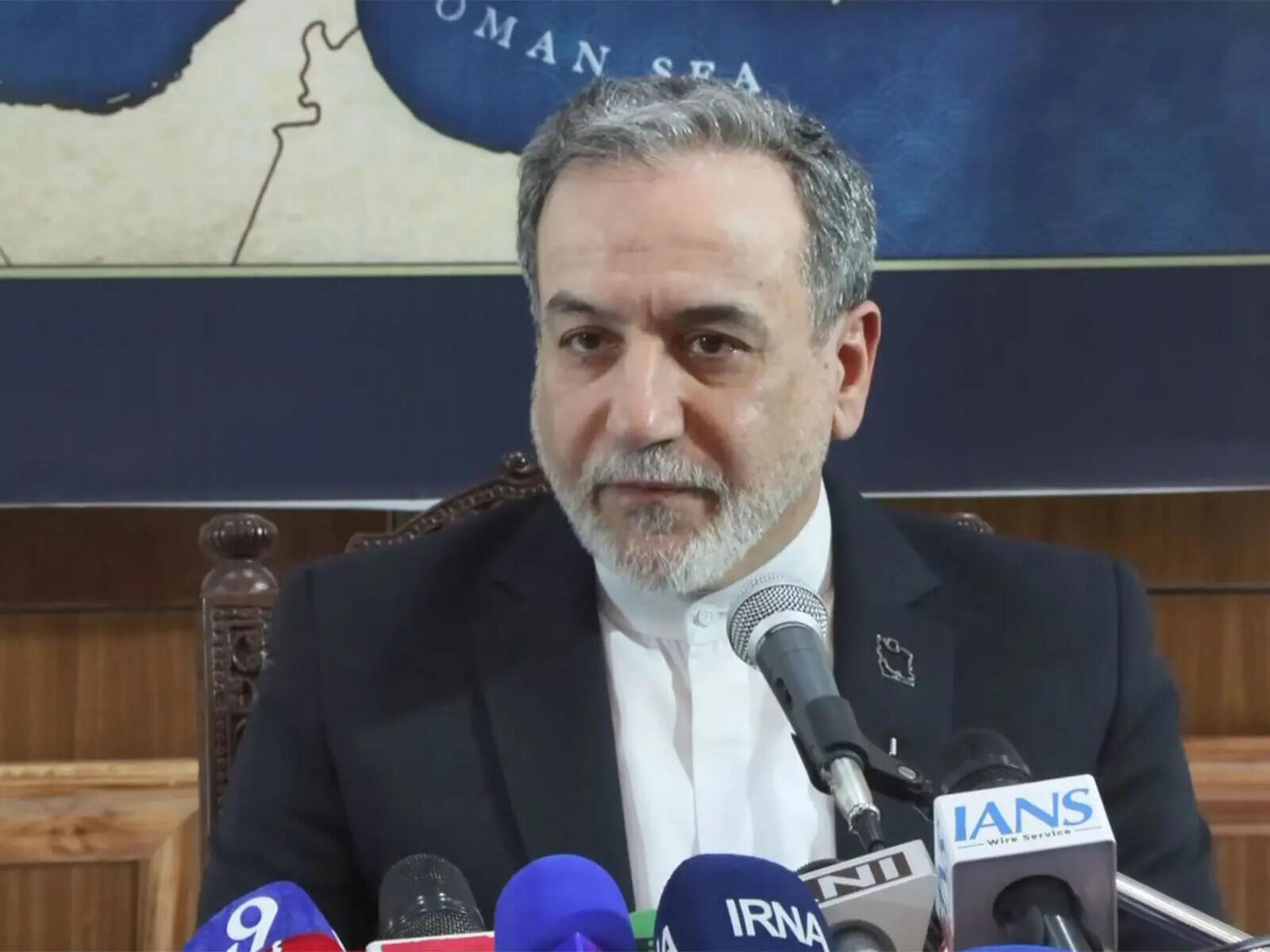
The persistent signaling between Tehran and Washington regarding the revival of the Joint Comprehensive Plan of Action (JCPOA) functions not as a prelude to an immediate breakthrough, but as a risk-mitigation strategy designed to manage regional escalation. Foreign Minister Abbas Araghchi’s recent confirmation of "received messages" from the United States indicates that the structural incentives for dialogue remain intact despite the collapse of formal frameworks. This interaction is governed by a specific logic of necessity where both parties utilize backchannels to prevent a total "breakout" scenario while simultaneously maintaining their respective domestic and geopolitical leverage.
The Tripartite Framework of Current US-Iran Engagement
To understand why talks continue despite a lack of visible progress, one must categorize the engagement into three distinct operational pillars. Each pillar serves a specific function in the broader strategic calculus.
1. Escalation Throttling
The primary function of current messaging is to define the "red lines" that prevent a direct kinetic conflict. By maintaining a functional, albeit indirect, line of communication, both administrations can calibrate their military and economic pressures. This prevents a "spiral effect" where a tactical miscalculation—such as a proxy strike or a sudden spike in uranium enrichment—is interpreted as an existential threat requiring an immediate, high-scale military response.
2. The Preservation of Technical Data Points
Negotiations serve as a mechanism to freeze the status quo. For the United States, the goal is to keep Iranian enrichment levels below the 90% weapons-grade threshold. For Iran, the goal is to ensure that the architecture of sanctions remains a subject of debate rather than a permanent, unchangeable fixture of the global economy. The "messages" Araghchi refers to are likely centered on the technical parameters of monitoring and the potential for limited, incremental sanctions relief in exchange for verifiable pauses in nuclear development.
3. Domestic Political Buffering
Both leaderships face significant internal opposition to formal rapprochement. In Washington, the political cost of a new deal is prohibitively high during election cycles or periods of heightened Middle Eastern instability. In Tehran, the hardline factions view concessions as a sign of weakness. Backchannels allow both sides to "negotiate without negotiating," providing enough diplomatic cover to claim they are pursuing peace while avoiding the scrutiny of a formal treaty process.
The Cost Function of Diplomatic Stasis
Maintaining the current state of "no war, no deal" is not a cost-free strategy. It operates on a decaying trajectory where the value of the original JCPOA diminishes as Iranian technical capabilities advance.
The Sunk Cost of Technology is a critical factor here. As Iran masters the centrifuge cycles and enrichment processes required for $U^{235}$ concentrations at 60%, the "breakout time"—the duration required to produce enough fissile material for a nuclear weapon—shrinks to a matter of weeks. The original 2015 agreement was built on a one-year breakout window.
The mathematical reality of this shift is clear:
- Original JCPOA Metric: $\approx 12$ months breakout time.
- Current Estimated Metric: $\approx 7$ to 14 days breakout time.
Because the physical knowledge cannot be unlearned, any future agreement cannot simply replicate the 2015 terms. This creates a structural bottleneck: the US demands a "longer and stronger" deal to account for these gains, while Iran demands higher compensation for the "lost" years of economic growth under the "Maximum Pressure" campaign.
Strategic Bottlenecks in the "Received Messages" Phase
The transition from receiving messages to signing an accord is obstructed by three primary bottlenecks that render traditional diplomacy ineffective.
The Verification-Compliance Gap
The International Atomic Energy Agency (IAEA) has consistently reported gaps in its ability to monitor Iranian facilities. This lack of transparency increases the "information asymmetry" between the two parties. For the US, any message regarding sanctions relief is contingent upon a level of verification that Iran currently views as an infringement on its sovereignty. Without a baseline of trusted data, the messages remain purely aspirational.
The Regional Linkage Problem
Neither party operates in a vacuum. The actions of regional actors, specifically the "Axis of Resistance" and Israel, act as external variables that can derail backchannel progress instantly. A message sent on Monday regarding nuclear limits can be invalidated on Tuesday by a drone strike in the Red Sea or an assassination in Tehran. The US-Iran relationship is no longer a bilateral negotiation; it is a multivariate equation where the variables are often outside the control of the primary negotiators.
The Sunset Clause Paradox
Many of the restrictive measures in the original JCPOA are approaching their "sunset" dates. As these dates pass, the legal basis for international sanctions dissolves. Iran sees no reason to negotiate away rights it will technically regain through the passage of time, while the US views the expiration of these clauses as a trigger for "snapback" sanctions at the UN Security Council. This creates a collision course where the legal timeline outpaces the diplomatic timeline.
The Mechanism of "Indirect" Communication
Araghchi’s mention of messages often points to the role of intermediaries like Oman, Qatar, or Switzerland. The choice of the intermediary is itself a message.
- Oman: Usually reserved for high-level political shifts or prisoner exchanges.
- Qatar: Often focused on the financial plumbing of sanctions relief and the unfreezing of assets.
- Switzerland: Primarily used for technical, consular, or immediate de-escalation needs.
The reliance on these intermediaries introduces a "latency" in communication. This delay is both a hindrance and a tool; it allows for internal deliberation but prevents the rapid-response diplomacy needed during a crisis. The effectiveness of these messages is currently hampered by the fact that the "ask" from both sides is fundamentally incompatible with the other's "give."
The Strategic Projection
The most likely trajectory is the continuation of Managed Friction. We are witnessing a transition from a "grand bargain" strategy to a "transactional containment" strategy.
The United States will likely focus on an informal "freeze for freeze" arrangement. In this scenario, Iran agrees not to cross the 90% enrichment line and to limit the activities of its regional proxies, while the US provides quiet "look-the-other-way" enforcement on Iranian oil exports to China. This is not a treaty; it is a shared understanding of the consequences of escalation.
For Iran, this provides the necessary hard currency to maintain domestic stability without the political humiliation of a formal return to a deal that they believe was betrayed. For the US, it avoids a second front in the Middle East while the focus remains on Eastern Europe and the Indo-Pacific.
The signals from Araghchi should be viewed as a confirmation of this containment protocol. The messages are not about building a bridge to a new era of cooperation; they are about maintaining the guardrails on a very dangerous road. Any investor or geopolitical analyst expecting a formal signing ceremony in the near term is miscalculating the structural incentives. The objective is stability through ambiguity, not resolution through clarity.
The immediate tactical move for regional players and global markets is to monitor the IAEA Board of Governors meetings rather than the rhetoric of the Foreign Ministry. Real movement will be signaled by an increase in inspector access or a formal "censure" resolution—tangible actions that the current backchannel messages are specifically designed to avoid.