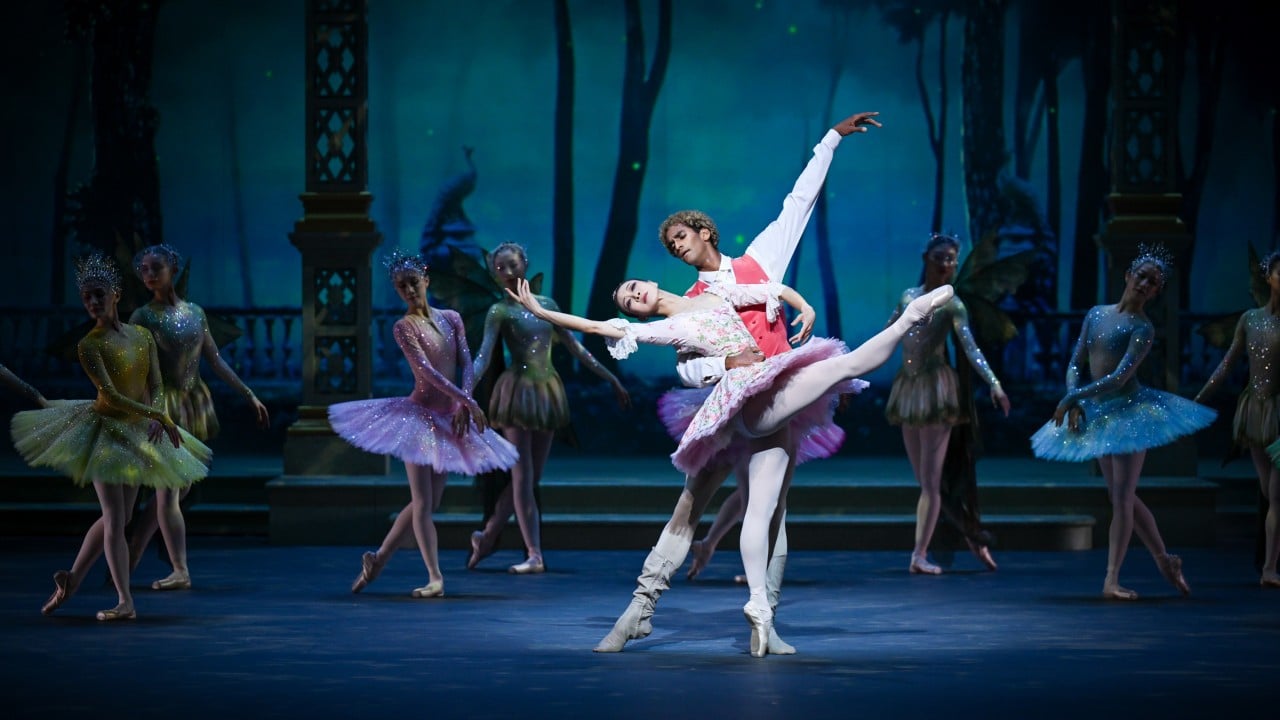
Treating box office receipts as the primary measure of cultural worth confuses commercial liquidity with public value, and that confusion sits at the center of Hong Kong's debate over funding plays, ballets, and symphonies.
When public subsidies face scrutiny over soft attendance figures—such as reported drops from 360,000 attendees in 2007 to 300,000 in 2025, alongside seat occupancy sliding from 77 percent to 69 percent—policymakers face a genuine governance problem. Tax revenue funds major performing arts bodies, cultural venues, and district infrastructure at substantial net cost. Yet evaluating a symphony orchestra or experimental theatre troupe by the same seat-fill logic applied to a commercial pop tour misdiagnoses why public subsidy exists in the first place. A rigorous evaluation model separates market revenue from non-market externalities, maps the cost structure of live performance, and pairs quantitative output metrics with structured artistic and civic indicators.
Deconstructing the Box Office Trap
Competitor commentary on Hong Kong's cultural metrics generally frames the issue as a binary clash between "spreadsheet bean-counting" and "creative survival". That framing captures the emotional stakes of arts administration, but it leaves the underlying economic mechanics underdeveloped.
In standard coverage of the debate, three analytical gaps recur:
- Conflating revenue generation with social return: Ticket revenue measures willingness to pay at a specific price point, not total economic or cultural benefit. Many live performances generate positive spillovers—such as youth arts education, cultural preservation, and city branding—that ticket buyers do not capture or pay for directly.
- Treating attendance shifts as a single cause: A drop in seat occupancy or total admissions can stem from shifting demographics, competing leisure substitutes, venue geography, programming mix, or post-pandemic habit changes rather than artistic failure alone.
- Ignoring cost asymmetry: Live performing arts suffer from what economists call Baumol's cost disease. Unlike manufacturing or software, staging a live symphony or theatrical run still requires roughly the same labor hours per performance today as decades ago, while wages across the broader economy rise. Productivity gains in rehearsal or stagecraft cannot match economy-wide wage growth indefinitely without shrinking artistic quality or raising ticket prices beyond mass reach.
The Cost Function and Subsidy Logic of Live Performance
To measure value fairly, an analyst has to look at how performing arts organizations actually incur costs and earn revenue. A performing arts organization's operating cost in a given fiscal year can be understood through three main components: fixed institutional overhead (administration, permanent ensembles, rehearsal spaces, and baseline facility commitments), production-specific variable costs (set construction, costumes, guest artists, royalties, and rights), and venue or marketing costs (hall hire, ticketing fees, and audience acquisition).
Revenue comes from a parallel set of buckets: earned income (box office sales, touring fees, workshops, and commercial sponsorships) and public or philanthropic support (direct government grants, subsidized venue access, and endowment or donor contributions). In publicly supported performing arts ecosystems, earned income rarely covers total operating cost. For instance, official reporting on the West Kowloon Cultural District Authority shows cost recovery rates of 30 percent for its Performing Arts Division in FY2024/25, alongside 44 percent for both M+ and the Hong Kong Palace Museum, figures described as aligned with established international cultural institutions rather than commercial break-even models.
Public funding exists to close the gap between socially desirable cultural output and what commercial ticket pricing can finance on its own.
A common mistake in public debate is assuming that low ticket revenue automatically proves waste. Two different organizations can both post a 65 percent occupancy rate for completely different reasons:
- Market mismatch: A company schedules too many performances of a familiar work in a hall too large for local demand, driving up per-show production and venue costs without building new audience reach.
- Risk-weighted artistic investment: A company stages a demanding contemporary work, bilingual drama, or specialized heritage repertoire with a smaller core audience, investing in artistic range and talent development that would not clear a commercial profitability hurdle.
Penalizing both outcomes identically creates a perverse incentive. Administrators respond by programming safer revivals, familiar classics, or lighter entertainment that protect occupancy ratios while narrowing artistic ambition. Over several funding cycles, a city can end up with respectable attendance percentages alongside a homogenized repertoire and fewer pathways for emerging artists.
Four Pillars for Measuring Cultural Value
Replacing raw ticket counts with a workable accountability system does not mean abandoning numbers. Taxpayers and lawmakers have a legitimate right to know whether public funds are used efficiently, while artists and arts managers need criteria that reflect how cultural work operates. A sound evaluation architecture rests on four distinct pillars.
1. Audience Reach and Depth
Raw seat occupancy tells only part of the audience story. A venue filled to 90 percent by repeating the same small group of subscribers behaves differently from a 70 percent house that brings in first-time attendees, students, or cross-district visitors.
Useful indicators in this pillar include repeat versus first-time attendance rates, demographic and geographic breadth across districts, student and community outreach participation, and average ticket yield relative to concessionary access programs. Measuring depth alongside volume shows whether an organization is growing a durable cultural public or relying on a shrinking core.
2. Artistic Vitality and Talent Pipeline
Artistic value cannot be reduced to a single score, yet leaving artistic assessment entirely informal invites criticism that funding decisions are opaque. Institutions can combine structured peer and artistic review panels with concrete operational indicators.
Relevant signals include the proportion of new commissions, experimental works, or under-represented repertoire; artistic collaborations with local writers, composers, choreographers, and designers; and career progression metrics such as fellowships, residencies, or touring invitations. This distinction is especially relevant when comparing established flagship companies with smaller or newer groups seeking access to public funds.
3. Civic and Educational Spillovers
Performing arts organizations often deliver public goods through activities adjacent to mainstage ticketed runs. School workshops, masterclasses, accessible performances, and neighborhood collaborations build cultural literacy and social cohesion over multi-year horizons.
Evaluating these spillovers requires tracking program reach, school and community partnerships, and retention across educational stages rather than pretending every workshop should generate box office profit. At the same time, evaluators must guard against counting every peripheral activity as proof of high value if the core artistic work is neglected.
4. Financial Discipline and Cost Efficiency
Accountability still requires clear fiscal guardrails. Public funders should track cost per performance, cost per attendee, own-source revenue growth relative to baseline benchmarks, administrative overhead ratios, and multi-year reserve management.
Evaluating financial discipline by trajectory and peer comparability—rather than demanding commercial profitability—lets administrators improve operational efficiency without gutting artistic scope. Where exact causal attribution between a single arts grant and broader economic or tourism spending is difficult to isolate, analysts should state those limits explicitly instead of inflating indirect multipliers.
Operationalizing a Tiered Evaluation System
In practice, a single scorecard applied uniformly to every theatre company, dance ensemble, and orchestra creates friction. A large institution with permanent ensembles and major venue commitments faces a very different operating reality from a mid-sized or emerging group.
- Tier the metrics by organizational scale and mandate: Assign stricter operational and reach benchmarks to large, long-funded institutions with major infrastructure or ensemble commitments, while weighting artistic development, innovation, and pilot audience growth more heavily for emerging or small-to-medium groups.
- Use multi-year rolling windows: Evaluate performance over three-to-five-year cycles rather than single seasons. Major productions, audience cultivation, and repertoire development take years to mature, whereas single-year snapshots punish necessary experimentation.
- Separate commercial hiring from artistic grants: Keep commercial venue rentals, large-scale entertainment hires, and tourism-driven events analytically distinct from artistic grants so commercial cash flow neither masks artistic stagnation nor distorts arts subsidies.
- Audit the evaluation process itself: Review rubric definitions, panel composition, and indicator weights periodically so metrics do not become static checkboxes that encourage gaming.
No measurement framework eliminates trade-offs. Qualitative panels can introduce subjectivity or groupthink, while overly rigid quantitative targets can push organizations toward conservative programming. A transparent mix of pre-agreed targets, documented rationales for artistic risk, and clear public reporting keeps accountability credible without pretending culture behaves like a commodity.
Strategic Play for Cultural Policymakers
Cultural policymakers in Hong Kong should replace single-season box office and occupancy thresholds with a dual-track funding contract that pairs multi-year baseline stability with explicit portfolio targets for audience expansion and artistic experimentation. Rather than forcing every company to chase mass-market ticket numbers or defending status-quo subsidies without clear benchmarks, funding bodies should require each grantee to commit upfront to a balanced mix of accessible programming, artistic risk, and cost discipline over a three-to-five-year horizon—and judge renewal against that agreed portfolio.


