The intersection of maritime sovereignty and humanitarian activism creates a high-stakes friction point where international law meets kinetic enforcement. When naval forces intercept aid vessels in international waters, the event is rarely a simple tactical maneuver; it is a manifestation of a protracted blockade strategy designed to control the flow of dual-use materials into a conflict zone. Analyzing the interception of Gaza-bound ships requires moving beyond the surface-level narrative of "aid vs. blockade" and instead deconstructing the operational logic, the legal justifications under the San Remo Manual, and the logistical bottlenecks that define Mediterranean maritime security.
The Strategic Logic of Maritime Exclusion Zones
A maritime blockade is not merely a physical barrier but a calculated economic and security filter. For the enforcing state, the objective is the degradation of an adversary's military capability by restricting access to the global supply chain. This strategy rests on three operational pillars:
- Material Interdiction: The primary goal is the prevention of "dual-use" goods—items like cement, steel, or certain chemicals—from reaching the territory. While ostensibly for civilian infrastructure, these materials are often diverted for military engineering, specifically subterranean fortifications.
- Sovereignty Assertion: By enforcing an exclusion zone in international waters, the state signals its intent to maintain a security perimeter that extends beyond its territorial sea. This creates a buffer zone where potential threats are identified and neutralized before they reach a vulnerable proximity to the coastline.
- Psychological Deterrence: High-profile interceptions serve to increase the "cost of entry" for future organizers. When the risk of vessel seizure and cargo confiscation becomes a statistical certainty, the financial and logistical burden on activist organizations increases, potentially leading to a breakdown in their operational tempo.
The tension arises because these vessels often carry essential humanitarian supplies—food, medicine, and water purification equipment. The conflict is therefore a zero-sum game between the state’s "Security Requirement" and the organizers' "Humanitarian Mandate."
Legal Frameworks and the San Remo Manual
The legality of boarding a vessel in international waters is often the most contested aspect of these operations. Under standard international law (UNCLOS), a ship on the high seas is generally subject only to the jurisdiction of its flag state. However, the law of armed conflict—specifically the San Remo Manual on International Law Applicable to Armed Conflicts at Sea—provides a specific set of rules for blockades.
A blockade is legally recognized if it meets four criteria:
- Declaration: The blockade must be formally declared and notified to all neutral states.
- Effectiveness: The blockading power must have the means to enforce it. A "paper blockade" that is not physically maintained is legally invalid.
- Impartiality: It must be applied to the ships of all nations without discrimination.
- Proportionality: The blockade must not cause excessive suffering to the civilian population relative to the military advantage gained.
Interceptions in international waters are permitted under Paragraph 67 of the San Remo Manual, which allows for the capture of neutral merchant vessels if they are "breaching or attempting to breach a blockade" after having been notified of its existence. The tactical execution—boarding, steering the vessel to a secondary port, and processing the crew—is the physical manifestation of this legal theory. The organizers argue that the blockade itself is an illegal form of collective punishment, creating a fundamental disagreement where both parties operate under divergent legal interpretations.
The Logistics of Interception and Cargo Processing
The interception process follows a rigid operational sequence designed to minimize kinetic engagement while ensuring total control of the asset.
Phase I: Hailing and Identification
Before physical contact occurs, the naval force establishes communication. The vessel is informed that it is approaching a restricted zone and is offered an alternative: divert to a sanctioned port (such as Ashdod) where the cargo can be inspected and subsequently transferred via land crossings. This step is critical for legal defense, as it establishes "intent to breach" if the vessel refuses the detour.
Phase II: Tactical Boarding
If the vessel maintains its course, the navy initiates a boarding operation. This is typically executed by elite maritime units using Fast Rope Insertion Extraction System (FRIES) from helicopters or via rigid-hull inflatable boats (RHIBs). The goal is to seize the bridge and the engine room simultaneously, neutralizing the vessel's propulsion and steering.
Phase III: Cargo Triage and land-based Distribution
Once the ship is diverted to a controlled port, the "Masterclass of Logistics" begins. The cargo is not simply discarded. It undergoes a rigorous triage process:
- X-Ray and Chemical Scanning: Identifying hidden compartments or hazardous materials.
- Category Sorting: Separating "pure" humanitarian goods (flour, medicine) from "dual-use" items.
- The Land-Link Bottleneck: The transition from sea to land is the most significant friction point. Goods must be offloaded, palletized, and moved through terrestrial checkpoints like Kerem Shalom. This transition significantly slows the delivery speed compared to a direct maritime offload, which is the exact outcome the blockading power intends to maintain for security oversight.
Structural Failures in Aid Delivery Models
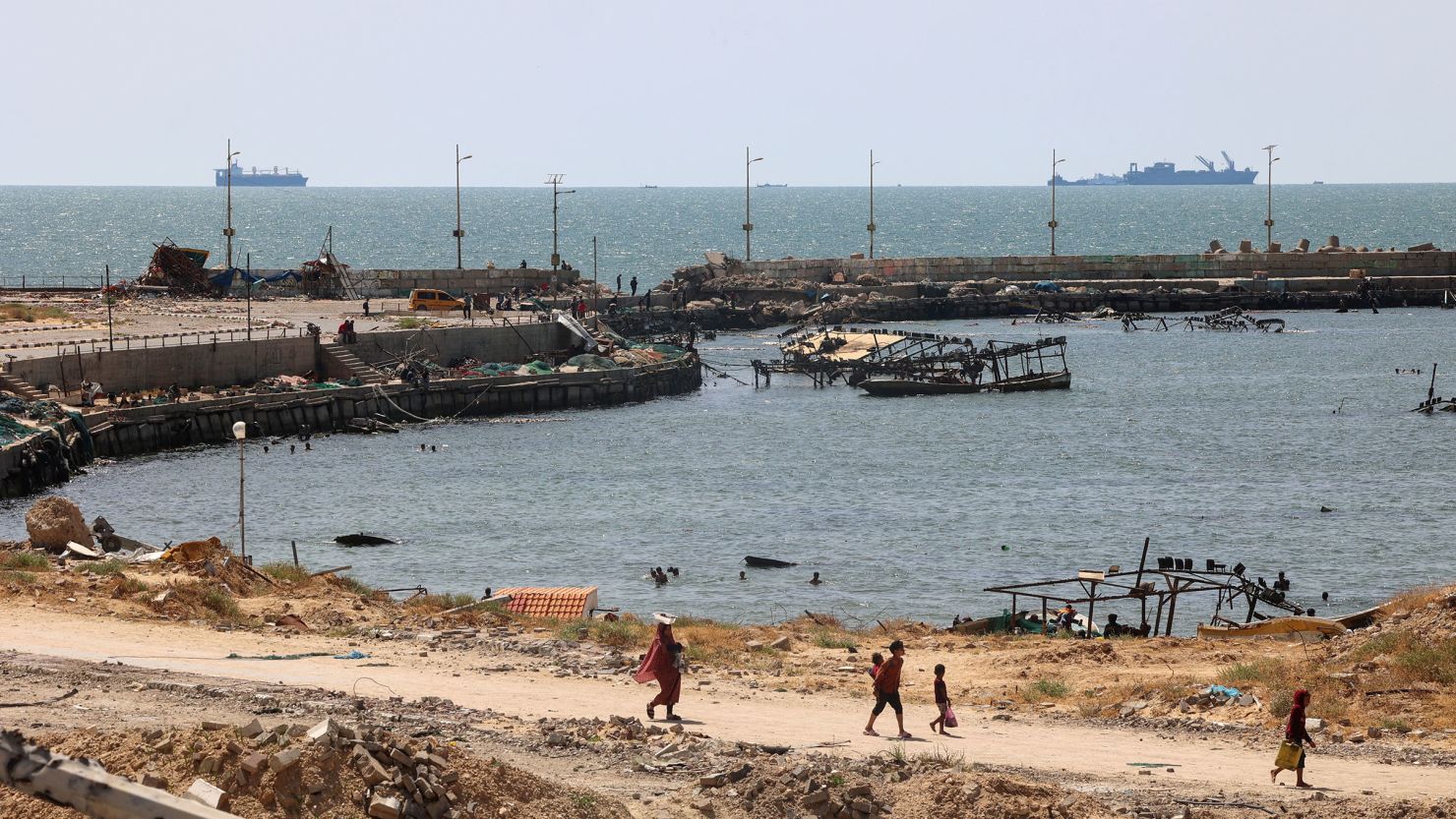
The "Flotilla" model of aid delivery is structurally inefficient when viewed through the lens of humanitarian logistics. Maritime delivery requires deep-water port infrastructure to be effective. Gaza’s lack of a modern, functioning seaport means that even if vessels were allowed to reach the coast, the offloading process would be slow, dangerous, and limited to small-tonnage vessels.
The inefficiency is compounded by the High-Volatility Risk Premium. Because these missions are uncoordinated with the territorial authority, they lack the "Green Channel" status afforded to established international NGOs like the Red Cross or the World Food Programme. This results in a "Stop-and-Go" delivery cycle that prevents the establishment of a consistent supply chain.
The Geopolitical Cost Function
Every interception carries a "Diplomatic Overhead." The state enforcing the blockade must weigh the military utility of stopping a ship against the resulting erosion of international standing.
- Media Asymmetry: Organizers utilize live-streaming and social media to frame the interception as a David-vs-Goliath encounter. The naval force, restricted by operational security (OPSEC), often fails to provide a counter-narrative in real-time.
- Third-Party Relations: Intercepting a vessel flagged to a neutral or allied nation creates immediate friction with that nation's government. This necessitates a "Diplomatic Buffer" where the state must justify the action through intelligence sharing or high-level bilateral talks.
The cost function of a blockade is therefore:
$$C = O_c + D_s + R_a$$
Where:
- $C$ = Total Cost
- $O_c$ = Operational Cost (Fuel, personnel, maintenance)
- $D_s$ = Diplomatic Strain (Political capital expended)
- $R_a$ = Risk of Escalation (The probability of a tactical error leading to a wider conflict)
As $R_a$ increases, the sustainability of the blockade model comes into question, forcing states to move toward technological solutions—such as remote-sensing buoys and automated surveillance—to reduce the need for physical ship-to-ship boarding.
Tactical Realignment and Automated Enforcement
The future of blockade enforcement lies in the transition from "Physical Interdiction" to "Digital Exclusion." We are seeing the emergence of a multi-layered security architecture that includes:
- AIS Spoofing and Monitoring: Tracking vessels long before they reach the exclusion zone by analyzing Automatic Identification System (AIS) data for anomalies in speed or heading.
- Uncrewed Surface Vessels (USVs): Deploying autonomous drones to shadow aid ships, providing a 24/7 video feed to command centers and reducing the risk to naval personnel during the initial contact phase.
- Electronic Warfare (EW): Disrupting the communication and navigation systems of vessels that refuse to change course, effectively "blinding" the ship until it accepts a tow or diverts.
This shift toward automation seeks to lower the $O_c$ (Operational Cost) while maintaining the effectiveness of the blockade. However, it does not resolve the underlying legal and humanitarian friction; it merely sanitizes the mechanics of enforcement.
The strategic play for any entity involved in maritime aid or enforcement is the move toward a "Third-Party Verification" system. By utilizing neutral, internationally recognized bodies to inspect cargo at the point of origin (e.g., Cyprus or Greece), the security concerns of the blockading power can be addressed without the need for high-risk interceptions in international waters. Until such a framework is formalized and trusted by both the state and the activists, the Mediterranean will remain a theater of periodic maritime confrontation where tactical success often results in strategic stalemate.