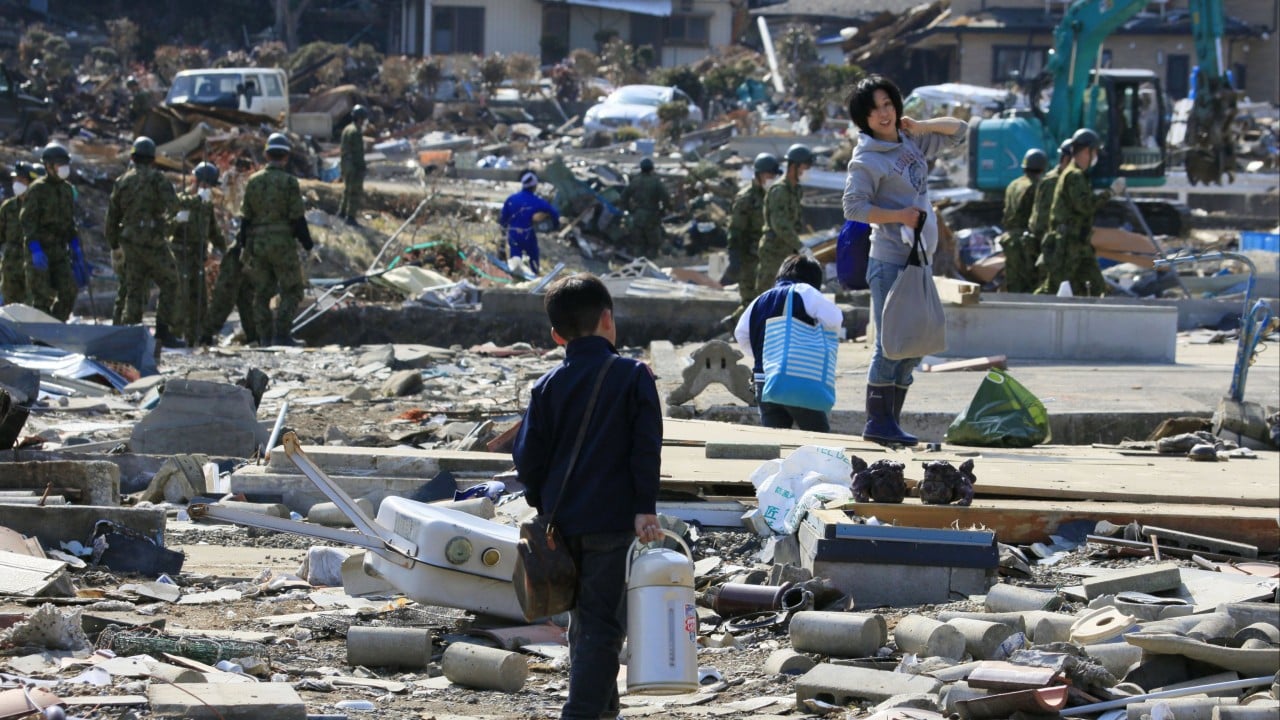
The ground does not just shake in Japan; it snaps. When the Great East Japan Earthquake struck in 2011, it didn’t just topple buildings or trigger a wall of water that erased entire coastlines. It deleted the coordinates of people’s lives.
Imagine a man named Kenji. He is seventy-two years old. For five decades, his identity was anchored to a specific patch of soil, a specific neighbor’s morning wave, and the exact creak of the floorboards in a house his father built. In ten minutes, the ocean turned his history into gray sludge. He was moved to a temporary housing unit—a sterile, prefabricated box with thin walls and a door that locked from the inside. He was safe. He was fed. He was, by every clinical metric, "recovered." You might also find this similar article insightful: Inside the Congo Ebola Crisis Nobody is Talking About.
But Kenji was dying. Not from injury, but from a silent, corrosive thinning of the soul that the Japanese call kodokushi—lonely death. He had lost his ibasho.
The Invisible Architecture of Being
We often mistake "home" for a roof and four walls. We think of "belonging" as a fuzzy, sentimental luxury. Research emerging from the wreckage of the 2011 disaster suggests we have been looking at human health through a keyhole. Scientists found that survivors who possessed a strong sense of ibasho—a word that translates roughly to "a place where one feels at home" or "a space where it is okay to be yourself"—showed significantly lower levels of psychological distress and higher physical resilience. As highlighted in detailed reports by Medical News Today, the effects are significant.
It isn't just about having a seat at the table. It is about knowing that if you didn't show up, someone would notice the empty chair.
The concept of ibasho functions as a psychological immune system. In the wake of a catastrophe, the medical community rushes to treat PTSD and physical trauma. These are vital, but they are reactive. Ibasho is proactive. It is the invisible thread that stitches a person back into the fabric of reality. When Kenji sits in his prefab box, he is a ghost. When he walks to a communal garden and hands a trowel to a neighbor, he becomes Kenji again.
The Mechanics of the Soul
Think of your life as a series of circles. The inner circle is your skin. The next is your home. The third is your community. A disaster like a tsunami doesn't just break the outer circles; it collapses them onto the individual.
A study led by researchers at the University of Tokyo examined thousands of survivors. They weren't just looking at who had money or who had family. They were looking for the "quiet contributors." They found that individuals who felt they had a role to play—even something as small as making tea for others or being the person who remembers everyone’s birthday—recovered faster.
This isn't a coincidence. It is biology.
When we feel we belong, our bodies produce less cortisol. Our blood pressure stabilizes. The chronic inflammation triggered by the "fight or flight" response of a disaster begins to ebb. Without ibasho, the body remains in a state of high alert, waiting for the next wave that never comes, eventually wearing itself out from the inside.
The Problem With Modern Help
The tragedy of modern disaster relief is that it is often too efficient. We build rows of identical houses. We deliver pre-packaged meals. We create systems that prioritize "efficiency" over "connection." In doing so, we accidentally strip away the very things that give a person a sense of agency.
Consider the difference between a "waiting room" and a "living room." A waiting room is a place where you are a number, a patient, a victim. A living room is a place where you are a host, a friend, a storyteller.
In many Japanese recovery zones, the most effective healing didn't happen in doctors' offices. It happened in "Kizuna" (bond) cafes and shared workshops. These were spaces designed specifically to cultivate ibasho. They weren't fancy. Often, they were just tents or refurbished shipping containers. But inside, the hierarchy of "helper" and "helped" vanished.
Why This Matters Beyond Japan
You do not need a tsunami to lose your sense of place.
We are currently living through a global epidemic of displacement. It isn't always physical. You can be displaced in your own neighborhood by gentrification. You can be displaced in your own company by an algorithm. You can be displaced in your own family by a screen.
The data from the Japanese disaster survivors is a warning to the rest of us. We have built a world that is incredibly good at keeping people alive, but increasingly bad at giving them a reason to live. We have optimized for the roof, but we have forgotten the hearth.
If you feel a low-level hum of anxiety that won't go away, or a sense of drifting despite being "successful," you are likely suffering from a lack of ibasho. You are a survivor of a slow-motion disaster.
Creating a Space to Breathe
How do we find this "place of being" when the world feels like it's shifting under our feet? It starts with the realization that ibasho is not something you find; it is something you negotiate. It is a co-authored story.
It requires three specific elements:
- Safety: Not just from physical harm, but from judgment.
- Role: The feeling that you are needed for something, however small.
- Recognition: Being seen as a whole human being, not a category.
In the recovery villages of Tohoku, the most successful spaces were those where the survivors themselves were the architects of their daily lives. They chose the paint. They decided who brewed the coffee. They were given the power to be more than just "survivors."
The Weight of a Small Thing
Back to Kenji.
Three years after the wave, he wasn't in his box anymore. He was standing in a small, wooden shed that smelled of cedar and damp earth. He was teaching a ten-year-old boy how to sharpen a chisel.
The boy’s father was gone. Kenji’s house was gone. But in that shed, neither of those facts mattered as much as the angle of the blade against the stone. Kenji wasn't a victim being "rehabilitated" by a social worker. He was a master craftsman passing on a legacy. He had a role. He had a place. He had his ibasho.
The boy looked up and smiled. Kenji felt a warmth in his chest that no space heater could provide.
We like to think we are independent creatures, masters of our own fates. But we are actually more like stars in a constellation. On our own, we are just points of light in a cold, vast vacuum. It is the lines we draw between each other that create the shape.
The research is clear. The survivors who thrived weren't the ones who were the strongest or the richest. They were the ones who found a way to draw those lines again. They were the ones who understood that a house is just a structure, but a home is a place where your presence is required.
In an age of increasing isolation, the search for ibasho is the most important journey any of us will take. It is the difference between existing and living. It is the only thing that holds when the ground finally gives way.
The chisel bites into the wood. The tea is poured. The name is called.
The ghost returns to the man.