Putrajaya wanted a green revolution. Instead, they got a financial headache and a charging network that looks more like a ghost town outside major urban centers.
The Malaysian government recently floated a proposal to slap a dedicated sales levy on every electric vehicle sold in the country. The stated goal is simple: squeeze cash from new buyers to fund a desperately needed public charging infrastructure. But scratch the surface of this policy announcement, and you will find a market caught between stalled foreign investments and an administration scrambling to claw back billions in lost revenue.
Let's look at why this move threatens to stall Malaysia's electric vehicle momentum right when it should be accelerating.
The RM3.3 Billion Reality Check
For four years, the government rolled out the red carpet. Completely built-up electric vehicles enjoyed full exemptions from import duties, excise duties, and sales taxes. The strategy worked brilliantly to get cars onto the asphalt. Registrations skyrocketed from a few thousand to tens of thousands.
Then came the bill.
Investment, Trade and Industry Minister Datuk Seri Johari Abdul Ghani dropped a hard truth during a Dewan Negara session: those four years of generous tax breaks cost the nation an estimated RM3.3 billion in forgone revenue. Worse, private automotive players failed to hold up their end of the unspoken bargain. They sold cars, but they didn't build chargers.
You cannot drive a battery-powered vehicle across long distances if you have to cross your fingers every time your state-of-charge drops below twenty percent. Malaysia currently hosts just over a thousand public charging points. Compare that to the roughly 3,500 traditional petrol stations scattered across the country, and the infrastructure gap becomes glaring.
Why a New Sales Levy Misses the Mark
Now, the government wants to fund infrastructure by taxing the very consumers who are trying to adopt clean energy. It feels counterintuitive, and frankly, it is.
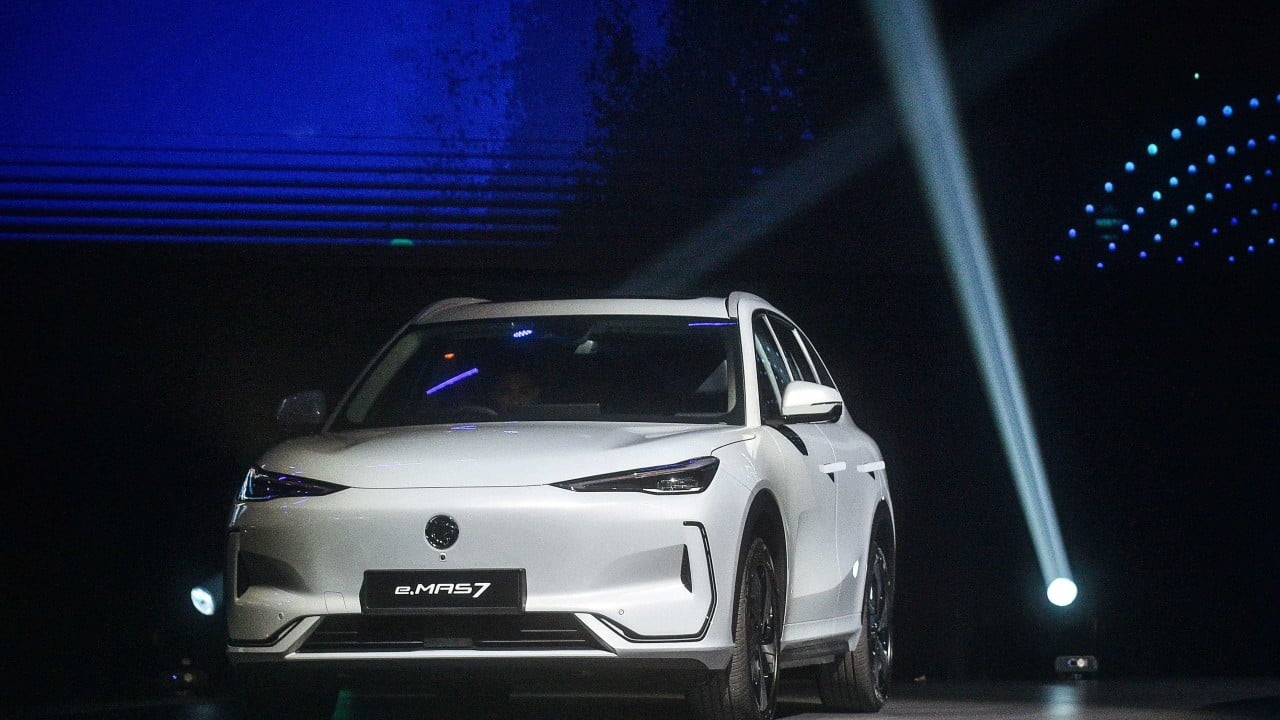
When you penalize new buyers with an extra fee at the point of purchase, you cool down consumer demand. Brands like BYD, Tesla, and local upstarts like Proton with its e.MAS lineup have worked hard to make battery-powered cars affordable for the middle class. Adding a levy risks pricing everyday drivers back into internal combustion engine vehicles, especially now that the sweet era of free road tax has officially ended.
Foreign direct investment is also hitting speed bumps. Major regional manufacturing announcements have faced delays, and officials admit they are still waiting on official confirmations from giants like China's BYD regarding expanded assembly commitments in places like Tanjung Malim. When foreign investors sense policy whiplash—shifting from absolute tax holidays to sudden sales levies—they hesitate. Capital flows to predictable markets.
The Real Crisis Hiding in High-Rise Parking Lots
Talk to anyone living in a Kuala Lumpur high-rise or a public housing flat, and they will tell you why public charging is failing.
The bottleneck isn't just highway fast chargers. It's home charging. If you live on the fifteenth floor of an apartment building, you cannot drop an extension cord out your window. You rely entirely on public infrastructure. When public chargers are broken, occupied, or nonexistent within a two-kilometer radius, EV ownership turns into a stressful chore.
Throwing a new tax on vehicle buyers doesn't solve the real estate and strata management nightmares that prevent apartment complexes from installing AC wall boxes. Until local councils and joint management bodies streamline approvals for residential chargers, no amount of fund-raising levies will fix the core adoption barrier.
What Needs to Happen Next
If Putrajaya wants a sustainable electric vehicle ecosystem, punishing new buyers with extra fees is the wrong playbook.
Automotive companies that benefited from billions in tax exemptions need to be held contractually accountable for infrastructure rollouts, rather than letting them off the hook and passing the financial burden to citizens. Furthermore, streamlining local municipal approvals for commercial and residential chargers will do more for adoption speed than any central government fund ever could.
The transition to clean transport is never smooth. But policy consistency matters more than panic-driven revenue fixes. If the rules keep changing mid-game, buyers will stay on the sidelines, and Malaysia's green ambitions will remain parked in neutral.