Viktor Orban no longer owns the silence of the Hungarian countryside. For over a decade, the Fidesz party maintained a psychological and political stranglehold on Hungary by projecting an image of total invincibility. That facade cracked when Peter Magyar, a former high-ranking insider turned whistleblower, led the Tisza party to a result that has fundamentally reshaped the national map. This was not a standard electoral shift; it was a structural failure in the machinery of "illiberal democracy" that relied on a passive, divided opposition and a controlled media environment.
The rise of Magyar represents the first time the Orban government has faced a challenger who speaks its own language, understands its internal logistics, and shares its cultural DNA. By securing nearly 30 percent of the vote in recent European and local elections, Magyar has effectively neutralized the old guard of the left-wing opposition while simultaneously siphoning off disillusioned Fidesz voters. This dual-threat capability has forced the Prime Minister into a defensive posture for the first time since his return to power in 2010.
The Insider Defection that Broke the Code
Political movements in Hungary usually die in the cradle because they are painted as foreign-funded or out of touch with traditional values. Magyar bypassed this defense. As the former husband of ex-Justice Minister Judit Varga and a man who held lucrative positions in state-owned companies, he carried the "insider" credential that made it impossible for the state media to dismiss him as a fringe agitator. When he walked away from the system following a presidential pardon scandal that rocked the nation, he didn't just bring grievances; he brought the receipt for how the system operates from the inside.
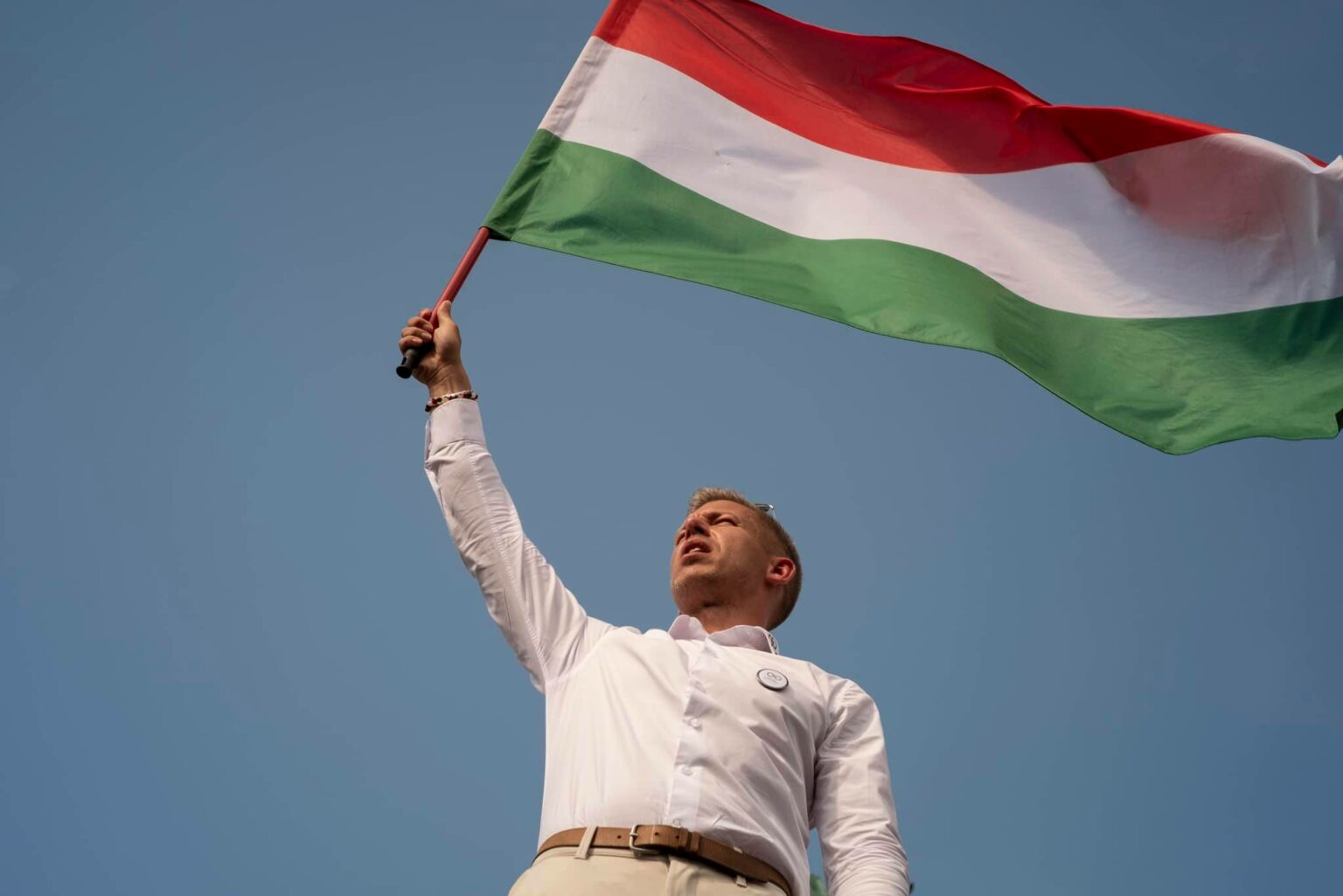
His strategy relied on a grueling, grassroots tour of the Hungarian provinces. This is the "hinterland" that Orban considered his personal fortress. Magyar showed up in small towns where opposition leaders hadn't set foot in years. He stood on flatbed trucks and spoke to crowds in the rain, focusing on the decay of the healthcare system, the crumbling infrastructure of rural schools, and the enrichment of a narrow circle of oligarchs. He avoided the abstract jargon of Brussels and focused on the kitchen-table reality of an economy struggling with some of the highest inflation rates in the European Union.
The result was a surge that the state’s polling apparatus failed to predict. It wasn't just that people were voting for Magyar; they were voting against the inevitability of Orban. This psychological shift is what Magyar refers to when he speaks of "liberating" the country. It is the liberation from the belief that change is impossible.
The Architecture of Discontent
To understand why this moment is different, one must look at the specific economic pressures currently squeezing the Hungarian middle class. The Orban model was built on a social contract: political compliance in exchange for steady growth and protected utility prices. That contract is currently under immense strain.
Heavy investments in battery factories and a reliance on Russian energy have created a precarious fiscal situation. When the government was forced to roll back subsidies on energy and bridge the gap created by frozen EU funds, the "protected" status of the Hungarian voter vanished. Magyar capitalized on this by pointing out the disparity between the lavish lifestyles of the government-aligned elite and the struggling public sector workers.
The Death of the Traditional Opposition
For years, the Democratic Coalition (DK) and other leftist parties served as the perfect foil for Orban. He could easily frame them as the remnants of the failed pre-2010 era. Magyar has effectively cleared this board. By positioning the Tisza party as a "center-right" alternative, he has made the old opposition irrelevant. The recent election results show a consolidation of the anti-Orban vote under a single banner, which is the one scenario the Fidesz strategists have spent fourteen years trying to prevent.
The math is simple but devastating for the status quo. If the opposition is fragmented into five or six parties, the winner-take-all electoral system favors Fidesz. If the opposition collapses into a single, viable entity led by someone with conservative credentials, the Orban majority is at risk.
The Propaganda Machine Hits a Wall
The Hungarian government spends hundreds of millions of euros annually on "government information" campaigns. These campaigns are designed to saturate the public consciousness with specific enemies: Brussels, George Soros, or "gender ideology." Magyar represents a new kind of target that the machine is struggling to process.
When the state media attacked him, he used social media to bypass them, reaching millions through unedited livestreams. He turned the attacks into proof of the system's fear. This created a Streisand Effect: the more the government tried to bury his message, the more curious the average voter became. The sheer volume of the smear campaigns—accusing him of everything from being a secret leftist to a domestic abuser—began to yield diminishing returns. A public saturated with ten years of high-intensity propaganda has developed a certain level of immunity.
The European Dimension
Magyar’s success has immediate consequences in Strasbourg and Brussels. By joining the European People’s Party (EPP)—the group that Orban’s Fidesz was forced to leave years ago—Magyar has positioned himself as the legitimate representative of Hungarian conservatism in Europe. This provides him with an international platform and a level of protection that local activists lack.
He is playing a sophisticated game. He criticizes the Brussels bureaucracy to appeal to sovereignist sentiment at home, but he simultaneously pledges to bring back the billions in EU funds that have been blocked due to rule-of-law concerns. It is a pragmatic "Hungary First" approach that strips Orban of his monopoly on nationalist rhetoric.
The Fragility of the Oligarchic Circle
Systems built on patronage are notoriously stable until the money slows down or a credible successor appears. The "Orban System" is not just a political party; it is an economic ecosystem where loyalty is rewarded with state contracts. However, the rise of a viable challenger creates a "wait and see" atmosphere among the second and third tiers of the elite.
If Magyar continues to poll at 30 percent or higher, the cost of loyalty to Fidesz begins to rise. Local mayors, business leaders, and mid-level bureaucrats start to wonder if they should keep all their eggs in one basket. We are seeing the first signs of this hesitation. Internal reports suggest that the discipline within the Fidesz rank-and-file is fraying as the leadership struggles to find an effective counter-narrative to Magyar's momentum.
The Risks of the Magyar Movement
It would be a mistake to view Peter Magyar as a flawless savior of liberal democracy. He is a populist, albeit a different brand than Orban. His movement is highly centralized around his persona, and the Tisza party currently lacks a deep bench of experienced policymakers. There is also the question of his long-term consistency. Having been part of the system for so long, his critics on both the left and right wonder if his rebellion is one of principle or merely of thwarted ambition.
Furthermore, the Orban government still controls the judiciary, the tax office, and the intelligence services. They have two years until the next national election to dismantle Magyar’s reputation or find a legal way to disqualify him. They are masters of the "long game," and they will use every lever of state power to ensure that the 2026 election does not result in a loss.
The Rural Awakening
The most significant takeaway from the recent data is the shift in the capital, Budapest, and the major provincial cities. Fidesz lost ground in places they previously considered safe. This indicates that the "Budapest vs. The Rest" divide, which Orban used so effectively to polarize the country, is breaking down. Young people in rural areas, who have grown up knowing nothing but Orban, are increasingly looking to Magyar as a way to join the modern European economy rather than being stuck in a neo-feudal patronage system.
The "liberation" Magyar speaks of is not yet a policy reality, but it is a psychological one. The spell of inevitability is broken. Orban is no longer fighting against "foreign interests"; he is fighting against a mirror image of his own movement, one that is younger, faster, and unburdened by the scandals of the last decade.
The tactical error the government made was assuming that the Hungarian people’s desire for stability would always outweigh their frustration with corruption. They underestimated the level of exhaustion within the population. Magyar didn't create this discontent; he simply gave it a recognizable face and a name.
The next twenty-four months will be the most volatile period in Hungarian politics since the fall of communism. The government will likely double down on "sovereignty" legislation and aggressive legal maneuvers to pin Magyar down. But the momentum of a mass movement is difficult to stop once it gains a foothold in the provinces. The Orban era has entered its twilight phase, and whether it ends in 2026 or later, the blueprint for its dismantling has finally been written.
Political gravity has returned to Hungary. Decisions now have consequences, and the ruling party can no longer rely on a divided public to maintain its grip. The challenge for Magyar is to transform a protest movement into a governing alternative that can survive the inevitable counter-attack from a state that has forgotten how to lose.