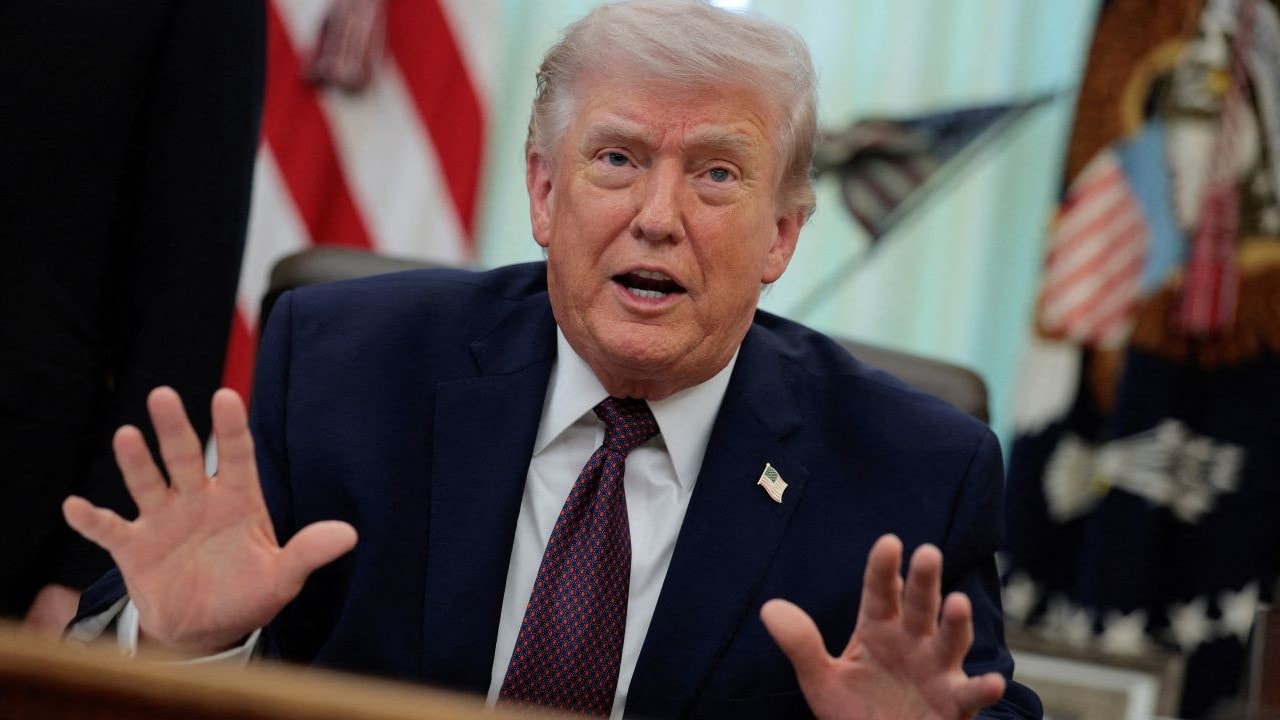
The May Consumer Price Index (CPI) report, revealing a headline annual inflation acceleration to 4.2 percent, marks the highest consumer price threshold in over three years. This shift from April's 3.8 percent print signals a structural bottleneck in the domestic economy, driven primarily by systemic supply-side shocks in global energy markets. While political rhetoric has framed this spike as an acceptable collateral cost of ongoing military maneuvers in the Middle East, a cold mechanical analysis of the data reveals a complex interplay between commodity volatility, core pricing persistence, and the limitations of unilateral supply interventions.
To understand the trajectory of current domestic purchasing power, the inflationary pressure must be isolated into its component parts: the volatile energy sector directly impacted by the Iran conflict, and the underlying core metric which excludes food and energy.
The Dual Architecture of the May Inflation Spike
The headline CPI advance of 0.5 percent on a seasonally adjusted monthly basis stems directly from the cost function of global energy logistics. The ongoing conflict involving Iran has restricted transit through the Strait of Hormuz, a maritime chokepoint responsible for approximately 20 percent of global petroleum trade. The resulting supply premium pushed international benchmark Brent crude past $110 per barrel in early April before settling near $94 per barrel by mid-June.
This commodity escalation feeds directly into domestic supply chains through three primary propagation vectors:
- Direct Transport Costs: Higher diesel and gasoline prices increase the marginal cost of freight distribution across all retail sectors.
- Secondary Manufacturing Inputs: Elevated petroleum costs raise production expenditures for chemical derivatives, plastics, and agricultural fertilizers.
- Marginal Power Generation: Regional utility grids dependent on fossil fuel inputs pass fuel cost adjustments directly to industrial and residential consumers.
In stark contrast to the headline surge, Core CPI—which strips out volatile food and energy subcomponents—advanced by just 0.2 percent from April, bringing the annualized core rate to 2.9 percent. This marks a deceleration from the 0.4 percent monthly increase observed the previous month and fell below consensus forecasts of 0.3 percent.
The divergence between headline and core prints reveals that the structural domestic economy is not experiencing widespread demand-pull inflation. Instead, consumer demand is relatively stable, while a localized supply shock in energy is artificially inflating the aggregate index.
The Friction of Unilateral Supply Interventions
White House communications have defended the inflation print by pointing to covert military logistics initiatives aimed at moving commercial tankers through the blockaded Strait of Hormuz. The administration reported that these operations successfully ferried 100 million barrels of crude into the open market, asserting that this intervention kept oil prices at $85 to $94 per barrel rather than escalating past historical highs.
However, the efficacy of relying on tactical military escorts to suppress long-term inflation faces two severe structural limitations.
The Scale Imbalance
While 100 million barrels appears statistically significant, global petroleum consumption sits at roughly 102 million barrels per day. A localized influx of this volume distributed over several weeks provides only marginal, transitory price relief. It fails to alter the global supply-and-demand equilibrium required to drive energy costs back to pre-war baselines.
The Premium Shift
Tactical operations do not eliminate risk; they reallocate it. While commercial vessels may physically clear the chokepoint, the insurance premiums, maritime security outlays, and operational hazards associated with navigating a war zone remain baked into the landing cost of the commodity.
This friction explains why official forecasts diverge from political optimism. The U.S. Energy Information Administration (EIA) revised its long-term retail gasoline projections upward, shifting its baseline forecast from $2.95 per gallon to $3.64 per gallon. This adjustment confirms that institutional economists view supply-side disruptions as structural fixtures rather than temporary market anomalies.
Monetary Policy Consequences and Market Imbalances
The persistence of a 4.2 percent headline CPI print disrupts the Federal Reserve's intended monetary normalization timeline. The central bank operates under a dual mandate of maximum employment and price stability, historically targeting a 2 percent inflation rate.
The cross-currents in the May data present a distinct policy dilemma. Tightening interest rates further or maintaining an elevated federal funds rate for a prolonged period is an effective tool for dampening demand-pull inflation. However, monetary policy cannot directly resolve structural supply-side shocks; higher interest rates cannot reopen a blockaded shipping lane or lower the cost of maritime insurance.
If the Federal Reserve maintains a restrictive stance to combat headline inflation, it risks overtightening the credit market for domestic businesses and consumers. Conversely, if it cuts rates prematurely to support broader economic growth, it risks unanchoring long-term inflation expectations, as sustained high energy costs gradually bleed into core services and wages.
The Midterm Economic Realities
As the economy enters a critical midterm election cycle, the divergence between equity market performance and consumer sentiment highlights a growing wealth-effect asymmetry. Although major stock indices have trended near all-time highs, the erosion of real disposable income remains the primary driver of consumer behavior.
The political risk for the incumbent administration is quantified by the immediate drop in public approval regarding economic stewardship. When energy and basic operating costs rise, lower- and middle-income households face immediate budget compression, as a larger percentage of their monthly income is diverted toward non-discretionary expenses. This pressure invalidates optimistic political framing; consumers respond to realized retail prices at the pump and grocery store rather than macroeconomic policy justifications or corporate equity valuations.
The optimal strategic path forward requires a transition away from temporary supply-side interventions and toward structural risk mitigation. Relying on tactical military escorts to manage commodity prices is a high-risk, low-yield strategy that fails to address the structural deficit caused by geopolitical blockades.
To stabilize the headline CPI without forcing the Federal Reserve into a damaging over-tightening cycle, policy must prioritize strategic energy reserve management and the rapid diversification of trade logistics routes. Until supply chains are permanently insulated from Middle Eastern geopolitical friction, inflation will remain highly sensitive to energy shocks, keeping consumer purchasing power suppressed regardless of short-term executive maneuvers.


