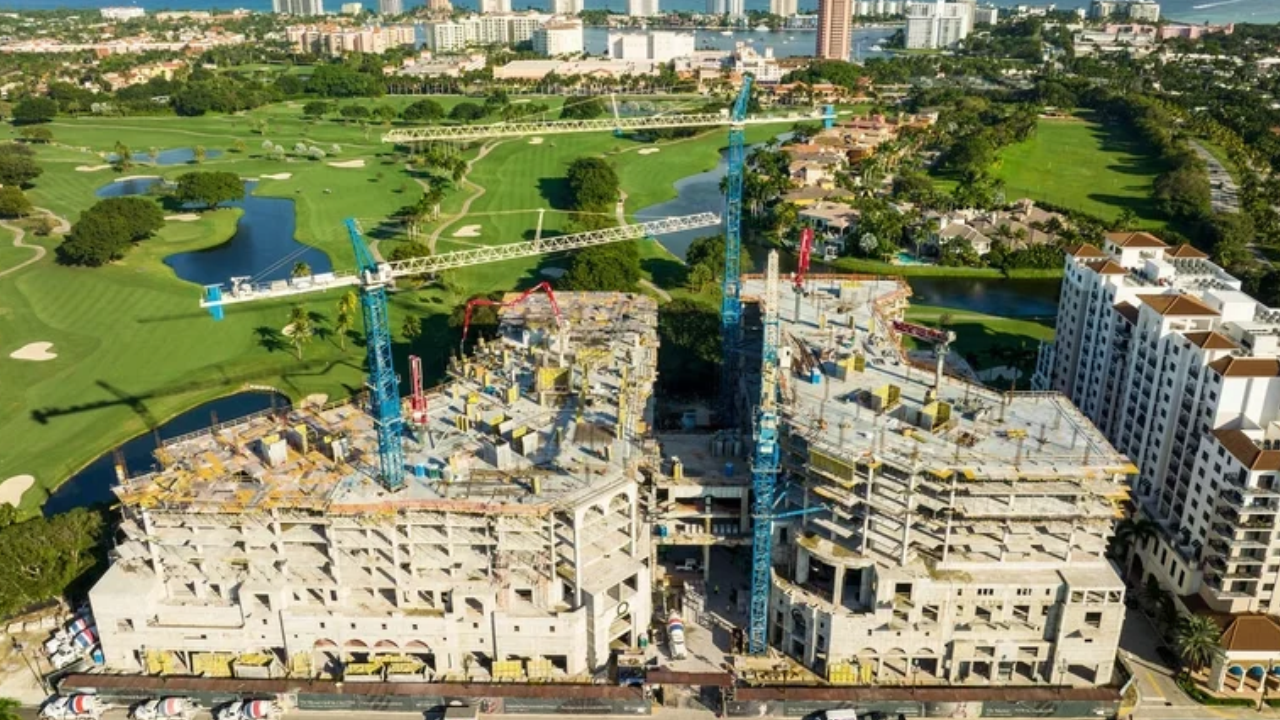
Every financial journalist loves a sob story about rich people losing their down payments.
When a high-profile residential tower stalls and lenders move to foreclose, the mainstream real estate press immediately reaches for the panic button. They frame pre-construction buyers as helpless victims caught in a sudden, unpredictable storm. They wring their hands over lost escrow funds, lawsuits, and the supposed death of the luxury branded residence. If you found value in this article, you might want to read: this related article.
That narrative is lazy, emotionally manipulative, and completely disconnected from how commercial real estate capital stacks actually function.
If you wired $1.5 million to a developer based on a glossy rendering and a fashion designer’s logo, you did not buy a home. You made an unsecured, zero-interest mezzanine loan to a single-purpose LLC. When the market turns and the senior lender steps in to take the keys, that is not a systemic failure. It is the capital market working exactly as designed. For another perspective on this event, refer to the latest coverage from Forbes.
More importantly, the panic surrounding distressed luxury towers hides the biggest opportunity in high-end real estate right now. While retail buyers are crying to their litigation attorneys, sophisticated distress funds are preparing to buy the exact same concrete and glass at 40 cents on the dollar.
The Myth of the Protected Escrow Account
The biggest lie sold to pre-construction buyers is that their deposit sits safely in a vault, untouched until the day they get their keys.
In almost every major luxury development market—from Miami to New York to Dubai—developers rely on buyer deposits to fund vertical construction. Through specific statutory allowances or clever contractual waivers buried on page 84 of the offering plan, buyers routinely grant developers permission to spend everything above the initial 10 percent deposit on hard construction costs.
I have sat across the table from dozens of wealthy buyers who only discovered what "release of escrow" meant after the crane stopped moving. They assumed real estate contracts work like standard residential resales, where a neutral title company holds the cash until closing.
In ground-up development, your deposit is equity-like risk with debt-like returns. You take on construction risk, interest rate risk, and entitlement risk, yet your upside is capped at whatever appreciation happens between contract signing and certificate of occupancy. If the project succeeds, the developer keeps the lion's share of the profit. If the project fails, you stand in line behind the senior construction lender, the mezzanine lender, and the general contractor’s mechanics' liens.
Calling this a "deposit" is a semantic trick. It is venture capital without the equity upside.
Why the Senior Lender Always Wins
To understand why buyers lose their shirts during a foreclosure, you have to look at the capital stack. Real estate finance is a strict hierarchy, and retail buyers sit near the very bottom.
- Senior Construction Debt: Typically a commercial bank or debt fund holding a first-position mortgage. They lend 50 to 65 percent of the project's cost. When the developer defaults, this entity has the legal right to wipe out everyone below them through foreclosure.
- Mezzanine Debt and Preferred Equity: High-yield institutional funds that fill the gap between the senior loan and the developer's cash. They charge double-digit interest rates because they know the senior lender can erase them.
- Mechanics' Liens: Subcontractors, steel fabricators, and concrete suppliers who have statutory rights to attach claims to the physical dirt and structure for unpaid labor.
- Contract Vendees (Pre-Construction Buyers): Unless state law grants them an explicit, unwaivable super-priority lien—which developers aggressively lobby against—buyers are unsecured creditors.
When interest rates spike or construction materials jump by 30 percent, the developer’s pro forma breaks. The senior lender refuses to fund the next draw because the project is no longer in balance. Work stops. The developer defaults.
At that moment, the mainstream media reports that "buyers are fighting for refunds." That fight is theater. You cannot get water from a dry well, and you cannot get a cash refund from an insolvent LLC whose only asset is a half-built concrete shell encumbered by a $300 million senior mortgage.
The Branding Mirage
Another false alarm pushed by industry observers is that a foreclosure ruins the "branding future" of a luxury tower. The assumption is that once a hotel group or luxury automotive marque attaches its name to a distressed project, the brand is permanently tarnished, making the building unmarketable.
This completely misunderstands how brand licensing works in real estate.
Luxury brands—whether hospitality giants like Four Seasons and Aman, or lifestyle names like Porsche, Aston Martin, and Armani—almost never put their own balance sheet equity into these towers. They are licensing agents. They collect an upfront fee, a percentage of gross sales, and a long-term management fee once the building opens.
If a developer goes bankrupt, the brand simply terminates the license agreement due to insolvency, pockets the fees already collected, and waits for the dust to settle. When the senior lender forecloses and sells the incomplete tower to a new, well-capitalized sponsor, that new sponsor frequently re-engages the exact same brand—or brings in an even stronger one—at a reset cost basis.
Buyers do not care who went bankrupt during the foundation pour. Five years later, when the marble is installed and the valet is parking Ferraris out front, the foreclosure is a forgotten footnote. The brand survives because the brand never owned the debt.
Dismantling the Wrong Questions
When distressed condo news hits the headlines, buyers and investors flood search engines with the wrong questions. They look for salvation in the legal system instead of looking at the balance sheet.
Can you sue a developer to get your pre-construction deposit back?
You can sue anyone if you have a retainer for a litigator, but winning a judgment against a bankrupt single-purpose entity is a pyrrhic victory. Developers insulate their parent companies behind layers of Delaware LLCs. Unless you can prove outright criminal fraud—commingling funds in violation of explicit statutes—piercing the corporate veil is nearly impossible. You will spend $200,000 in legal fees to win a piece of paper that entitles you to zero dollars.
Are pre-construction luxury condos a bad investment?
Buying at the peak of a cycle from a thinly capitalized developer is a terrible investment. Buying pre-construction from a fortress-balance-sheet sponsor who builds with cash and low leverage is one of the best ways to lock in trophy real estate before institutional completion premiums kick in. The asset class is not broken; the underwriting of the sponsor is what fails.
What happens to a condo building when the developer goes bankrupt?
The project enters a reset phase. A court-appointed receiver secures the site, insurance is maintained to prevent weather damage to exposed rebar and concrete, and the senior lender auctions the note or takes title via credit bid. Once the old equity and unsecured claims are wiped out, a new developer steps in to finish the last 20 percent of construction at a fraction of the original cost.
The Contrarian Playbook for Distressed Luxury
If you are sitting on the sidelines with liquid capital, a stalled luxury condo tower is not a warning sign. It is a dinner bell.
When a developer defaults, the physical asset does not evaporate. The ocean views are still there. The zoning approvals—which take years of political knife-fighting to secure—are already in place. The foundation and vertical structure are already paid for with someone else's wiped-out equity.
Institutional distress funds like Starwood Capital, Brookfield, and Oaktree have built empires on this exact dynamic. They do not buy at the groundbreaking ceremony; they buy at the bankruptcy auction.
Retail high-net-worth buyers can execute a smaller version of this same strategy if they stop acting like emotional homeowners and start acting like distressed debt vultures.
1. Track the Lis Pendens Filings, Not the Press Releases
By the time a foreclosure hits the front page of the business section, the smartest money has already been working the deal for six months. Monitor county court filings for lis pendens notices and mechanics' liens on major residential projects. When you see three major subcontractors file liens within the same 30-day window, the developer’s construction loan draw has been frozen. That is your signal to start doing homework.
2. Buy the Debt, Not the Unit
If you are looking at a boutique luxury building—say, 20 to 40 units—and the project stalls, do not try to negotiate a discount with the desperate developer. Their hands are tied by their lender. Instead, have your attorney contact the special servicer or the debt fund holding the senior note. Lenders hate owning half-built real estate. They are regulated institutions that want non-performing loans off their books before the end of the quarter. Buying a distressed note at 70 cents on the dollar puts you in the driver's seat to take over the entire building.
3. Wait for the "Receiver Fire Sale"
When a new sponsor takes over a foreclosed tower, their mandate is speed. They acquired the building at a massive discount to replacement cost, which means they do not need to hit the original developer's delusional price-per-square-foot targets to make a profit. They need to show immediate sales velocity to satisfy their new lenders. This creates a brief, 60-to-90-day window right after the building relaunches where units are priced 25 to 35 percent below comparable completed inventory.
The Uncomfortable Downside of Bottom-Fishing
Chasing distressed luxury real estate is not free money, and anyone who tells you otherwise is selling a seminar.
First, construction defects are rampant in stalled projects. When a developer runs out of cash, they cut corners during the final months before the shutdown. Waterproofing gets rushed, HVAC ductwork sits exposed to humidity, and curtain walls are improperly sealed. If you buy into a rescued tower, you must budget for aggressive third-party engineering inspections, because the original subcontractor warranties are often voided by the bankruptcy.
Second, carry costs will bleed you dry if the timeline slips. Distressed workouts move at the speed of bankruptcy courts, which is glacial. A project projected to finish in 18 months can easily drag out to four years due to lien disputes and municipal permit renewals. If you tie up millions in a stalled project without an income stream, opportunity cost becomes your silent killer.
Finally, HOA assessments in rescued buildings can be brutal. When a new sponsor dumps remaining inventory at steep discounts, they often underfund the initial homeowner association reserve budgets to keep monthly carrying costs artificially low during the sales push. Two years after closing, once the developer hands control of the board over to the residents, special assessments hit to pay for deferred maintenance and insurance spikes.
Stop Pitying the Unprepared
The next time you read an article lamenting the fate of luxury condo buyers caught in a foreclosure, look past the sensationalism.
Real estate is an unforgiving, capital-intensive business. Every cycle flushes out over-leveraged developers who mistook a bull market for genius, alongside wealthy buyers who mistook a marketing brochure for a financial guarantee.
Do not mourn the collapse of poorly structured deals. Let the bankruptcy courts clear the deadwood, let the senior lenders reset the basis, and keep your powder dry for the moment the concrete goes on sale.