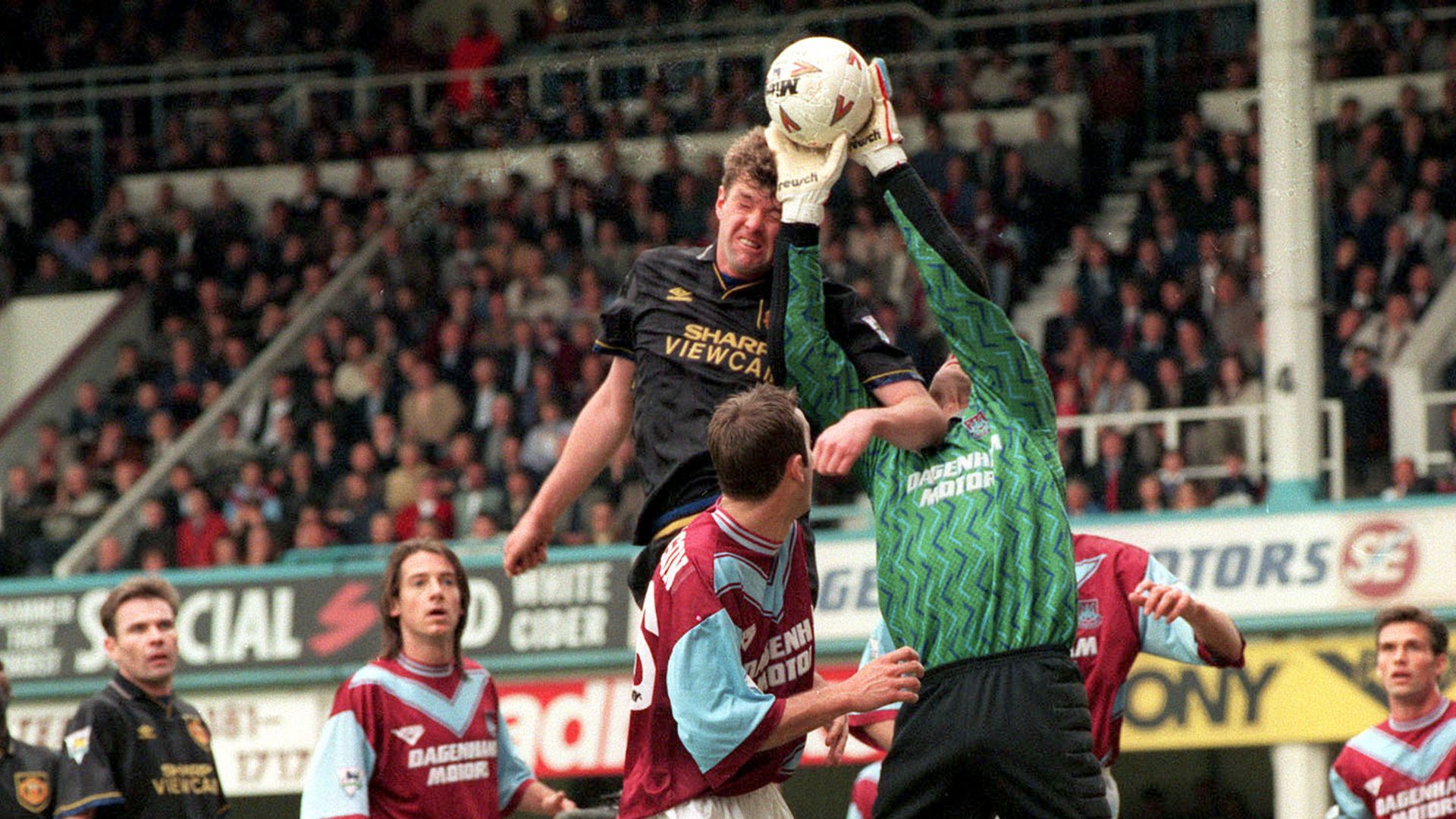
Football matches rarely live up to the cinematic hype. Most title deciders end in nervous, cagey stalemates where fear outweighs ambition. May 14, 1995, defied that script completely. Manchester United arrived at Upton Park needing a victory and a favor elsewhere to snatch the Premier League trophy from Blackburn Rovers. Standing directly in their path was a Czech goalkeeper named Ludek Miklosko.
You don't forget a performance like that. Waves of red shirts crashed against West Ham's penalty box for ninety relentless minutes. Andy Cole, Ryan Giggs, Mark Hughes, and Brian McClair threw everything they had at the goal. Miklosko turned into an immovable wall. He didn't just block shots; he absorbed the pressure of an entire club desperate for glory. When the final whistle blew at one-all, Blackburn celebrated at Anfield, but the lasting image of that afternoon was Miklosko flat on his back, exhausted, adored by thousands of Hammers fans who knew they had just witnessed something mythical. Also making headlines lately: Why Michael Carrick Faces the Exact Same Manchester United Headaches.
The Day Upton Park Froze Manchester United
The atmosphere in East London that spring afternoon crackled with raw tension. Manchester United held the psychological edge, breathing down Blackburn's neck on the final day of the season. Alex Ferguson's side possessed an aura of inevitability. They expected to win. West Ham had nothing tangible to play for except pride and local stubbornness, but that proved more than enough.
From the first whistle, Miklosko commanded his six-yard box with absolute authority. Shots rained down from every angle. Crosses dipped dangerously into a crowded penalty area. Every time United looked certain to score, a glove, a boot, or a torso intervened. Miklosko played with a frantic yet controlled brilliance. He threw his body into challenges, claimed high balls amidst flying elbows, and communicated with his defenders with hoarse, roaring urgency. More details into this topic are covered by FOX Sports.
Fans still talk about specific saves from that afternoon. Cole thought he had scored at least twice, only to see Miklosko claw the ball away at full stretch. The sheer volume of traffic in the West Ham box would have broken most goalkeepers. Miklosko thrived in the chaos. He embraced the villain role for the red half of Manchester while cementing his status as an East London icon.
Anatomy of a Goalkeeping Masterclass
Modern football analysis relies heavily on expected goals and data models, but 1995 was pure instinct and grit. Miklosko relied on positional intelligence and raw courage. He wasn't the tallest goalkeeper in the division, nor did he possess modern distribution skills. What he had was elite shot-stopping ability and unbreakable mental fortitude.
Preparation met opportunity that day. Harry Redknapp’s West Ham side was defensively resilient, but they left their goalkeeper exposed to wave after wave of attacks. Miklosko organized his backline with fierce intensity, ensuring Steve Potts and Tim Breacker stayed disciplined under immense duress. When gaps opened, his lateral movement saved the day.
Goalkeeping legends aren't born from clean sheets in routine wins. They are forged in matches where everything is on the line against superior opponents. Miklosko's display against Manchester United stands shoulder to shoulder with the greatest individual keeping performances in Premier League history. It wasn't about luck. It was about standing tall when the entire football world was watching.
Life Before and After the Claret and Blue
Before becoming a cult hero at Upton Park, Miklosko built his reputation in Czechoslovakia, starring for Baník Ostrava and earning international caps for his national team. Moving to English football in the early nineties presented a massive cultural and physical shift. The Premier League was transitioning into a global powerhouse, characterized by faster transitions and heavier physical contact.
Adapting required toughness. Miklosko integrated into the squad seamlessly through sheer work ethic. Fans loved players who left everything on the pitch, and Ludo embodied that ethos every single week. He spent eight years in East London, making well over three hundred appearances and earning the affectionate nickname "Ludo" from the terraces.
Injuries and age eventually caught up, leading to his departure in 1998, but his connection to West Ham never severed. He later returned to the club as a goalkeeping coach, passing down his wealth of experience to the next generation of shot-stoppers. That longevity matters. Journeymen come and go, but true club legends stay rooted in the fabric of the institution.
Why Ludo Captured the Hearts of West Ham Fans
West Ham supporters possess a very specific radar for authenticity. They demand flair and skill, but above all else, they respect hard work and commitment. Miklosko wasn't a flashy superstar signed for millions of pounds. He was a gritty, reliable competitor who wore his heart on his sleeve.
Think about the character of East London during that era. It was industrial, working-class, and proud. Miklosko mirrored those values on the pitch. When he made a crucial save, he celebrated with the supporters behind his goal, pumping his fists and sharing the passion of the terraces. That mutual respect transformed a foreign import into one of their own.
Football has changed dramatically since the nineties. TV money, tactical evolution, and corporate homogenization have altered the game's soul. Yet, fans still crave the visceral connection that players like Miklosko provided. Remembering his career isn't just about nostalgia for a single afternoon against Manchester United. It's a celebration of an era when character defined the pitch.
The legacy of Ludek Miklosko remains secure in football lore. He stepped onto the pitch on a sunlit May afternoon and altered the course of a title race through sheer refusal to yield. Whenever fans gather outside the stadium to debate club history, his name always surfaces with a smile and a nod of deep respect. Some players win medals; others win immortality. Ludo chose the latter.