The shrill, unmistakable wail of an emergency alert is designed to pierce through the mundane rhythm of a Saturday afternoon. It causes drivers to pull over, families to pause at backyard barbecues, and shoppers to look down at their screens in unison. On July 18, 2026, at 1:35 p.m., phones across Alberta buzzed with that exact panic-inducing tone.
But this broadcast carried a rare, bureaucratic weight that most people sliding their thumbs across glass would never notice. It was categorized as an Amber Alert, yet the mechanical checkboxes that usually trigger such an alarm were completely absent. There was no getaway car. There was no suspected abductor. Instead, the province of Alberta had issued a rare emergency exemption for the Calgary Police Service.
The system was bent because a boy had vanished, and time was running out.
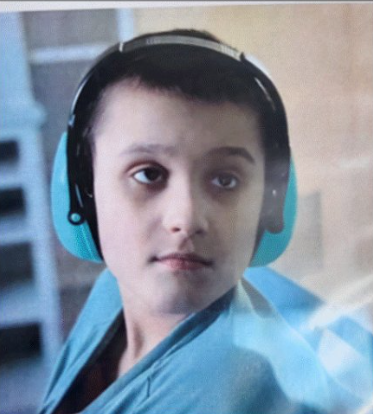
His name is Parker. He is 11 years old. To look at the grainy closed-circuit television image captured on Travis Crescent N.E. on Thursday afternoon is to see a snapshot of profound vulnerability. In the frame, he is walking without a shirt. He wears grey shorts, black Skechers, and a pair of large, dark noise-cancelling headphones clamped over his ears.
He has been gone for more than forty-eight hours.
To understand why a city of over a million people is currently being asked to search their private properties is to understand how Parker perceives the world. He is autistic and non-verbal. Emotionally and cognitively, investigators say he functions at the level of a two- or three-year-old child. Those noise-cancelling headphones are not an accessory; they are a shield against a world that can easily sound too loud, too chaotic, and too terrifying.
Consider the terrifying paradox of the search itself. When a typical child goes missing, the protocol is to yell their name, to form search lines, to call out into the brush. If you do that with Parker, he will run.
"Parker experiences the world in his own way," his family shared in a raw, breaking statement released through the police. "He may not respond when his name is called, and he can become frightened when approached by people he does not know."
If a well-meaning stranger corners him, the boy will not see a savior. He will see a threat. Because of this, the Calgary Police Service has issued an unusual warning to the public: if you spot the shirtless boy with the headphones, do not approach him. Do not call his name. Keep your distance, keep him in your line of sight, and dial 911 immediately.
The timeline of his disappearance traces a quiet, heartbreaking path through northwest Calgary. It began between 11:08 a.m. and 11:41 a.m. on Thursday, July 16, when Parker wandered away from his day home in the 0-100 block of Connaught Drive N.W.
A brief, tantalizing clue emerged around noon that same day. Discarded articles of clothing, verified to belong to the boy, were discovered on Northmount Drive N.W. Then came the CCTV footage from Travis Crescent, tracking his movement further northeast at 12:52 p.m.
Then, nothing. The trail went cold.
By Saturday afternoon, the scale of the emergency pushed past standard police operations. More than 200 Calgary police officers, alongside specialized mounted units on horseback, canine teams, mountain bike squads, and the HAWCS helicopter hovering overhead, have been tracing grid lines through communities like Thorncliffe, Cambrian Heights, and North Haven. Over 120 trained civilian search volunteers have joined them on the ground.
But a city is full of blind spots that a uniform cannot reach.
Police are operating under the distinct behavioral patterns common to children with Parker's profile. He is drawn to water. In the mid-July heat, the temptation of a backyard pool or a shimmering hot tub is immense. Furthermore, a child functioning at a toddler's level who is frightened by the roar of transit or the flash of police cruisers will look for tight, enclosed spaces to hide. They look for safety under the dark overhang of a deck, inside an unlocked garden shed, or curled up in the backseat of a neighbor’s recreational vehicle.
Acting Staff Sergeant Scott Guterson did not mince words during a press briefing. He asked the entire city to look down, look behind, and look within their own borders.
"There are literally a million eyes out there," Guterson said, balancing the urgency of the moment with a plea for residents to respect property laws and let people check their own spaces. "We need each and every one of them to do the checks on their property."
Behind the logistical deployment and the digital alerts are two parents living inside a clock that ticks with agonizing slowness. Every hour that the sun dips lower toward the Rocky Mountains is another hour their non-verbal son is navigating a concrete environment without shelter, without a shirt, and without the ability to ask for a glass of water.
The community has responded with the quiet solidarity that often defines Calgary in a crisis. Dashcam footage is being pulled from commutes. Smart doorbells are being checked for a fleeting glimpse of a boy in black headphones.
The search remains an open, beating nerve in the city. The authorities maintain they have no reason to believe Parker is not alive, but the window of safety is narrowing with the passing of the weekend light.
For now, the mandate for the people of Calgary is simple, local, and deeply human. Walk out to the backyard. Open the latch on the shed. Peek beneath the gray wood of the deck. Look for a little boy who is lost in a loud world, waiting for the silence that means he is finally home.