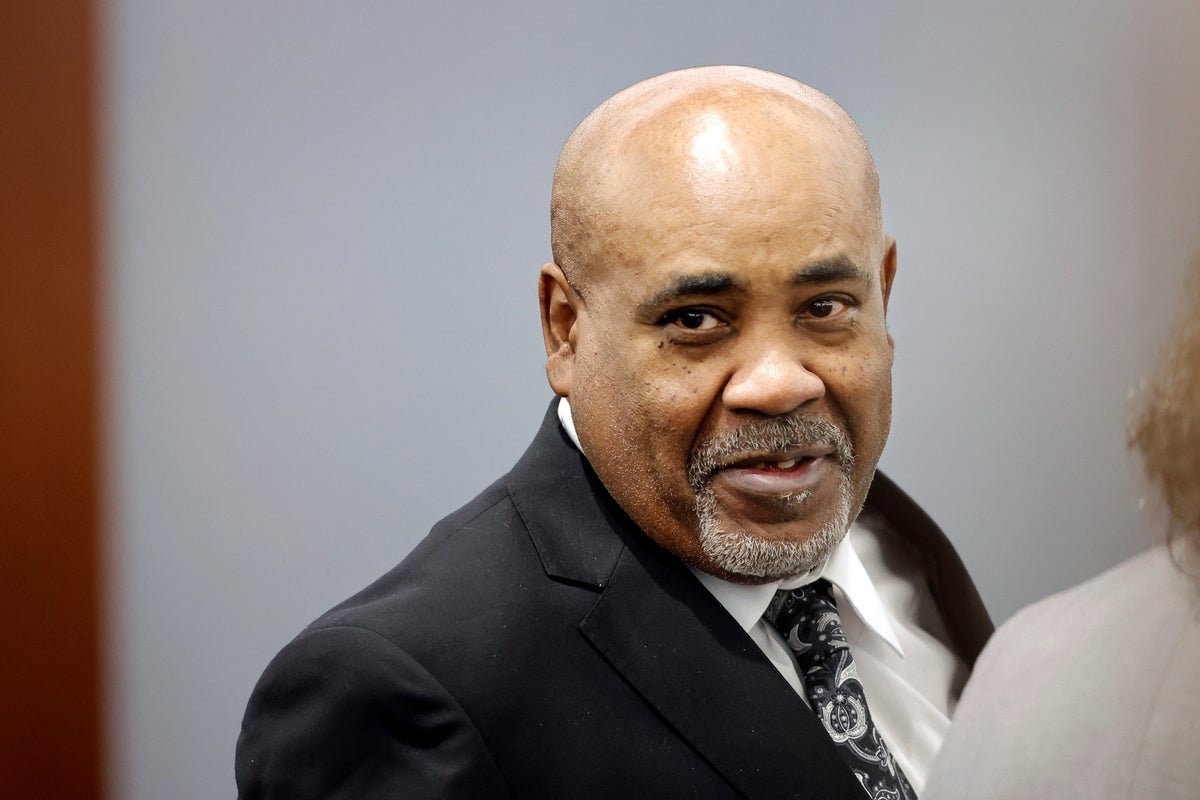
Paul Biya landed in Yaoundé on August 20, 2026, ending a 73-day absence that pushed Cameroon to the brink of a governance crisis. At 93, the world’s oldest serving head of state returned from Switzerland, greeted by a staged display of state-sanctioned support at Nsimalen International Airport. His return officially concludes a period of speculation regarding his health and the stability of a nation effectively operating without its primary executive. Yet, for the average citizen, the physical presence of the president changes little. The machinery of his power remains disconnected from the immediate, daily struggles of the Cameroonian people.
The fundamental reality is that Biya’s governance style does not require his physical presence to exert control. Over four decades, he has constructed a political architecture designed to function on inertia. He is a master of the "long silence," a strategic detachment that forces subordinates to compete for his favor while preventing any single official from consolidating enough influence to challenge his authority. When the president is in Geneva, the ministers in Yaoundé do not act with greater autonomy; they act with greater caution. They wait, observing the vacuum, knowing that any bold policy initiative could be perceived as a threat to the established order. You might also find this similar story interesting: The Face Behind the Plastic Smile When a Childhood Nightmare Steps Into the Morning Sun.
This latest 73-day disappearance illustrates a recurring pattern that has defined his eighth term. By distancing himself from the daily glare of the capital, Biya insulates the presidency from the volatility of economic instability and the grinding conflict in the North-West and South-West regions. It is an effective, albeit cynical, mechanism. When the state is perceived as being on "autopilot," as critics have labeled it, the responsibility for failures is diffused among lower-level appointees. Meanwhile, the core of the regime—a tight circle of loyalists in the military and civil cabinet—continues to manage the levers of patronage and security.
The constitutional question of succession remains the most dangerous element of this ongoing theater. Cameroon’s constitution provides a path for power to pass to the President of the Senate in the event of an executive vacancy, yet the political reality is far murkier. Succession in a regime built on personality-driven patronage is never a mere matter of legal procedure. It is a high-stakes calculation involving deep-seated ethnic allegiances and the interests of an entrenched elite. By refusing to appoint a vice president or designate a clear successor, Biya keeps the entire political class in a state of perpetual anxiety. This anxiety is his most potent tool for ensuring loyalty. As extensively documented in recent articles by NPR, the results are worth noting.
Look at the recent military reshuffles that occurred while he was abroad. By replacing commanders in four of the five integrated military domains and elevating his own Presidential Guard, Biya sent a message that he remains the ultimate arbiter of force, regardless of his coordinates. He does not need to sit at a desk in the Unity Palace to fire a general. He only needs to issue a decree. This capacity to project power from thousands of miles away undermines the claims of an institutional vacuum. The vacuum is not administrative; it is political.
The true cost of this absenteeism is the stagnation of reform. When a leader is physically removed from the consequences of his policies, the urgency to address critical issues—such as the collapse of infrastructure or the persistent separatist violence—evaporates. The government’s priorities are not centered on the evolution of the state, but on the preservation of the regime. This objective has successfully transformed Cameroon into a bastion of electoral authoritarianism, where democratic institutions serve as facades for the continuation of the status quo.
Consider a hypothetical scenario where an external economic shock hits the Central African region. A functional, present executive would be forced to navigate the crisis, negotiate with international partners, and address the public. In the current framework, the absence of the leader becomes the official response. By the time the administration reacts, the window for meaningful intervention has often closed, leaving the populace to bear the burden of the delay. This is not a failure of the system; it is the design.
Opposition figures such as Issa Tchiroma Bakary have correctly identified that the legitimacy of the regime is tied to this sense of detachment. Every day that the president spends in Europe is a day that reinforces the perception that the interests of the elite are fundamentally divorced from the needs of the population. However, the opposition’s frustration often misinterprets the nature of Biya’s power. They treat his absence as a symptom of weakness, whereas it is, in fact, a performance of immunity. He is literally above the country, watching the internal machinery spin in response to his silence.
The international community, particularly Western diplomatic circles, often struggles to engage with this model of governance. They look for traditional indicators of state failure—a lack of services, civil unrest, or the breakdown of law and order—and they see these symptoms in Cameroon. Yet, the state does not collapse because it is not intended to be a service provider for the people. It is a security-first apparatus designed to keep the regime intact.
As 2026 wanes, the political conversation in Yaoundé will inevitably return to the whispers of what comes next. The age of the president makes the topic unavoidable, yet the environment of fear and surveillance makes it impossible to discuss openly. The return of Paul Biya does not resolve the tension of his twilight years; it only prolongs the uncertainty. The regime has mastered the art of survival by simply refusing to end, relying on the fact that an absent autocrat is still, for the moment, an autocrat. The wait for a genuine transition continues, not because the institutions are weak, but because they are perfectly synchronized to serve a single man who is almost never there.
.png?width=1200&auto=webp&trim=0%2C0%2C0%2C0)