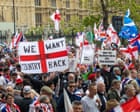
The Metropolitan Police just threw down the gauntlet for this coming Saturday, and honestly, the stakes couldn't be higher. We’re looking at a massive, high-friction collision in the heart of London. On one side, you’ve got the Nakba Day march—a staple of pro-Palestine activism marking the 1948 displacement. On the other, the "Unite the Kingdom" rally, a right-wing event led by Stephen Yaxley-Lennon (better known as Tommy Robinson).
Throw in the FA Cup Final at Wembley, and you’ve got what the Met calls "one of the busiest days for policing in recent years." But this isn't just about traffic jams or rowdy football fans. The Met is rolling out a brand of "zero-tolerance" policing that we haven't seen on this scale before. If you’re planning to be anywhere near central London on May 16, you need to know that the rules of engagement have changed. For a deeper dive into similar topics, we recommend: this related article.
The New Rules for Organisers and Speakers
For the first time, the Met is holding protest organisers legally responsible for what comes out of their speakers' mouths. It’s a massive shift. In the past, if a speaker went off-script and veered into what the law defines as hate speech or extremism, the police would go after that specific individual. Now? The people holding the permits are on the hook too.
Deputy Assistant Commissioner James Harman was blunt about it during his briefing. The force has imposed strict conditions that essentially turn organisers into speech monitors. If they platform someone who crosses the line into unlawful extremism, both the speaker and the organisers will face the music. It’s a move clearly designed to make groups self-censor and vet their lineups with extreme caution. For broader background on this development, detailed analysis can also be found at The New York Times.
Live Facial Recognition and the Double Standard Debate
Here's where things get controversial. The Met confirmed they’ll be using Live Facial Recognition (LFR) in Camden, specifically targeting areas where "Unite the Kingdom" attendees are expected to gather. They’ll be scanning faces against a specific watchlist in real-time.
Interestingly, Harman mentioned that LFR isn't currently slated for the pro-Palestine marchers. This has already sparked a firestorm of "bias" accusations from both sides. Pro-Palestine campaigners are furious that the Met denied their preferred route while allowing Robinson’s group to occupy the "political centre" of the city. Meanwhile, right-wing supporters feel they’re being unfairly targeted by high-tech surveillance.
The Met's defense? It’s not about politics; it’s about safety. They point to the "severe" terrorism threat level and a recent spike in antisemitic hate crimes and arson incidents. With 4,000 officers on the streets and a £4.5 million price tag for the day, they aren't taking any chances.
How the Crime and Policing Act 2026 Changes Everything
If you haven't been keeping up with the legal jargon, the Crime and Policing Act 2026 became law just a couple of weeks ago, and Saturday will be its first massive test. This Act gives the police sweeping new powers that go way beyond just keeping two groups apart.
- Cumulative Impact: The police can now restrict a protest simply because there have been "too many" of them lately. They’ll argue that the constant weekend marches are causing "serious disruption to the life of the community."
- Face Coverings: There’s a new offence for concealing your identity. If an officer thinks you're wearing a mask to hide from the law, they can force you to remove it or arrest you on the spot.
- Places of Worship: New "buffer zones" allow the Met to divert marches away from synagogues, mosques, or churches if they think the atmosphere might become "intimidating" for worshippers.
Basically, the "right to protest" is feeling a lot more like a "privilege to protest" these days. The Met is moving from a "hands-off" approach to what they call "the most assertive possible use of our powers."
Navigating the Saturday Chaos
If you’re heading into the city, don't expect a normal Saturday. The pro-Palestine march is set to move from South Kensington toward central London, while the "Unite the Kingdom" rally will be digging in near the political hub.
Expect heavy metal: armored vehicles, helicopters, drones, and dog units will be everywhere. The Met is also using "specialist investigative teams" to record everything. Even if an arrest isn't made on the spot, they’ll be using that footage to hunt for hate speech offences in the days following the event.
What You Should Do
Whether you're a commuter or a participant, the environment on Saturday will be high-pressure. If you’re protesting, be aware that the definition of "intimidation" or "disruption" is now much broader under the 2026 Act.
- Check the Routes: Both marches have had their routes restricted or changed by the police. Don't rely on last week’s maps.
- Know Your Rights: While the police have more power, you still have the right to peaceful assembly. However, be very careful with placards or chants that could be interpreted as supporting proscribed groups like Palestine Action, which has seen thousands of arrests recently.
- Expect Delays: Between the two marches and the FA Cup Final at Wembley, public transport in central and west London will be a nightmare.
The Met is clearly trying to send a message: the era of "policing by consent" is being heavily supplemented by "policing by tech and statute." Saturday isn't just a protest; it's a litmus test for how much dissent the UK government is willing to tolerate in 2026. Be smart, stay aware of your surroundings, and don't expect the police to be in a "lenient" mood.