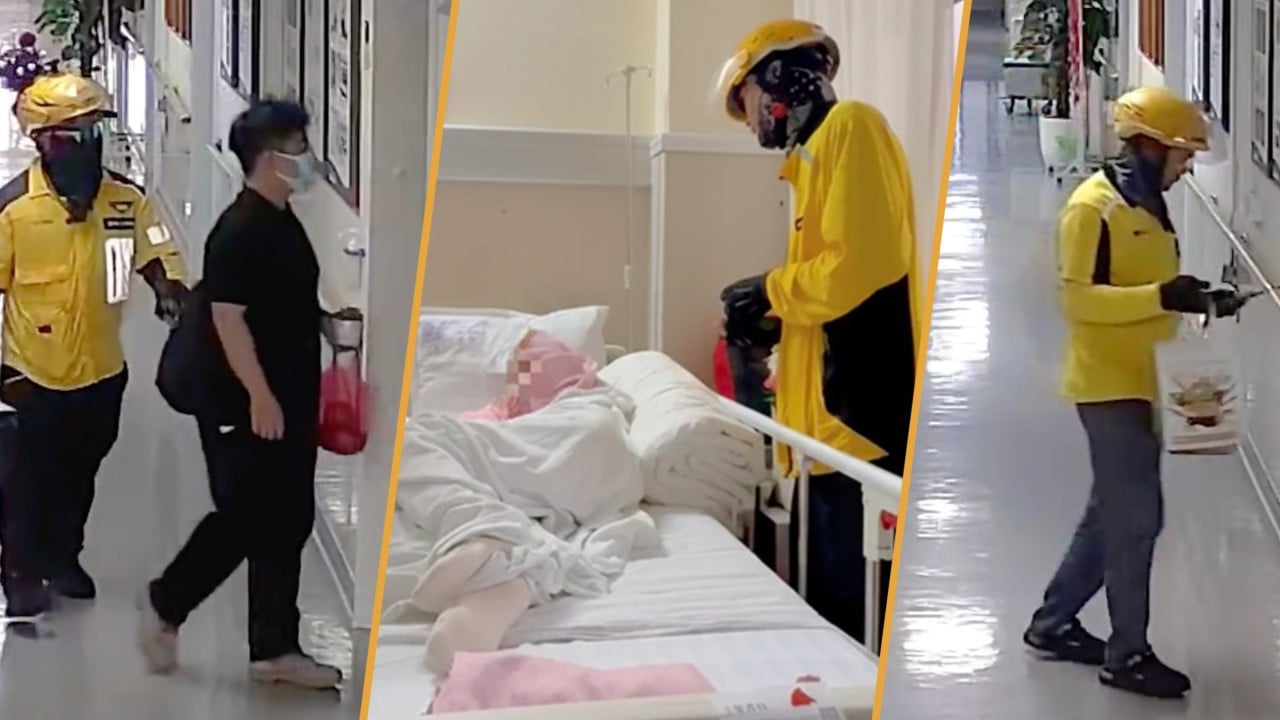
The utilization of food delivery platforms as a proxy for social companionship by terminal cancer patients in China is not a sentimental anomaly; it is a structural response to the failure of traditional care networks. When a patient in a high-density urban environment pays a delivery fee to "order" a human interaction, they are performing a rational arbitrage. They are converting a standard gig-economy logistics service into a primitive form of assisted living. This phenomenon exposes a critical gap between China’s rapid digitalization and its lagging geriatric and palliative care infrastructure.
The Logistics of Emotional Labor
The "Love Relay" incident highlights a specific shift in the utility function of delivery platforms like Meituan and Ele.me. We can categorize this shift using the Service Elasticity Framework. Normally, a delivery platform provides a low-elasticity service: the transportation of goods from point A to point B within a defined time window. However, when a user adds a specific request for companionship or "check-ins," they are testing the elasticity of the platform’s human capital.
The driver, or waimai, becomes an accidental first responder. This creates a friction point between two competing systems:
- The Algorithm's Efficiency Metric: The driver is measured by deliveries per hour. Any minute spent interacting with a patient is a direct financial loss to the driver, as it increases the opportunity cost of the next delivery.
- The Human Service Premium: The patient is willing to pay the delivery fee not for the food, but for the "proof of life" or human presence. This is essentially a micro-subscription to a welfare check, priced at the cost of a bowl of noodles.
This interaction is currently unpriced and unmanaged. The platform absorbs the risk—legal, emotional, and operational—without capturing the value of the specialized care being provided.
The Three Pillars of Informal Care Substitution
The reliance on delivery apps for social support is driven by three distinct systemic pressures.
1. The Urban Atomization Trap
High-density Chinese cities have replaced traditional clan-based support systems with anonymous high-rise living. For a cancer patient living alone, the physical proximity of thousands of neighbors does not translate into a safety net. The delivery driver is the only person guaranteed to penetrate the private sphere of the home on a daily basis. The driver has a "Permission to Enter" that even local community workers often lack.
2. The Economic Disparity in Palliative Care
Professional home nursing in China is a high-cost service with a significant supply-side shortage. By contrast, the marginal cost of a delivery order is negligible. The patient is essentially hacking the gig economy to create a "shadow care" system. This is a classic case of Resource Substitution: when a primary service (professional care) is inaccessible, the market will force a secondary service (logistics) to fill the void, regardless of its suitability.
3. The Digital Interface as a Psychological Tether
For the isolated, the smartphone app is the primary interface with reality. The gamified nature of tracking a driver’s GPS location provides a sense of connection. The "relay" aspect—where multiple drivers participate over time—creates a distributed network of witnesses. This provides the patient with a sense of continuous observation that a single, overstretched family member cannot provide.
The Quantified Risk of Unregulated Care-Work
From a strategy consulting perspective, allowing delivery drivers to act as informal social workers is a high-liability configuration. The platforms are currently ignoring a massive operational risk profile.
- Medical Liability: If a driver enters a home and finds a patient in respiratory distress, they are not trained in triage. Any attempt to help—or a failure to help—could lead to litigation against the platform.
- Psychological Burnout: Gig workers are optimized for speed, not emotional labor. Forcing them to participate in a "love relay" for a dying patient introduces a high degree of secondary trauma. This leads to churn, which increases the platform’s acquisition costs for new drivers.
- Service Integrity: When a driver deviates from the optimized route to provide companionship, the algorithm’s predictive accuracy degrades. If this behavior scales, the entire logistical network experiences increased latency.
The Bottleneck of Trust and Verification
The core problem is that the delivery platform is a "low-trust" environment designed for "high-speed" transactions. Social care requires a "high-trust," "high-touch" environment. The patient’s attempt to bridge these two worlds creates a fragile equilibrium.
The "relay" works only as long as the drivers are willing to opt-in to the altruism. This is a non-scalable resource. Altruism is a finite psychological asset that diminishes under the pressure of the algorithm’s "on-time" requirements. Once the novelty of the "story" fades, the patient returns to being a data point on a map. The platform does not have a mechanism to reward the driver for the extra 15 minutes spent talking to a lonely customer. Without a financial incentive or a formal "Care SKU," the service will inevitably revert to the mean: a cold drop-off at the door.
Mapping the Transition to "Service-Plus" Logistics
If these platforms intend to sustain their role as social infrastructure, they must move beyond the "Goods Delivery" model and into the Validated Human Presence (VHP) market.
The market currently lacks a middle-tier service between "Full-Time Nurse" and "Anonymous Delivery Driver." A VHP model would involve:
- Tiered Interaction Fees: Allowing users to pay a transparent premium for a "10-minute check-in."
- Liability Firewalls: Formalizing the scope of the driver’s responsibility to avoid medical litigation.
- Integration with Local Health Bureaus: Turning the delivery driver into a sensor. If a driver notes a significant decline in a regular customer’s condition, a standardized API could trigger a notification to a professional social worker.
This is not about "fostering community"; it is about optimizing the utilization of a mobile workforce that is already present in every residential hallway in the country.
The Economic Reality of Digital Companionship
The "Love Relay" is a symptom of a society that has optimized for the movement of objects while neglecting the maintenance of subjects. The patient is not looking for a "friend" in the traditional sense; they are looking for a Witness.
In the current Chinese economic landscape, the waimai driver is the most efficient witness available. They are mobile, GPS-tracked, and incentivized by a rating system. However, the reliance on their "kindness" is a failure of system design. Kindness is not a KPI.
The strategic play for a platform in this position is to recognize that they are no longer just a food app. They are a "Last-Mile Human Connectivity" utility. The data generated by these "lonely" orders—patterns of frequent, low-value food orders by elderly or ill users—is a leading indicator of social risk.
Institutionalizing the Shadow Care Network
The transition from an accidental social worker to a formalized service provider requires a re-engineering of the driver’s incentive structure. If the platform continues to treat these interactions as "heartwarming stories" rather than "unmet market demand," they miss the opportunity to monopolize the aging-in-place market.
The patient’s "Love Relay" is an unsolicited pilot program for a new business unit. The demand is proven. The delivery mechanism is in place. The missing component is the formalization of the labor.
Instead of relying on the spontaneous empathy of a driver who is five minutes behind schedule, the system must price the empathy into the transaction. This turns a random act of kindness into a sustainable, scalable service. Failure to do so will result in an increase in "delivery-side trauma" and eventually, restrictive regulations from a government wary of the social consequences of gig-worker exploitation.
The logical move is to segment the workforce. Creating a "Care-Certified" tier of drivers who receive a higher base pay in exchange for slower, high-touch deliveries would capture the value that is currently being given away for free. This tier would address the specific needs of the 280 million people in China over the age of 60, many of whom are entering the "lonely" phase of the life cycle.
The platforms must decide if they are simply pipes for calories or if they are the nervous system of the modern city. If they choose the latter, they must start charging for the signal, not just the delivery.